Geologic Time
Geologic time is the extensive interval encompassing Earth's history, which scientists organize into a standardized "calendar" known as the geologic time…
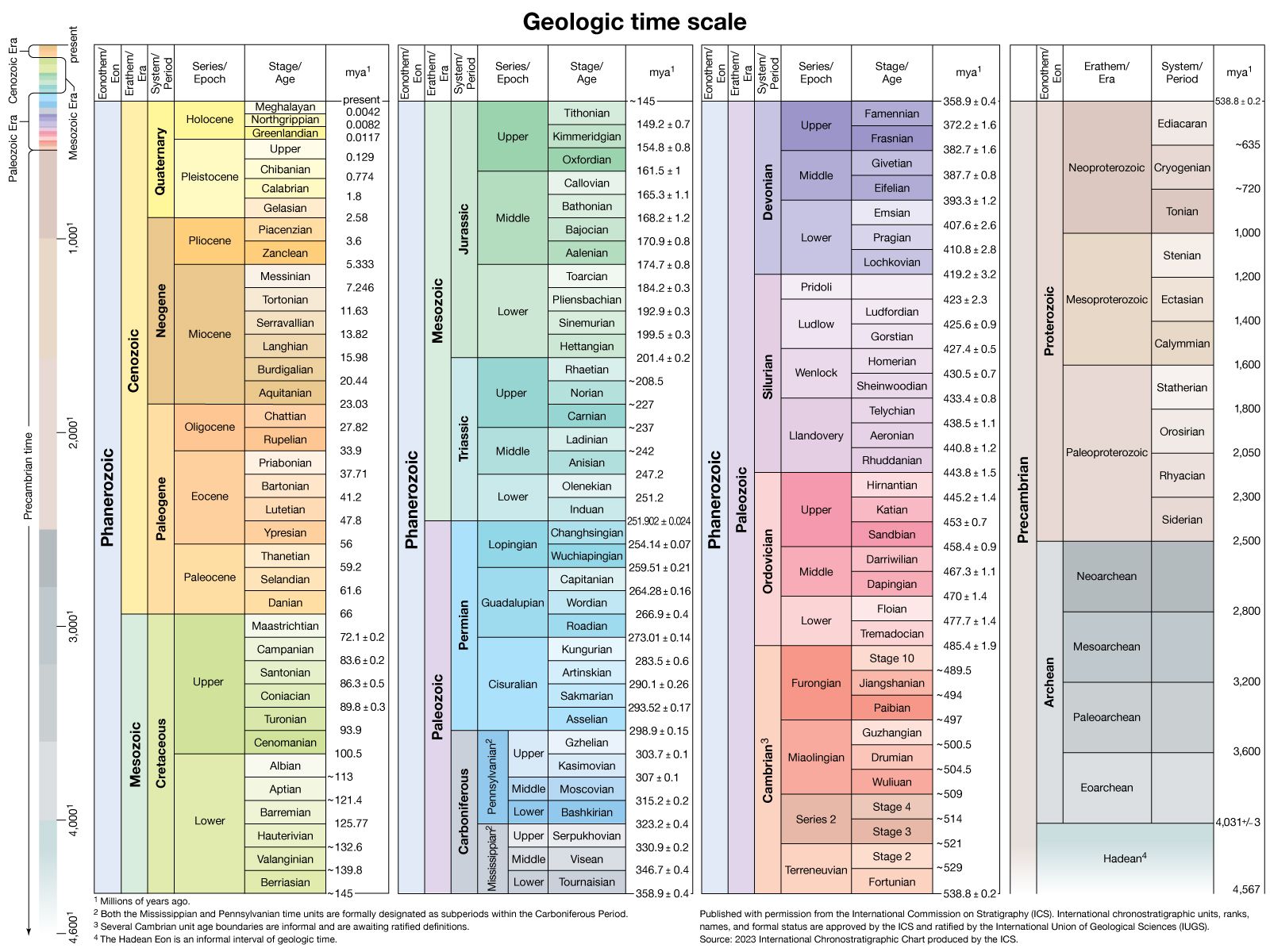
How is geologic time divided into different units or periods?
Geologic time is the extensive interval encompassing Earth’s history, which scientists organize into a standardized “calendar” known as the geologic time scale. This scale subdivides time into hierarchical units, listed in descending order of duration: eons, eras, periods, epochs, and ages.12
These divisions are established through two primary approaches:
- Chronostratigraphic (Relative) Scale: Based on stratigraphy, this method uses the order of rock strata and the fossil record to determine relative age. The emergence and disappearance of specific species within these layers help delineate the boundaries between time units.12
- Chronometric (Absolute) Scale: This scale uses radiometric dating to assign numerical ages to the boundaries defined by the stratigraphic record. By measuring the decay of radioactive isotopes, scientists can quantify the duration of these intervals.32
The International Commission on Stratigraphy maintains the official charts that standardize these relationships globally.1
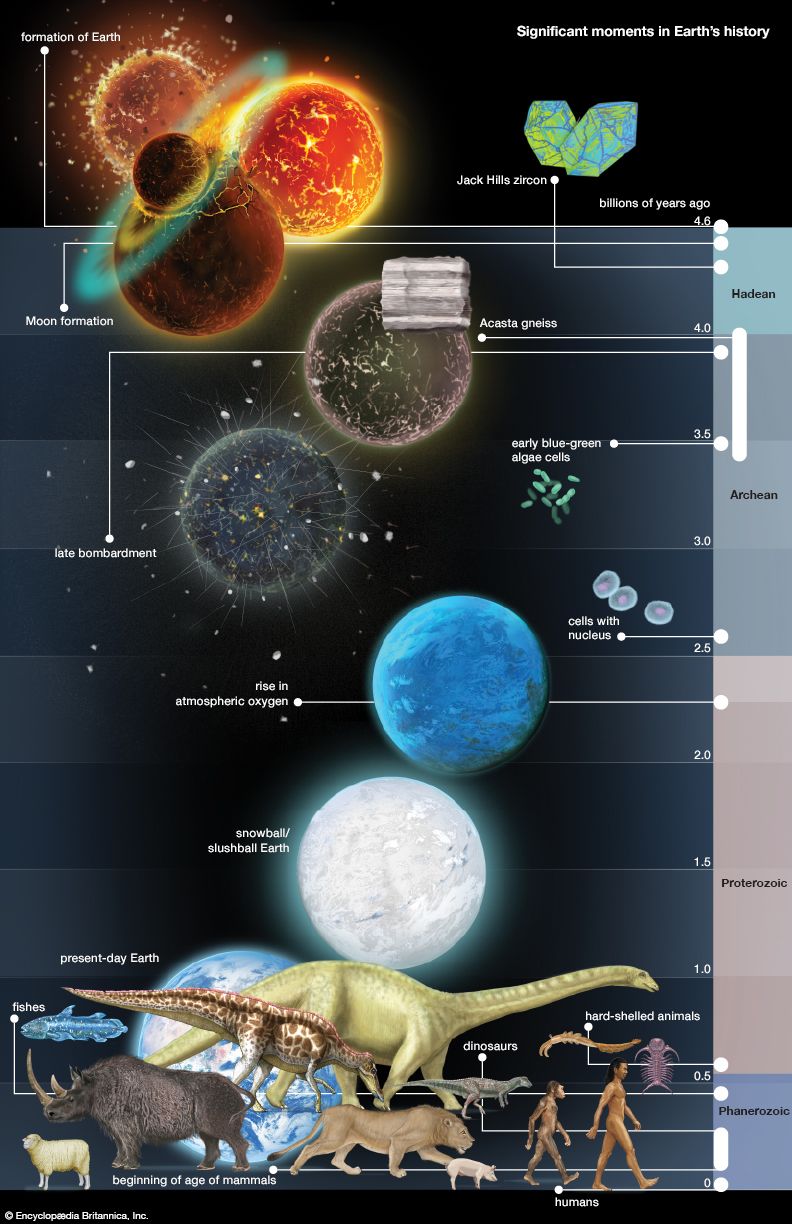
How has our understanding of geologic time impacted our view of Earth’s history and evolution?
Our understanding of geologic time has fundamentally transformed our perspective of Earth from a static, unchanging entity into a dynamic, evolving planet with a history spanning over 4.5 billion years. By integrating the fossil record with radiometric dating, scientists have moved beyond viewing Earth’s past as an unordered series of events to recognizing a coherent, unfolding narrative of change.156
This framework has profoundly impacted our view of evolution and Earth’s history in several ways:
- Reconstructing Life’s History: By correlating rock strata with the appearance and disappearance of species, we can map the evolutionary changes of life over vast intervals. This reveals how mass extinction events have repeatedly reshaped biodiversity, clearing the way for new groups—such as the rise of mammals following the Cretaceous-Paleogene extinction—to dominate the planet.57
- Quantifying Change: The development of chronometric scales allows us to measure the rates of geological and biological processes, providing a precise timeline for events like mountain building and climate shifts.86
- Recognizing Human Impact: The proposed Anthropocene Epoch highlights a shift in our understanding, acknowledging that human activity has become a significant geological force capable of altering the atmosphere, oceans, and nutrient cycles on a global scale.9
Understanding this deep time is essential for recognizing our current role in the sixth mass extinction, emphasizing the ethical imperative to protect the planet’s remaining biodiversity.7
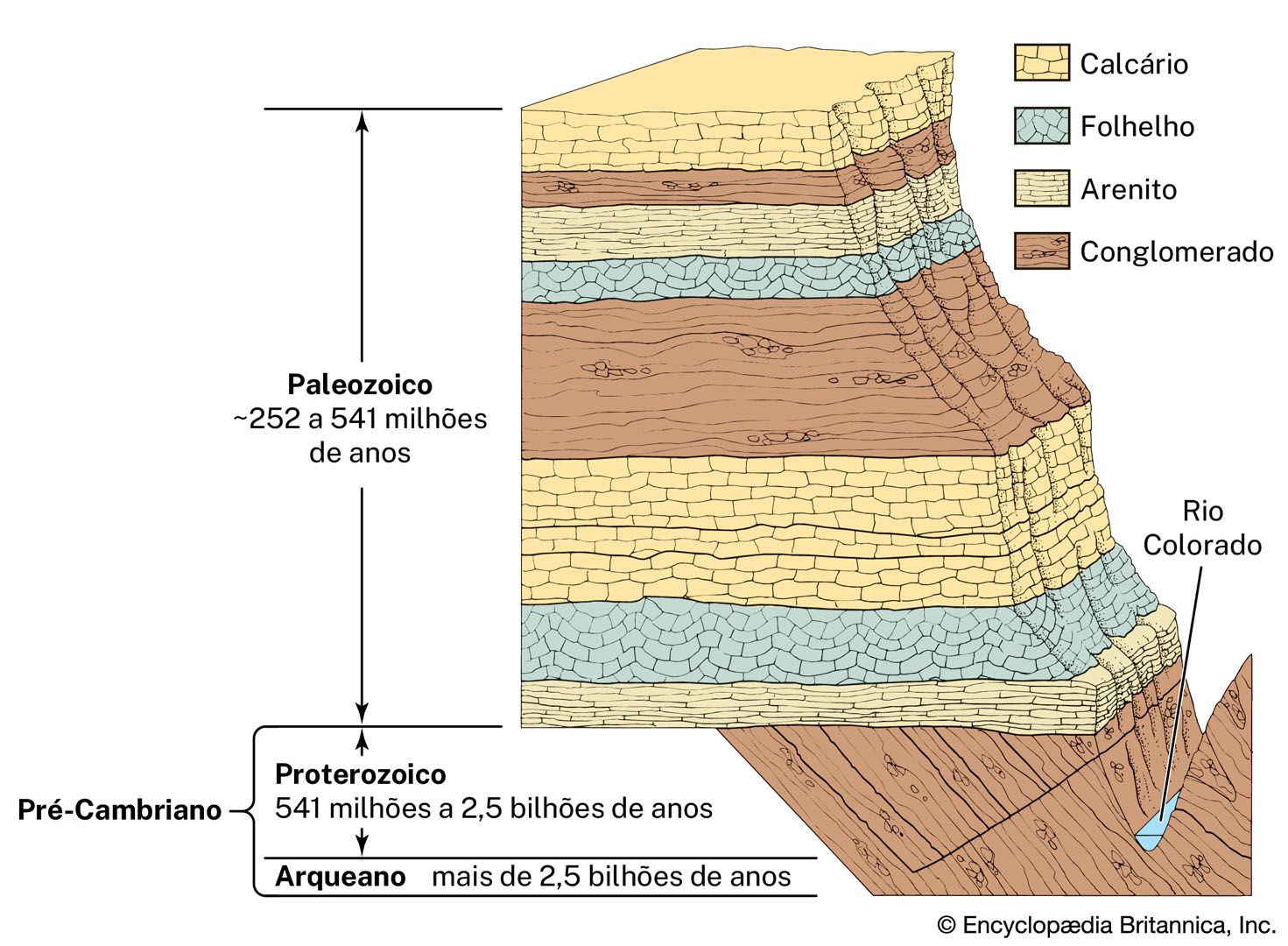
What is geologic time and how is it different from regular time?
Geologic time is the vast interval of Earth’s history, spanning approximately 4.6 billion years, that is recorded within the planet’s rock strata. While “regular” time is a continuous, linear progression used for daily life, geologic time functions as a specialized “calendar” for Earth’s history. It transforms an otherwise unordered series of isolated events into a coherent, unfolding narrative of a changing planet.110
The primary differences lie in how these intervals are defined and measured:
- Structure: Geologic time is subdivided into hierarchical, abstract units—eons, eras, periods, epochs, and ages—based on stratigraphy and the fossil record rather than fixed clock cycles.110
- Evidence: Boundaries in geologic time are delineated by significant changes in fossil forms or discontinuities in the rock record, such as mass extinctions or evolutionary shifts.110
- Quantification: Unlike the precise, human-centric measurement of seconds and hours, geologic time was historically relative. It is now numerically quantified using radiometric dating, which allows scientists to assign absolute ages to these ancient intervals.19
What are some common misconceptions about geologic time?
Understanding geologic time can be challenging because it operates on a scale vastly different from human experience. Several common misconceptions often arise when interpreting Earth’s history:
- Equating Rocks with Time: A frequent misunderstanding is the belief that rock sequences are always continuous. In reality, sediment deposition is rarely continuous, and significant gaps in the record are caused by erosion. These discontinuities, or unconformities, represent missing intervals of time that geologists must account for when reconstructing history.1125
- Confusing Processes with Time: Terms like “cycle” are sometimes used indiscriminately to describe both the physical rock layers (such as a cyclothem) and the time or processes involved in their formation. Distinguishing between the physical record and the temporal duration of the processes that created it is essential for clarity.9
- Provincial Bias: Early attempts to organize Earth’s history often suffered from “provincial bias,” where local geological observations were incorrectly assumed to have global applicability. Modern geochronology relies on integrating data from widely spaced outcrops to create a standardized, global geologic time scale.125
- Misinterpreting Relative vs. Absolute Age: There is often confusion between relative dating (the sequence of events) and absolute dating (the numerical age). While fossils help establish relative order, they must be calibrated with radiometric dating to provide a precise, absolute timeline.112
Sources
- geologic time — Encyclopædia Britannica
- A Journey Through Time Since the Precambrian — Encyclopædia Britannica
- geochronology — Encyclopædia Britannica
- stratigraphy — Encyclopædia Britannica
- geologic history of Earth - Time scales — Encyclopædia Britannica
- Earth sciences - Radiometric dating — Encyclopædia Britannica
- The Anthropocene Epoch: Adding Humans to the Chart of Geologic Time — Encyclopædia Britannica
- Major Mass Extinctions — Encyclopædia Britannica
- dating - Geologic column and its associated time scale — Encyclopædia Britannica
- geologic time — Merriam-Webster
- geology - Historical geology and stratigraphy — Encyclopædia Britannica
- dating - Distinctions between relative-age and absolute-age measurements — Encyclopædia Britannica
- cyclothem — Encyclopædia Britannica
- Earth sciences - Origins in prehistoric times — Encyclopædia Britannica
Published on · 4 min read