Priapulid
Priapulids are a phylum of predatory, marine, unsegmented worms that have existed for at least 540 million years. Their evolutionary history is deeply rooted…
What is the evolutionary history of priapulids and how long have they existed?
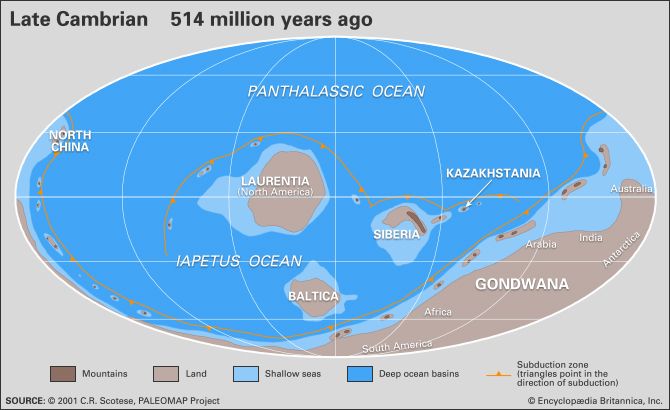
Priapulids are a phylum of predatory, marine, unsegmented worms that have existed for at least 540 million years. Their evolutionary history is deeply rooted in the Cambrian Period, as fossilized specimens that closely resemble modern species have been identified from deposits dating between approximately 540 million and 525 million years ago.1
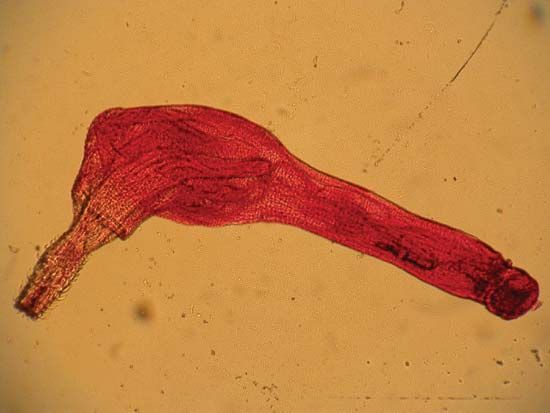
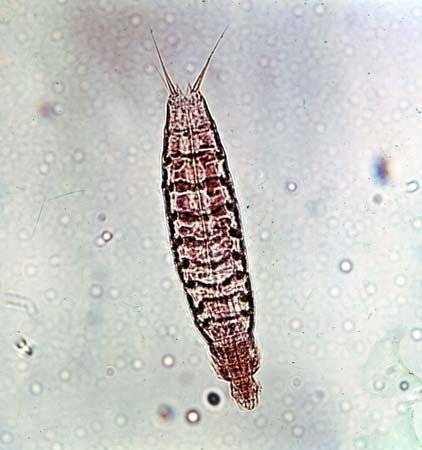
Because these worms lack mineralized skeletons, their fossil record is generally poor and relies on localities where conditions allowed for extraordinary preservation. Despite their ancient origins, priapulids remain distinct, with no clear evolutionary relationship to other animal groups. Modern priapulids are typically found in marine mud, ranging from several millimetres to 15 centimetres in length, and they continue to exhibit the same basic body plan—including a retractable presoma and a cuticle that molts—that characterized their ancestors during the early Paleozoic Era.21
Where are priapulids typically found in marine environments?
Priapulids are primarily found inhabiting marine mud environments. Their distribution is influenced by water temperature, with the largest species, reaching lengths of 10 to 15 centimetres, typically residing in colder seas, while smaller species, measuring only a few millimetres, are found in warmer marine waters.1
How many species of priapulids are known to exist?
There are approximately 15 known species of priapulids currently in existence. These predatory, unsegmented worms are found in marine environments, where they inhabit mud and exhibit a unique body plan that has remained largely unchanged since the Cambrian Period.1
What are some of the largest and smallest known priapulid species?
The size of priapulids varies significantly based on their habitat and species:
- Largest Species: These reach lengths of 10 to 15 centimetres (4 to 6 inches) and are typically found inhabiting colder marine seas.1
- Smallest Species: These are much smaller, measuring only several millimetres in length, and are generally found in warmer marine environments.1
While these size ranges are well-documented, the phylum Priapulida consists of only about 15 known species, all of which are predatory, unsegmented worms that have remained morphologically consistent since the Cambrian Period. since the Cambrian Period.1
Sources
- priapulid — Encyclopædia Britannica
- priapulid — Merriam-Webster
- Cambrian Period - Fossil record of the Precambrian-Cambrian transition — Encyclopædia Britannica
- Cambrian Period - Fauna — Encyclopædia Britannica
- Priapuloidea — Merriam-Webster
Published on · 2 min read