Cambrian Period
Cambrian rocks are globally significant as the first to contain diverse animal fossils, marking the Cambrian explosion of life. These formations are…
What are some of the unique geological formations or rock types associated with the Cambrian Period?
Cambrian rocks are globally significant as the first to contain diverse animal fossils, marking the Cambrian explosion of life. These formations are primarily marine, reflecting the period’s rising sea levels and the expansion of shallow continental shelves.1
Common rock types include:
- Siliceous Sandstone: Typically found in nearshore environments where wave action was prevalent.1
- Siltstone and Shale: Formed in deeper, calmer waters seaward from the shore. The Burgess Shale is the most famous example, renowned for its exceptional preservation of soft-bodied organisms buried by submarine mudslides.123
- Carbonate Rocks: In warm, low-latitude shallow waters, extensive platforms produced massive deposits of limestone and dolomite, similar to modern-day carbonate banks.1
While terrestrial deposits—such as floodplain sediments and windblown sand—exist, they are limited in extent, as the lack of land plants led to rapid erosion. The stratigraphic layering of these rocks often shows a transition from nearshore sandstone to deeper-water shale and carbonate, providing evidence of widespread marine transgression during the period.1
What is the Cambrian Period and where does it fit in Earth’s geological timeline?
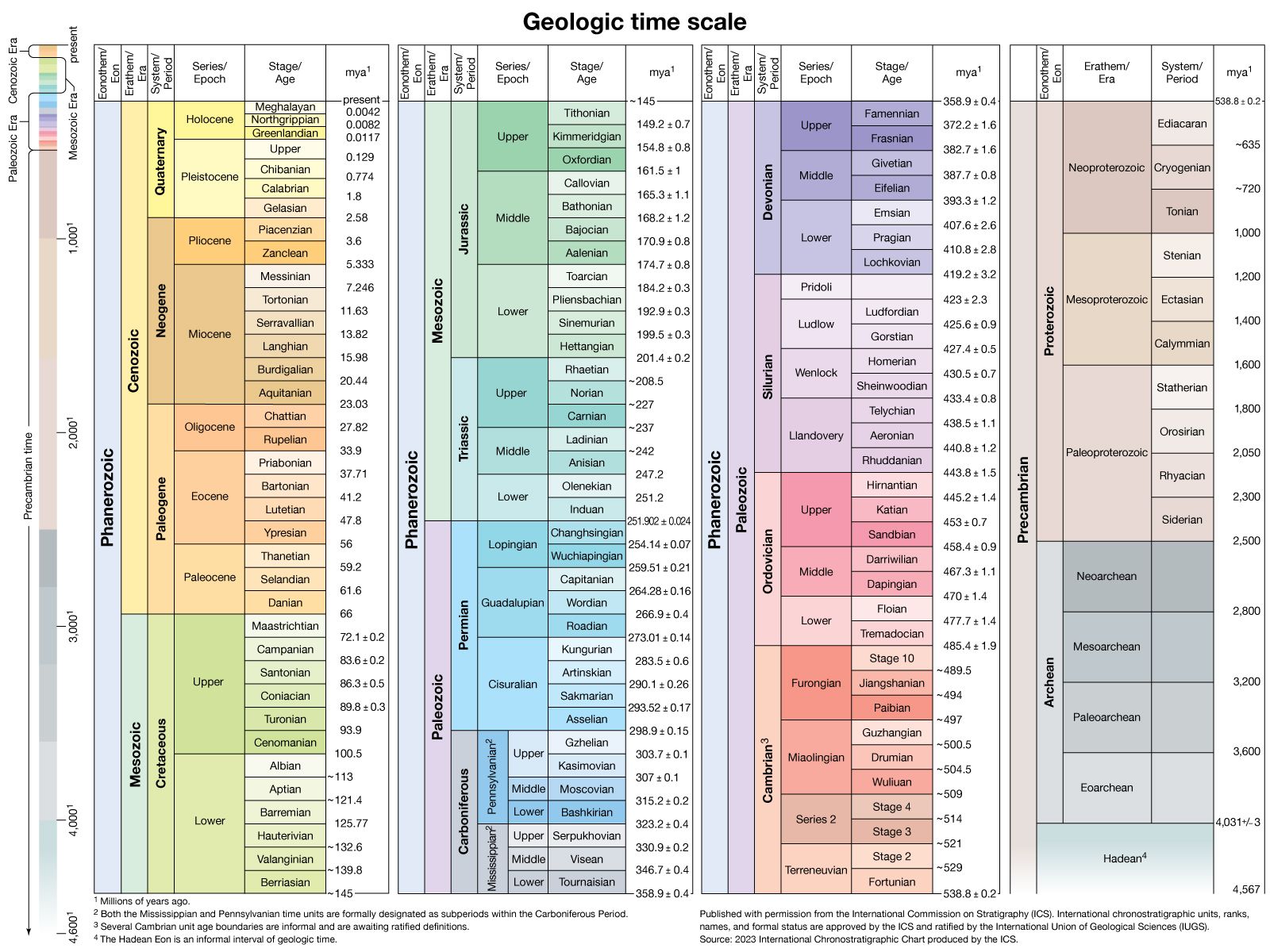
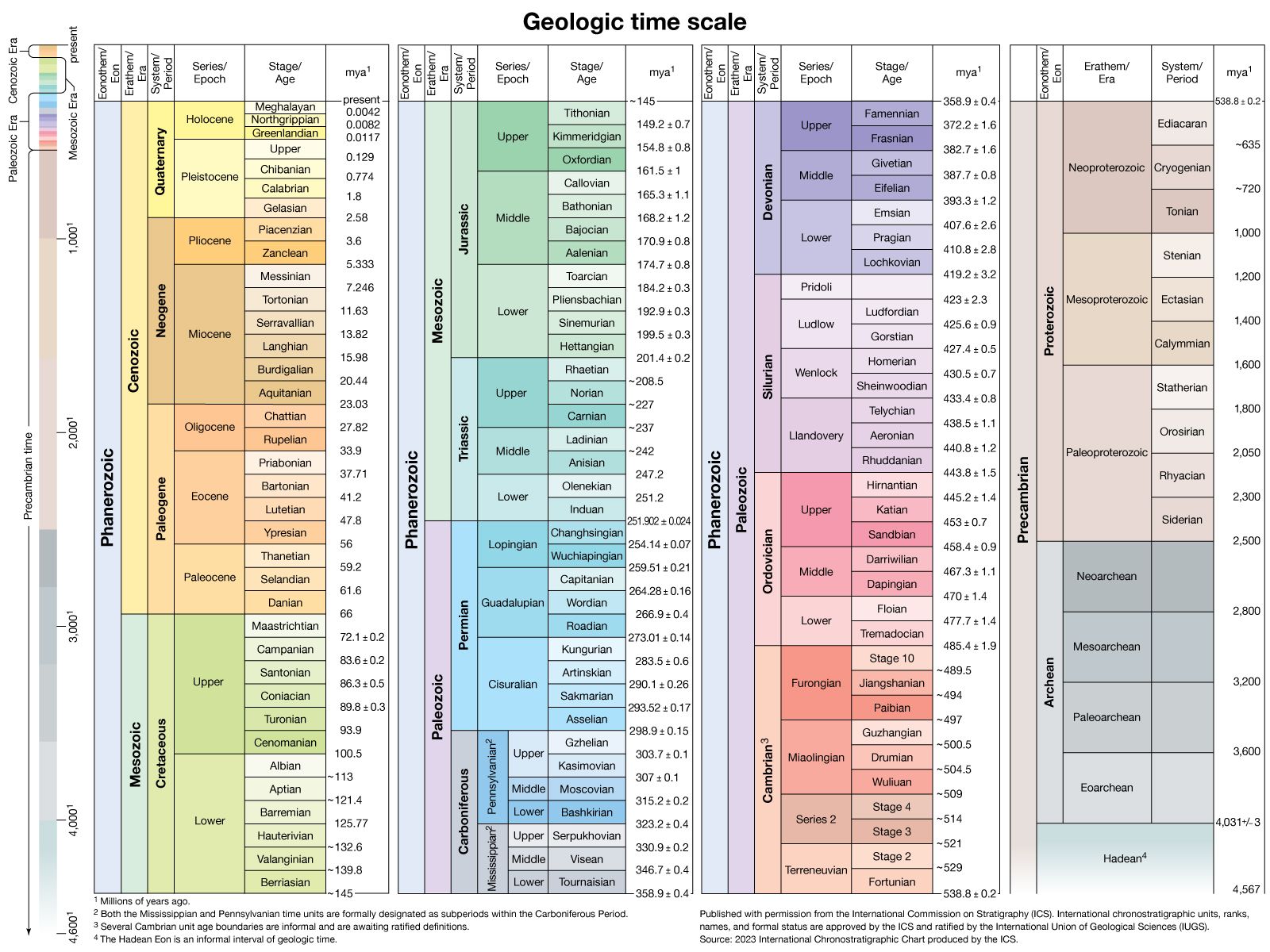
The Cambrian Period is the earliest time division of the Paleozoic Era, spanning from approximately 538.8 million to 485.9 million years ago. It marks the beginning of the Phanerozoic Eon, the current eon of geological time.4567
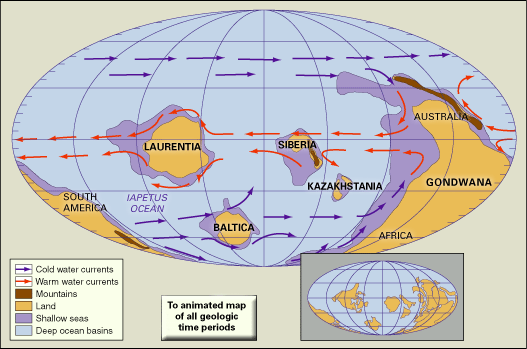
The period is defined by the Cambrian explosion, a significant interval of rapid evolutionary diversification that saw the emergence of numerous animal phyla. Geologically, the Cambrian was characterized by a global rise in sea level that flooded continental margins, creating shallow marine environments where life flourished. During this time, the supercontinent Gondwana was forming, while other landmasses like Laurentia, Baltica, and Siberia moved independently across the globe.75
The Cambrian System was named in 1835 by British geologist Adam Sedgwick after the Latin name for Wales, Cambria. It is followed in the geological timeline by the Ordovician Period, which was adopted as an intervening system to resolve historical debates regarding the boundary between Cambrian and Silurian rocks.56
How does the Cambrian Period relate to the concept of the ‘Cambrian Explosion’ in evolutionary history?
The Cambrian explosion refers to the rapid evolutionary diversification that occurred at the beginning of the Cambrian Period, roughly 541 to 530 million years ago. During this geologically brief interval, most major animal phyla—including the ancestors of modern species—emerged in the world’s oceans.489
The relationship between the period and this event is defined by several key factors:
- Fossil Record: The start of the Cambrian is marked by the evolution of hard body parts, such as calcium carbonate shells. These structures fossilize much more readily than soft tissues, making the biological record of this period significantly more complete and visible to researchers.84
- Environmental Drivers: Rising sea levels flooded continental margins, creating vast shallow marine environments. Increased erosion, fueled by these changes and warmer global temperatures, likely altered ocean chemistry and boosted oxygen levels, which may have supported the metabolic demands of larger, more complex organisms.54
- Ecological Innovation: Early Cambrian ecosystems saw the rise of complex behaviors, such as burrowing into seafloor sediments, and the development of the first carbonate reefs built by archaeocyathids.4
What were the major continents and their positions during the Cambrian Period?
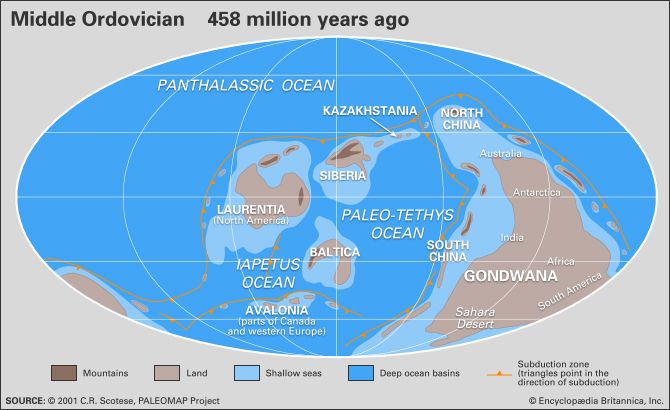
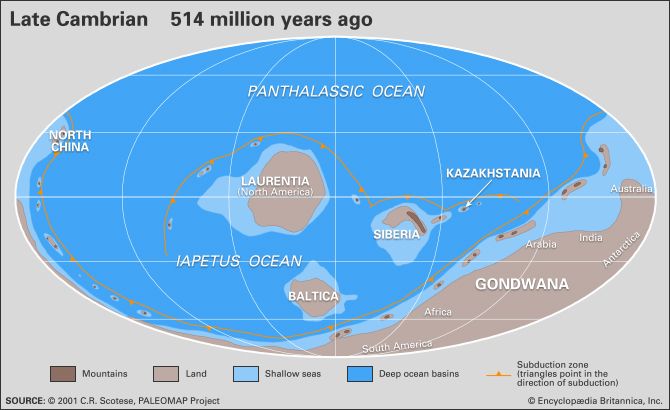
During the Cambrian Period, Earth’s geography was defined by the fragmentation of the supercontinent Rodinia and the subsequent assembly of the supercontinent Gondwana. The major landmasses and their positions were as follows:
- Gondwana: This massive supercontinent extended from low northern latitudes to high southern latitudes, nearly reaching the South Pole. It comprised present-day Australia, Antarctica, India, Africa, and South America.410
- Laurentia: Consisting of present-day North America and Greenland, this continent was positioned over the paleoequator for most of the period, characterized by extensive warm-water carbonate platforms.410
- Baltica: Comprising parts of modern-day western Europe and Scandinavia, this smaller continent was located in middle to high southern latitudes, resulting in cooler-water environments.410
- Siberia: A separate continent situated in low latitudes between Laurentia and Gondwana.410
The period was a time of tectonic transition, moving from the fragmentation of Rodinia toward the continental accretion that would characterize later eras.10
Sources
- Cambrian Period - Deposits with soft-bodied organisms — Encyclopædia Britannica
- Burgess Shale — Encyclopædia Britannica
- Cambrian Period - Types and distribution — Encyclopædia Britannica
- Cambrian Period: Top Questions — Encyclopædia Britannica
- Cambrian Period — Encyclopædia Britannica
- Cambrian Period - Boundaries and subdivisions of the Cambrian System — Encyclopædia Britannica
- Paleozoic Era — Encyclopædia Britannica
- Cambrian explosion — Merriam-Webster
- Cambrian explosion — Encyclopædia Britannica
- Cambrian Period - Paleogeography — Encyclopædia Britannica
- Ordovician Period - Paleogeography — Encyclopædia Britannica
Published on · 4 min read