Kinorhynch
Kinorhynchs are classified as members of the phylum Kinorhyncha. While they were historically grouped with nematodes, rotifers, and other small invertebrates…
How are kinorhynchs classified within the animal kingdom?
Kinorhynchs are classified as members of the phylum Kinorhyncha. While they were historically grouped with nematodes, rotifers, and other small invertebrates under the now-abandoned phylum Aschelminthes, modern classifications have moved away from this categorization.1
In some contemporary systems, Kinorhyncha is placed within the phylum Introverta, a grouping that also includes the classes Loricifera, Priapulida, and Acanthocephala. Because these microscopic marine invertebrates have not been fully analyzed through modern molecular methods, there is currently no universal consensus on their precise taxonomic placement within the animal kingdom.2
What are the distinguishing physical characteristics of kinorhynchs?
Kinorhynchs are microscopic marine invertebrates characterized by several distinct physical features:1
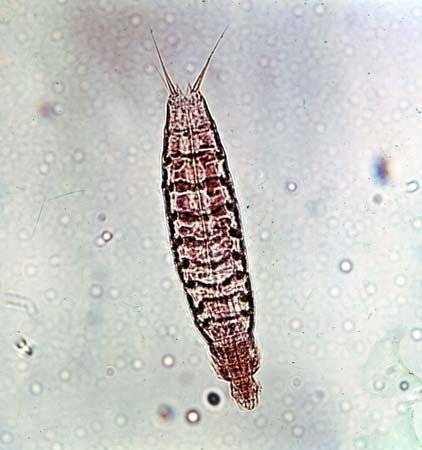
- Size and Appearance: They are typically less than 1 mm (0.04 inch) long and possess a bristly or spiny body that is yellowish or brownish in color.1
- Segmentation: The body is jointed and consists of 13 or 14 distinct segments.1
- Head Structure: The first segment, which functions as the head, is enlarged and features a conspicuous crown of curved spines known as “scalids”.1
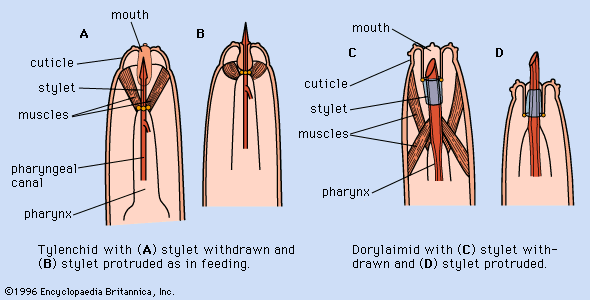
- Feeding Apparatus: The mouth is located on the head and is encircled by a ring of piercing stylets.1
- Locomotion: Kinorhynchs are capable of withdrawing their head into the front of their body. They move through marine sediment by alternating the thrusting and withdrawing of this head, creating a characteristic squirming motion.1
How do kinorhynchs reproduce and what is known about their mating behaviors?
Regarding the reproduction of kinorhynchs, the sexes are separate, meaning these organisms are dioecious. Their life cycle is characterized by the absence of free-living larvae, as the young develop directly into their adult form.
Currently, there is no specific information available in the provided records regarding their mating behaviors or the mechanisms of fertilization.
How do kinorhynchs move and feed?
Kinorhynchs utilize a specialized mechanism for both movement and feeding, relying on the unique structure of their head segment.
Movement
To navigate through marine sediment, such as mud or sand, kinorhynchs employ a distinct squirming motion. This is achieved by the alternate thrusting forward and withdrawing of their head into the front end of their body. When the animal is at rest, the head is typically retracted within the body.1
Feeding
The head segment is equipped with a mouth encircled by a ring of piercing stylets, which aid in the intake of food. Kinorhynchs are known to feed on the following:1
- Diatoms
- Certain protozoans
- Fine organic debris
These microscopic animals are highly efficient at inhabiting their environment, with some samples of sediment recording populations as dense as two million individuals per square meter.1
Sources
- kinorhynch — Encyclopædia Britannica
- Animal - Critical appraisal — Encyclopædia Britannica
Published on · 2 min read