Sponge
Sponges reproduce through both sexual and asexual means, adapting to their sessile lifestyle.
How do sponges reproduce, both sexually and asexually?
Sponges reproduce through both sexual and asexual means, adapting to their sessile lifestyle.12
Sexual Reproduction
Most sponges are hermaphroditic, capable of producing both eggs and sperm, though often at different times to avoid self-fertilization. Sperm are released into the water and carried by currents into another sponge. There, specialized cells called choanocytes capture the sperm and transport them to the eggs for fertilization. The resulting larvae are free-swimming for a short period before settling to develop into new adults.12
Asexual Reproduction
Asexual reproduction occurs through several methods:
- Gemmulation: This involves the formation of gemmules—aggregates of cells protected by a tough covering. These allow sponges to survive harsh conditions like drought or extreme temperatures, germinating into new sponges when environments become favorable.3
- Other Methods: Sponges may also reproduce via the formation of stolons (rootlike extensions) or through the simple fragmentation of the adult body.3
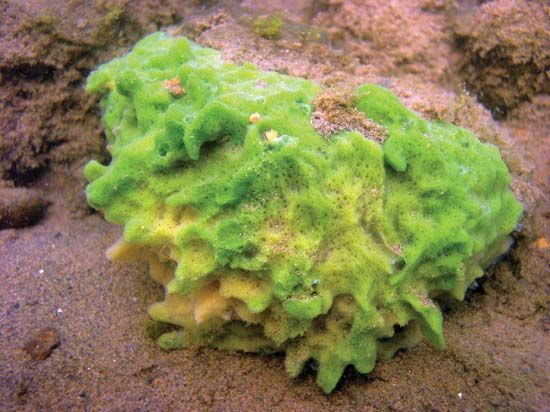
How do scientists classify sponges, and what are the main groups?
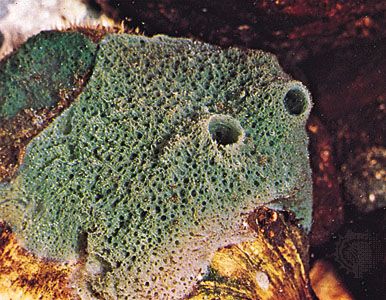
Scientists classify sponges within the Phylum Porifera, a group of primitive aquatic invertebrates characterized by their filter-feeding systems and lack of true tissues or organs. Classification is primarily based on the composition and structure of their skeletal elements, known as spicules.45
There are three main classes of living sponges:
- Class Calcarea: These sponges possess a skeleton composed of calcium carbonate spicules. They are typically small, inhabit shallow marine waters, and are divided into two subclasses, Calcinea and Calcaronea, based on larval development and cellular structure.4
- Class Hexactinellida (Glass Sponges): These exclusively marine sponges feature a skeleton made of siliceous (silica-based) spicules that are characteristically six-rayed (hexactinal). They are generally found in deep-water environments and lack spongin.45
- Class Demospongiae: This is the most diverse and abundant group, comprising over 95 percent of all known sponge species. Their skeletons are composed of siliceous spicules, spongin fibers, or a combination of both. This class includes a wide variety of forms, ranging from massive marine species to the freshwater sponge family.54
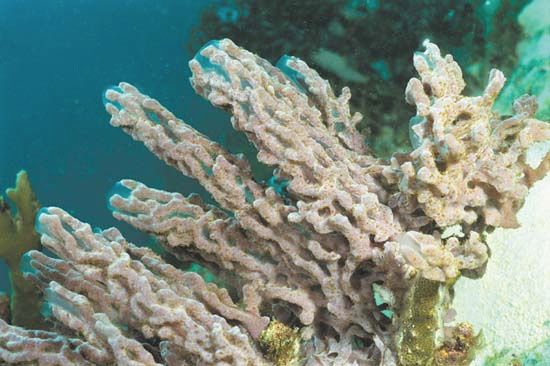
What role do sponges play in marine ecosystems?
Sponges play a multifaceted role in marine ecosystems, acting as both habitat providers and active participants in biological and geological processes.
Ecological Associations
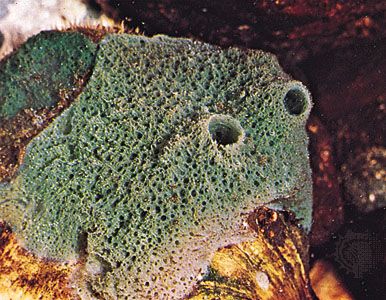
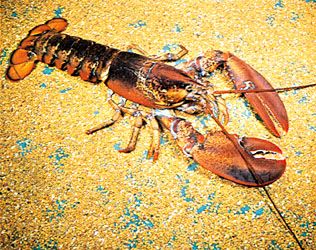
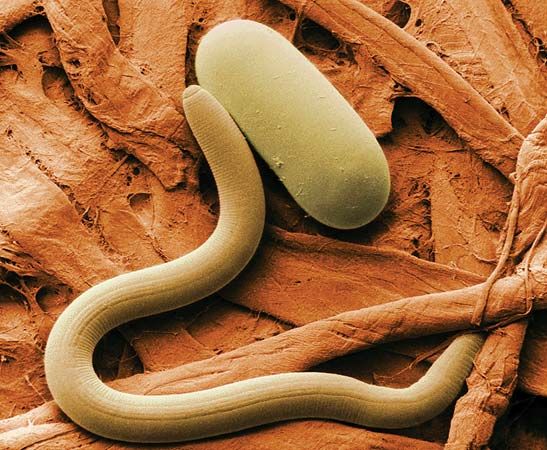
Sponges often serve as hosts for a vast array of organisms. Their complex internal canal systems provide shelter for crustaceans, nematode and polychaete worms, brittle stars, and bivalve mollusks, with some sponges housing thousands of individuals. Furthermore, they engage in significant symbiotic relationships with algae. These algae receive protection and metabolic waste from the sponge, while the sponge benefits from oxygen production, waste elimination, and sun screening.7
Environmental Impact
Sponges are essential for water filtration, using a system of canals to circulate water, which helps distribute nutrients and remove waste from the environment. However, some species, such as those in the family Clionidae, actively excavate calcium carbonate from shells and coral reefs. While this boring activity contributes to the breakdown of reef structures, it is a natural part of the ecosystem’s turnover. Additionally, sponges provide camouflage for animals like hermit crabs, which use the sponge’s disagreeable taste and smell as a chemical defense against predators.897
How have sponges been used by humans throughout history?
Humans have utilized sponges for various practical and medicinal purposes since ancient times. The soft, elastic skeletal frameworks of certain species in the class Demospongiae, such as Spongia officinalis, have long been valued for their absorbent properties.10
Historical and Traditional Uses
- Daily Life: In ancient Greece and Rome, sponges were commonly used as mops, tools for applying paint, and even as makeshift drinking vessels for soldiers.10
- Medicine: During the Middle Ages, burned sponge was believed to possess therapeutic properties and was used in the treatment of various diseases.10
- Modern Applications: While synthetic materials have largely replaced natural sponges for household cleaning and the traditional sponge bath, natural sponges remain in use today for specialized tasks in arts and crafts—such as pottery, jewelry making, and painting—as well as in surgical medicine.1011
Commercially valuable sponges are harvested from regions including the Mediterranean, the West Indies, and off the coast of Florida.10
Sources
- sponge - Life cycle — Encyclopædia Britannica
- Reproductive behaviour - Protozoans and sponges — Encyclopædia Britannica
- sponge - Asexual reproduction — Encyclopædia Britannica
- sponge - Annotated classification — Encyclopædia Britannica
- sponge - Evolution and paleontology — Encyclopædia Britannica
- siliceous sponge — Encyclopædia Britannica
- sponge - Form and function — Encyclopædia Britannica
- sponge - Associations with other organisms — Encyclopædia Britannica
- sponge - Habitats — Encyclopædia Britannica
- sponge - Importance — Encyclopædia Britannica
- bath sponge — Merriam-Webster
- sponge bath — Merriam-Webster
- sponge - Biochemical aspects — Encyclopædia Britannica
Published on · 4 min read