Prince Edward Island
Agriculture serves as a cornerstone of Prince Edward Island’s economy and is considered the province’s iconic industry. The sector remains a significant…
What role does agriculture play in Prince Edward Island’s economy and culture?
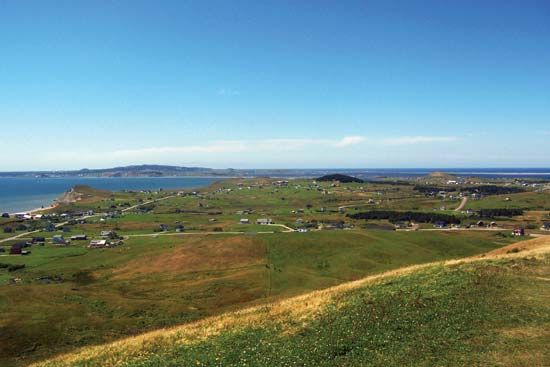
Agriculture serves as a cornerstone of Prince Edward Island’s economy and is considered the province’s iconic industry. The sector remains a significant economic base, with potatoes standing as the traditional primary crop. Beyond potato farming, the agricultural landscape includes the production of turnips, hay, and grains, alongside major dairy operations and the raising of cattle and hogs. In specific regions, the industry diversifies into tobacco cultivation and the raising of furbearing animals.1
Culturally, the province maintains a largely rural character, deeply rooted in its agricultural heritage. While the number of family farms has decreased, their individual acreage has grown, reflecting shifts in modern agricultural practices. Today, the provincial government continues to support this legacy by encouraging investment in bioscience related to agriculture and fisheries, aiming to modernize the sector while preserving its foundational role in island life. Furthermore, the island’s infrastructure, including the Confederation Bridge, facilitates the transport of these vital agricultural products to mainland markets.234
How does the Confederation Bridge impact Prince Edward Island’s connectivity and tourism?
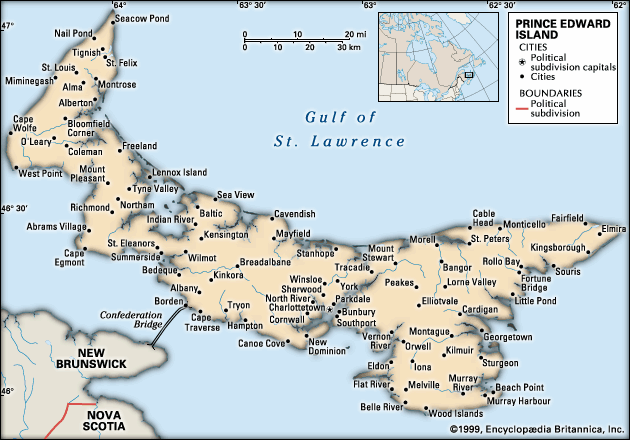
Completed in 1997, the Confederation Bridge serves as a vital link between Prince Edward Island and New Brunswick, fundamentally transforming the province’s connectivity. As the world’s longest bridge over ice-covered waters, it provides a reliable, year-round overland connection that replaced the reliance on traditional ferry services.42
This infrastructure has significantly improved the efficiency of the island’s logistics. Goods such as potatoes and pulpwood, which were previously shipped from southern and eastern ports, are now transported via truck across the bridge to mainland markets. While the provided search results do not explicitly detail specific tourism statistics, the bridge is a key component of the broader infrastructure investments that have historically supported the expansion of the province’s tourism sector. By facilitating easier access for travelers and freight, the bridge has become an essential element of the island’s modern economic framework.452
What is the population of Prince Edward Island, and how has it changed over time?
As of 2025, the estimated population of Prince Edward Island is 182,657, showing growth from the 154,331 residents recorded in 2021.6
Historically, the island’s population has been shaped by diverse waves of migration. While the majority of residents are descendants of early settlers from the British Isles—including Highland Scots, English, and Irish—the demographic landscape also includes descendants of Acadian families, British loyalists, and various European groups.7
In the 21st century, the province has experienced gradual population growth despite a declining birth rate that remains lower than the national average. This growth is primarily driven by a net influx of new immigrants. Unlike historical patterns dominated by Western migration, recent newcomers have increasingly arrived from China, South Korea, and Taiwan. Additionally, the Mi’kmaq First Nations continue to maintain a presence on the island, residing both on reserves and in their traditional ancestral homelands.87
How does the provincial government of Prince Edward Island function?
The provincial government of Prince Edward Island operates within a constitutional framework consisting of the lieutenant governor and an Executive Council. This council is selected from the 27 members of the Legislative Assembly and is led by the premier.9
The Executive Council manages a wide range of portfolios, including:
- Finance and municipal affairs
- Education and early childhood development
- Agriculture, fisheries, aquaculture, and rural development
- Environment, energy, and forestry
- Tourism and culture
- Justice and public safety
- Transportation and infrastructure renewal
- Innovation and advanced learning
- Community services, seniors, Indigenous affairs, and labour
- Health and wellness9
At the federal level, the province is represented in the Canadian Parliament by four members in the House of Commons—one for each electoral district—and four appointed senators. Historically, the provincial government has evolved from its colonial roots to its current role, which includes fostering economic growth in sectors such as aerospace, bioscience, information technology, and renewable energy.296
Sources
- Prince Edward Island - Agriculture and fishing — Encyclopædia Britannica
- Prince Edward Island - History — Encyclopædia Britannica
- Prince Edward Island - Settlement patterns — Encyclopædia Britannica
- Prince Edward Island - Transportation and telecommunications — Encyclopædia Britannica
- Prince Edward Island — Encyclopædia Britannica
- Prince Edward Island: Country Facts — Encyclopædia Britannica
- Prince Edward Island - Demographic trends — Encyclopædia Britannica
- Prince Edward Island - Population — Encyclopædia Britannica
- Prince Edward Island - Constitutional framework — Encyclopædia Britannica
Published on · 3 min read