Bell Island
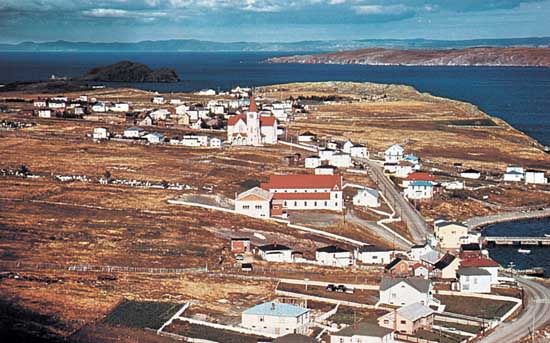
Bell Island is an island located in Conception Bay off the Avalon Peninsula in southeastern Newfoundland, Canada. Measuring approximately 6 miles long and 3…
What is Bell Island?
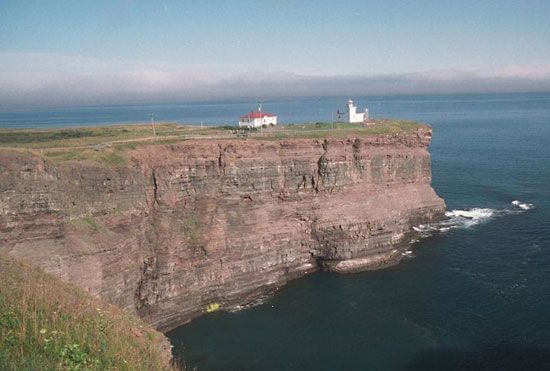
Bell Island is an island located in Conception Bay off the Avalon Peninsula in southeastern Newfoundland, Canada. Measuring approximately 6 miles long and 3 miles wide, the island derives its name from a large, bell-shaped rock situated off its western end.12
Historically, the island was a globally significant producer of iron ore from 1895 until 1966. Today, the local economy is primarily supported by fishing and subsistence agriculture. The island is densely populated, with its largest town, Wabana, maintaining regular ferry connections to the mainland.12
How were iron ore mines operated on Bell Island?
Mining operations on Bell Island were centered on the extraction of rich deposits of red hematite iron ore, which began in 1895. The town of Wabana developed specifically to support these industrial activities, growing significantly as the site became one of the world’s major producers of iron ore.13
The operations continued for over 70 years, sustaining a large population that reached more than 8,000 residents by 1961. However, the mines faced increasing challenges, including marketing difficulties and the high phosphorus content of the extracted ore. These factors ultimately led to the total cessation of mining in 1966, which triggered a period of economic depression and widespread emigration from the island.3
What is the history of the Avalon Peninsula?
The Avalon Peninsula, located in southeastern Newfoundland, Canada, has a rich history shaped by early European exploration and colonial ambition. Likely visited by John Cabot in 1497, the region became a focal point for 17th-century English settlement efforts.4
In 1610, the first English settlement in what is now Canada was established at Cupids on Conception Bay. Shortly after, Sir George Calvert founded the colony of Avalon at Ferryland in 1621, naming it after the legendary Isle of Avalon. While these early colonies struggled, a permanent population of planters eventually took root, working alongside migratory fishermen.45
The peninsula also holds significant modern historical milestones:
- 1866: The first successful transatlantic cable was landed at Heart’s Content.4
- 1941: The Atlantic Charter was signed by Franklin D. Roosevelt and Winston Churchill in Placentia Bay.4
Today, the peninsula remains the most densely populated region of Newfoundland, anchored by the capital, St. John’s.46
How does the ferry system support island life?
Ferries serve as a vital lifeline for island communities, providing essential connectivity for passengers and freight where permanent infrastructure like bridges or tunnels is absent or impractical. Historically, ferries were the primary means of crossing large bodies of water, and they remain critical in regions like Newfoundland and Labrador, where they link coastal settlements to one another and connect the island to mainland Canada settlements to one another and connect the island to mainland Canada.89
In many island economies, ferry systems facilitate the movement of goods and people that would otherwise be isolated. For instance, before the completion of the Confederation Bridge, Prince Edward Island relied entirely on ferry services to transport products like potatoes and pulpwood to the mainland. Similarly, in Newfoundland, ferry lines continue to support transportation between the island and Labrador, as well as between various coastal communities. While the rise of road networks and bridges has replaced some ferry routes, they remain indispensable for maintaining social and economic ties in densely populated coastal areas and remote regions alike.1098
Sources
- Bell Island — Encyclopædia Britannica
- Conception Bay — Encyclopædia Britannica
- Wabana — Encyclopædia Britannica
- Avalon Peninsula — Encyclopædia Britannica
- George Calvert, 1st Baron Baltimore — Encyclopædia Britannica
- Newfoundland and Labrador - Early settlement — Encyclopædia Britannica
- Newfoundland and Labrador - Avalon Peninsula — Encyclopædia Britannica
- ferry — Encyclopædia Britannica
- Newfoundland and Labrador - Transportation and telecommunications — Encyclopædia Britannica
- Prince Edward Island - Transportation and telecommunications — Encyclopædia Britannica
Published on · 2 min read