Rag Worm
Rag worms, members of the class Polychaeta within the phylum Annelida, are characterized by their elongated, multi-segmented bodies, which can exceed 200…
What are the defining characteristics of rag worms, and how do they differ from other annelids?
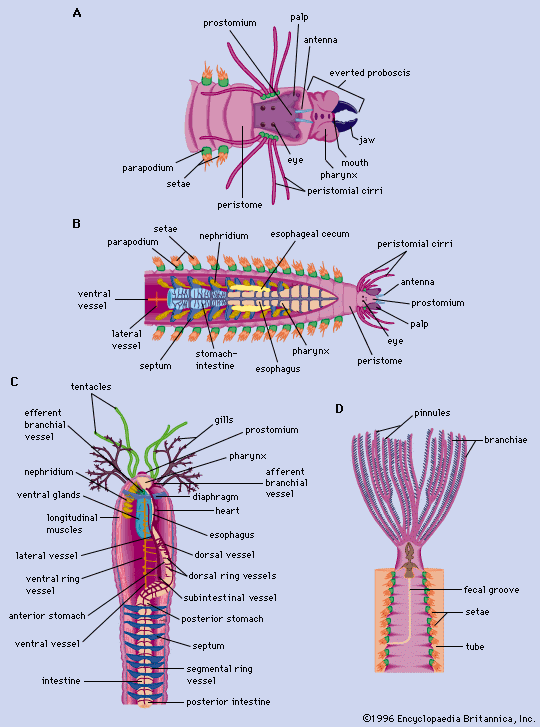
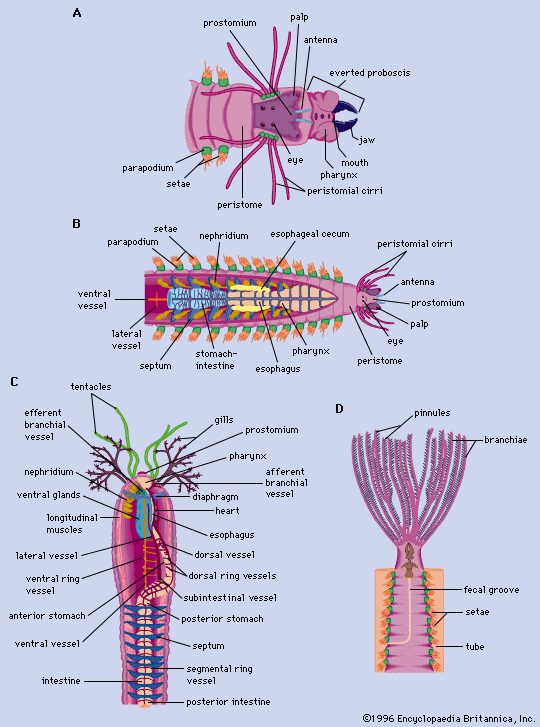
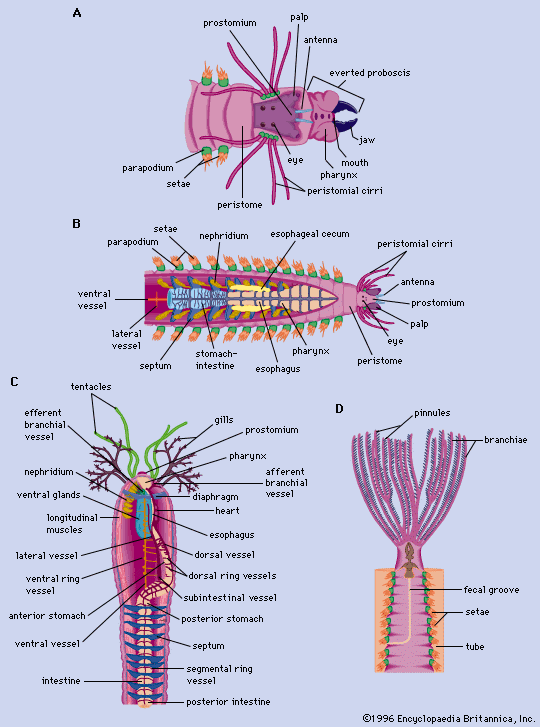
Rag worms, members of the class Polychaeta within the phylum Annelida, are characterized by their elongated, multi-segmented bodies, which can exceed 200 segments. They possess a well-defined head featuring four eyes, two tentacles, and sharp, retractable jaws used for predation. A primary defining feature is the presence of parapodia—flat, lateral outgrowths equipped with bristles—on most body segments, which serve as organs for both locomotion and gas exchange.12
Rag worms differ from other annelids, such as oligochaetes (earthworms) and leeches, in several key ways:
- Reproductive Structures: Unlike oligochaetes and leeches, which are characterized by the presence of a clitellum for reproduction, rag worms typically release sex cells into the water, where fertilization occurs to produce a trochophore larva.134
- Habitat and Morphology: While many annelids have adapted to terrestrial or freshwater environments, rag worms are primarily marine. They lack the clitellum found in the Clitellata group (oligochaetes and leeches) and exhibit distinct predatory behaviors supported by their complex jaws and parapodia.124
What are some common species of rag worms, and how do they vary?
Rag worms, which belong to the family Nereidae, exhibit significant variation in size, coloration, and reproductive strategy. While they share a common body plan—featuring a well-defined head with retractable jaws, four eyes, and numerous segments equipped with parapodia—specific species differ in their habitats and biological traits.16
Common Species and Variations
- Nereis virens: This is a notably large species, capable of reaching lengths up to 80 cm (31.5 inches). It is found on both sides of the North Atlantic and is frequently utilized by fishermen as bait.1
- Nereis limnicola: Recognized as the most common North American species, it inhabits both the Atlantic and Pacific coasts.1
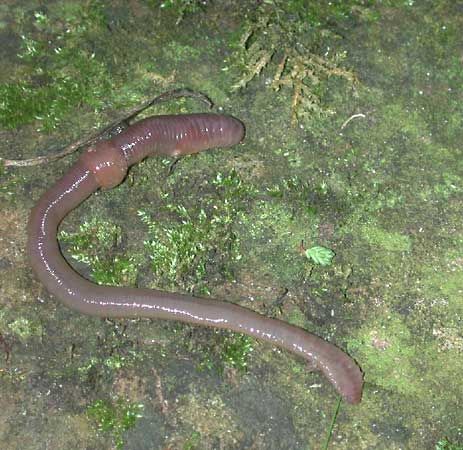
- General Variation: Rag worms vary in length from 2.5 to 90 cm (1 inch to 3 feet) and display a range of colors, including brown, bright red, and bright green.1
While most species are dioecious (having separate sexes) and release gametes into the water for external fertilization, some are simultaneous hermaphrodites capable of self-fertilization. Furthermore, while many species mate at the water surface, others complete the reproductive process within their burrows.1
What role do rag worms play in their ecosystems, particularly in marine food webs?
Rag worms play a significant role in marine ecosystems as active predators within the benthic zone. By feeding on other worms and various tiny sea animals, they function as important regulators of small invertebrate populations in shore and marine environments.1
Their presence also influences the physical structure of their habitat. Many species construct shallow burrows in the sea bottom, a behavior that helps aerate marine sediments and facilitates the cycling of nutrients within the seafloor. Furthermore, as a common food source for various fish and larger marine predators, they serve as a vital link in the marine food web, transferring energy from smaller organisms to higher trophic levels.1
How do rag worms reproduce, and what is their life cycle like?
Rag worms, which belong to the family Nereidae, exhibit diverse reproductive strategies, often involving complex physiological changes and environmental synchronization.
Reproductive Strategies
Most rag worms are dioecious, meaning they have separate sexes, though some species are simultaneous hermaphrodites capable of self-fertilization. In many species, the worm undergoes a transformation near mating time, where the rear portion of the body becomes an epitoke—a specialized reproductive form packed with eggs or sperm.189
This process is often synchronized with environmental cues, such as lunar cycles, to ensure mass spawning. During these events, epitokes detach or swarm to the water surface, where they engage in mass shedding of gametes. This behavior is frequently mediated by chemical signals, such as fertilizin, which attracts males and stimulates the release of sex cells. In some species, bioluminescence may also assist in species recognition and attraction. While many species spawn at the surface, others complete the reproductive process within their burrows.981
Life Cycle
Following external fertilization, a spherical larva known as a trochophore emerges from the egg. In many species, the female dies shortly after the reproductive event is complete.1
Sources
- rag worm — Encyclopædia Britannica
- annelid - Evolution and paleontology — Encyclopædia Britannica
- Nereidae — Merriam-Webster
- annelid - Critical appraisal — Encyclopædia Britannica
- nereis — Merriam-Webster
- polychaete — Encyclopædia Britannica
- nereid — Merriam-Webster
- Reproductive behaviour - Segmented worms — Encyclopædia Britannica
- Animal reproductive system - Annelids and mollusks — Encyclopædia Britannica
Published on · 3 min read