Oligochaete
Oligochaetes, such as earthworms, move and burrow through soil and sediment using a method known as peristaltic locomotion. This process relies on the…
How do oligochaetes move and burrow through soil or sediment?
Oligochaetes, such as earthworms, move and burrow through soil and sediment using a method known as peristaltic locomotion. This process relies on the animal’s hydrostatic skeleton, a fluid-filled body cavity that maintains a constant volume, allowing muscles to work against the internal pressure.12
Locomotion is achieved through the coordinated, alternating contraction of two sets of muscles:
- Circular muscles: When these contract, the worm’s body extends and elongates, pushing the anterior end forward into the substrate.1
- Longitudinal muscles: When these contract, the body shortens and thickens, which anchors the worm in place within the soil or sediment.1
By repeating these waves of contraction and relaxation, the worm effectively “creeps” or burrows through its environment. The setae—small, bristle-like structures embedded in the body wall—provide necessary traction against the substrate, preventing the worm from slipping as it moves. This rhythmic muscular action is essential for their ecological role in turning over and aerating the soil.134
What are some common examples of oligochaetes and where can they be found in nature?
Oligochaetes are a diverse group of annelid worms found globally in a variety of environments, including moist soil, freshwater, and marine habitats.18
Common Examples
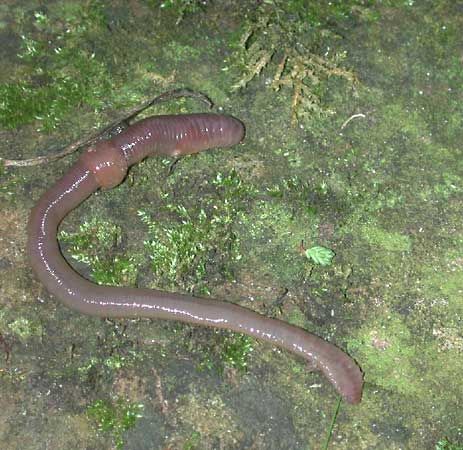
- Earthworms: The most familiar oligochaetes, these terrestrial worms belong to the class Oligochaeta. A well-known species is Lumbricus terrestris, commonly referred to as the night crawler1. Other species, such as Allolobophora chlorotica, are notable for their distinct green coloration.9
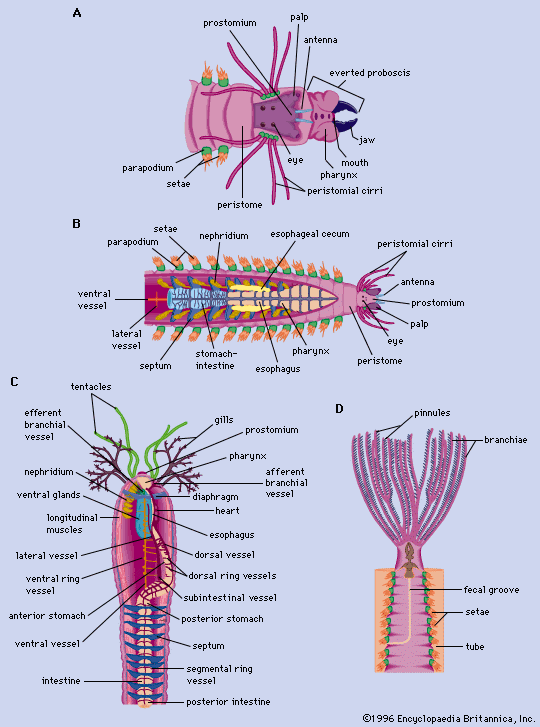
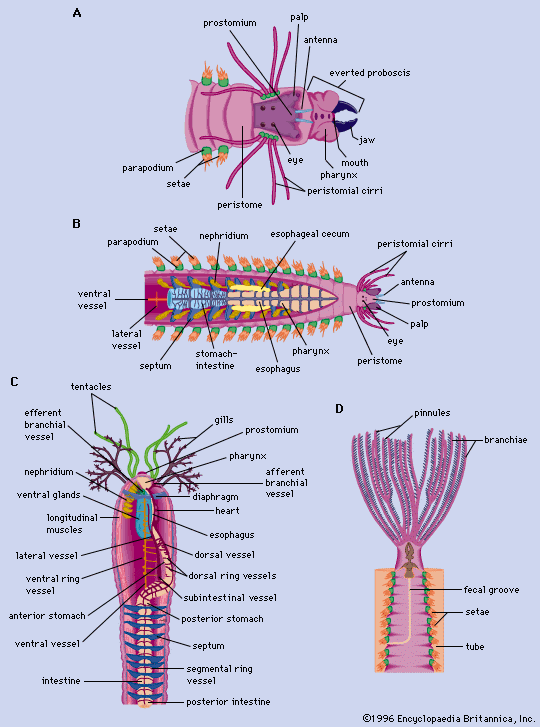
- Tubifex worms: These are slender, reddish aquatic worms belonging to the genus Tubifex. They are frequently found in freshwater or brackish environments, where they construct and live in protective tubes.10
Natural Habitats
Oligochaetes are widely distributed across the planet. Their specific habitat depends on the species:1
- Terrestrial: Earthworms inhabit virtually all soils that provide sufficient moisture and organic content to sustain them.9
- Aquatic: Many smaller oligochaete species reside in freshwater ecosystems, while a smaller number of species are marine, typically favoring shallow or estuarial waters.8
How have oligochaetes evolved over time and what is their evolutionary history?
Oligochaetes are believed to have evolved from marine polychaete ancestors, likely transitioning from marine environments to freshwater habitats. One hypothesis suggests this shift occurred in marine swamps where the ability to survive periodic drying—facilitated by the development of egg cocoons—provided an evolutionary advantage. Alternatively, some researchers propose that primitive oligochaetes were adapted to permanent freshwater conditions from the start.12
The evolutionary history of oligochaetes is difficult to trace through the fossil record because these worms lack hard body parts, leaving behind almost no physical remains. While some ancient burrows from the Precambrian era have been attributed to wormlike creatures, these interpretations remain uncertain.12
Taxonomically, oligochaetes are distinguished from polychaetes by their lack of specialized heads and parapodia, as well as their direct life histories, which do not include a trochophore larval stage. Reproductive structures serve as the primary criteria for classifying the various orders of oligochaetes, such as Lumbriculida, Monilogastrida, and Haplotaxida, each of which is thought to have evolved separately from primitive ancestors. Furthermore, it is widely accepted that leeches evolved from primitive oligochaetes, sharing traits like hermaphroditism and the presence of a clitellum.13912
How do oligochaetes reproduce and what is special about their regenerative abilities?
Oligochaetes, such as the common earthworm, exhibit fascinating reproductive strategies and remarkable regenerative capabilities.
Reproduction
Most oligochaetes are simultaneous hermaphrodites, meaning each individual possesses both male and female reproductive organs.115
- Sexual Reproduction: During mating, two worms align in a head-to-tail position, exchanging sperm that is stored in specialized sacs. A girdle-like structure called the clitellum secretes a mucous tube that slides along the body, collecting eggs and stored sperm to form a protective cocoon. Fertilization occurs within this cocoon, which acts as a nest for the developing young.1615
- Asexual Reproduction: While sexual reproduction is standard for many, asexual reproduction is common among aquatic oligochaetes. Some species reproduce by dividing into chains of individuals that eventually break apart, while others utilize parthenogenesis, where eggs develop without fertilization.15
Regenerative Abilities
Oligochaetes are among the most highly organized animals capable of complete regeneration, though their power to do so varies by species.1718
- Process: Regeneration typically involves the formation of a blastema at the wound site, where new tissue develops from existing cells. This process is energy-intensive, often requiring the depletion of stored glycogen near the injury16.17
- Limitations: While they can often regenerate both forward and backward, the ability is generally more extensive for posterior (tail) replacement. Anterior regeneration is more complex and typically requires the presence of the central nerve cord. In some cases, if a worm is cut, it may even regenerate a head at both ends.1817
Sources
- oligochaete — Encyclopædia Britannica
- Locomotion - Bottom locomotion — Encyclopædia Britannica
- annelid - External features — Encyclopædia Britannica
- skeleton - The hydrostatic skeleton — Encyclopædia Britannica
- skeleton - Skeletomusculature of a mobile coelenterate — Encyclopædia Britannica
- echinoderm - Burrowing — Encyclopædia Britannica
- annelid - Oligochaetes — Encyclopædia Britannica
- earthworm — Encyclopædia Britannica
- Oligochaeta — Merriam-Webster
- tubifex worm — Merriam-Webster
- annelid - Distribution and abundance — Encyclopædia Britannica
- annelid - Evolution and paleontology — Encyclopædia Britannica
- taxonomy - Classification since Linnaeus — Encyclopædia Britannica
- oligochaete — Merriam-Webster
- Reproductive behaviour - Segmented worms — Encyclopædia Britannica
- annelid - Regeneration — Encyclopædia Britannica
- annelid - Reproduction — Encyclopædia Britannica
- Regeneration - Annelids — Encyclopædia Britannica
- Reproduction - Reproduction of organisms — Encyclopædia Britannica
Published on · 4 min read