River Boyne
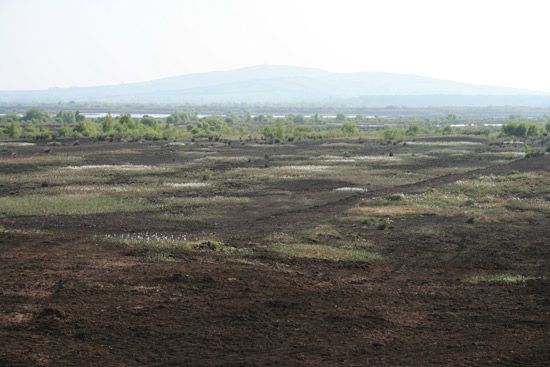
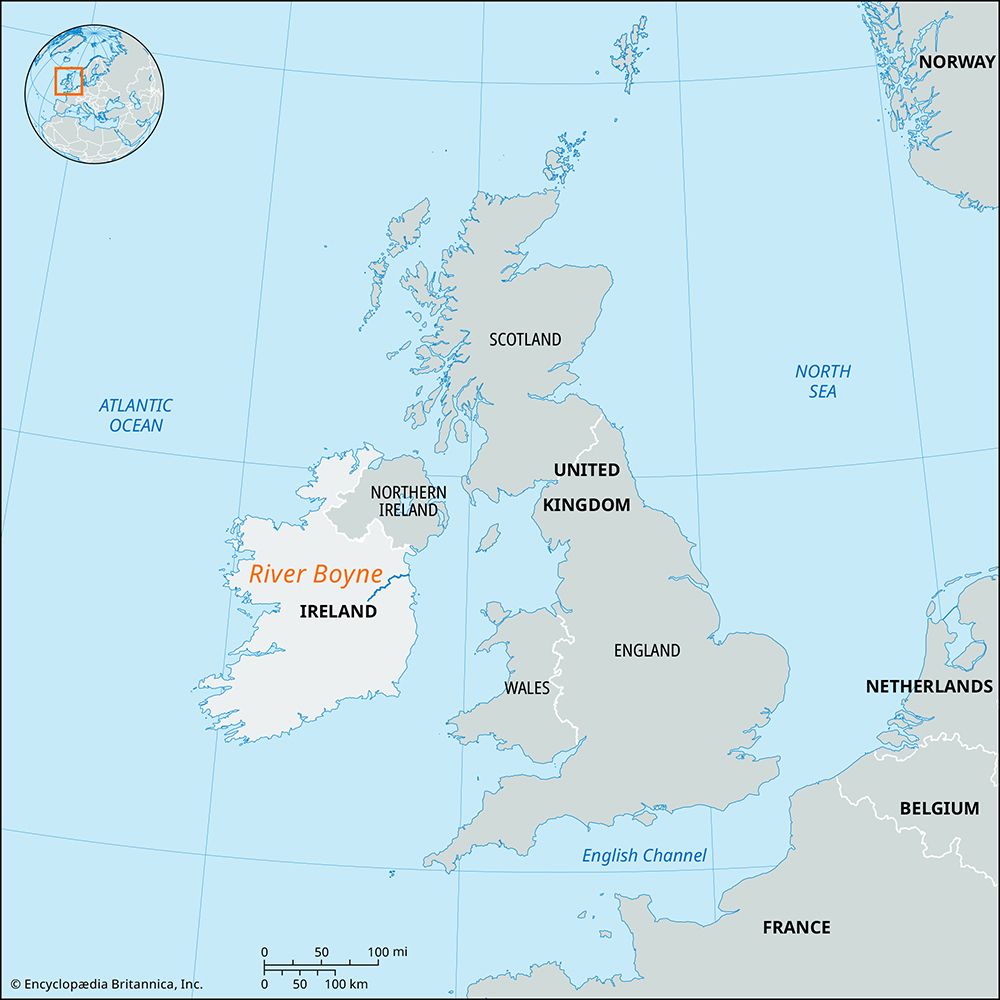
The River Boyne is a 70-mile (110 km) river located in eastern Ireland. It rises in the Bog of Allen in County Kildare and flows northeast, entering the…
What is River Boyne?
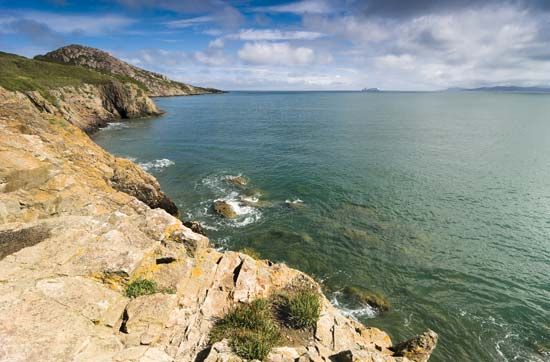
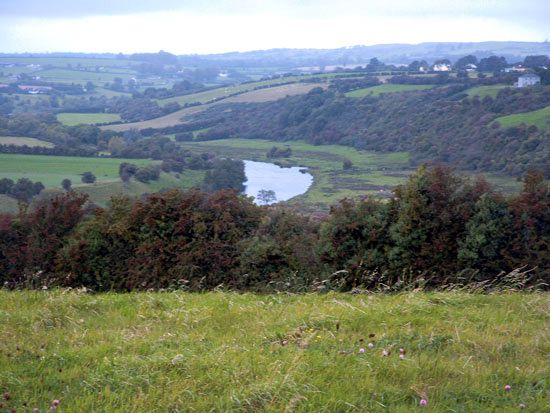
The River Boyne is a 70-mile (110 km) river located in eastern Ireland. It rises in the Bog of Allen in County Kildare and flows northeast, entering the Irish Sea just south of Drogheda.12
The river valley is of immense historical and archaeological importance. It is home to the Brú na Bóinne archaeological ensemble, which includes significant Neolithic passage graves such as Newgrange, Knowth, and Dowth. Nearby lies Tara, the ancient seat of the high kings of Ireland.13
Additionally, the river is famous as the site of the Battle of the Boyne in 1690, a pivotal conflict between William III and the deposed James II that helped secure William’s position on the throne.14
What are the Neolithic passage graves at Newgrange?
Newgrange is a renowned Neolithic passage grave located in the River Boyne valley in County Meath, Ireland. Completed around 3200 BCE by Stone Age farmers, it predates the Egyptian pyramids and is considered one of the finest examples of its kind in Europe.56
The monument features a massive circular mound of stone and turf, approximately 279 feet in diameter and 43 feet high. A narrow, 62-foot-long slab-lined passage leads to a central burial chamber with three alcoves, where the remains of elite individuals—likely priests or rulers—were interred.56
A remarkable architectural feat, the tomb is aligned with the winter solstice. Each year around December 21, a shaft of sunlight penetrates a roofbox above the entrance, illuminating the passage and the chamber’s interior. The site is also famous for its complex stone carvings, including spirals and zigzags, which may reflect astronomical observations or religious beliefs. Together with the nearby sites of Knowth and Dowth, Newgrange is a designated World Heritage site designated World Heritage site.56
Who were the high kings of Ireland at Tara?
Tara served as the seat of a dynasty of Uí Néill kings during the first five centuries of the Christian era. By the 6th century, these descendants of Niall of the Nine Hostages claimed to be overkings of three provinces: Ulster, Connaught, and Meath.78
While these rulers later claimed to be kings of all of Ireland, their actual power rarely extended over Munster or the majority of Leinster. From 734 to 1002, two branches of Niall’s descendants—the northern Cenél nEogain and the southern Clan Cholmáin—alternated as kings of Ireland. It was not until the 11th century that Brian Boru of Munster secured a true high kingship (árd rí Éireann) over the entire country.89
What was the outcome of the Battle of the Boyne?
The Battle of the Boyne, fought on July 1, 1690, resulted in a victory for William III over the exiled James II. While the battle was a success for William, it was not immediately decisive; he failed to destroy the Jacobite army, which retreated to Limerick to continue the resistance until the Treaty of Limerick in 1691.211
Following the battle, James II fled to France, and William entered Dublin on July 6, 1690, where he issued the Declaration of Finglas, demanding Irish repentance or the forfeiture of lands.11
Beyond Ireland, the outcome significantly influenced the European balance of power. The defeat of the Franco-Irish forces reassured the League of Augsburg that Britain would actively resist the expansionism of Louis XIV, ultimately contributing to the conclusion of the War of the Grand Alliance by 1697.11
Sources
- River Boyne — Encyclopædia Britannica
- Battle of the Boyne — Encyclopædia Britannica
- Boyne — Merriam-Webster
- list of World Heritage sites - Ireland — Encyclopædia Britannica
- Ireland Has It All, Including These 12 Incredible Feats of Architecture - Newgrange Burial Chamber — Encyclopædia Britannica
- Newgrange — Encyclopædia Britannica
- Tara — Encyclopædia Britannica
- Ireland - Early political history — Encyclopædia Britannica
- Northern Ireland - Mythic history — Encyclopædia Britannica
- Ireland - Political and social organization — Encyclopædia Britannica
- Battle of the Boyne - Aftermath and significance — Encyclopædia Britannica
Published on · 3 min read