River Slaney
The River Slaney is a 73-mile (118 km) river in Ireland that rises on Lugnaquillia Mountain in County Wicklow. It follows a course that turns westward…
What is River Slaney?
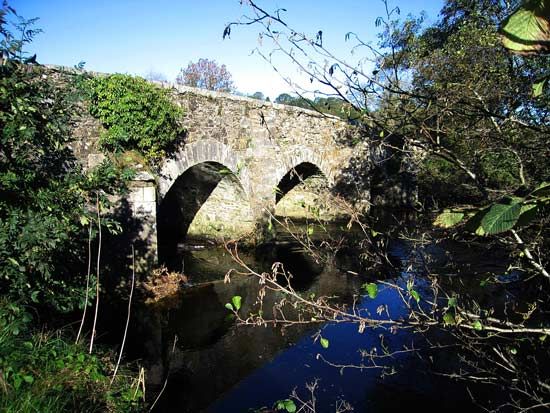
The River Slaney is a 73-mile (118 km) river in Ireland that rises on Lugnaquillia Mountain in County Wicklow. It follows a course that turns westward through the Glen of Imail before flowing south through the agricultural lowlands of County Carlow.1
As it continues southeast through the Slaney Gap, the river is joined by major tributaries, including the Derry and the Bann. Near Enniscorthy, the river becomes tidal, and it eventually empties into Wexford Harbour. Historically, the river was significant for barge traffic, with quays constructed in the 19th century to facilitate shipping. Today, the Slaney is recognized as one of the major rivers in eastern Ireland, known for its salmon fisheries.12
What are some other major rivers in Ireland?
Ireland features a diverse network of rivers, ranging from the long, slow-moving inland waterways to shorter, rapid coastal streams. These rivers are often categorized by their geographic location and drainage patterns.4
Major Irish Rivers
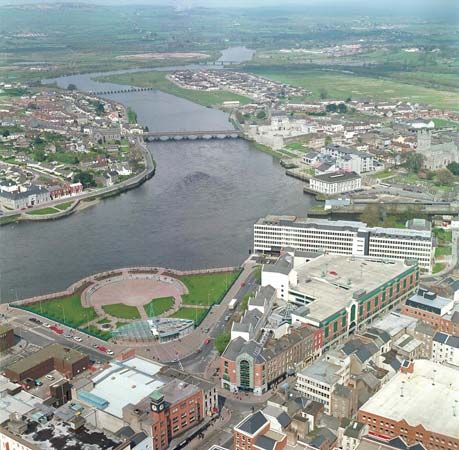
- River Shannon: As the longest river in Ireland, it flows for approximately 161 miles (259 km). It serves as the primary drainage system for the central lowlands, passing through several lakes before reaching the Atlantic Ocean via a large estuary near Limerick.23
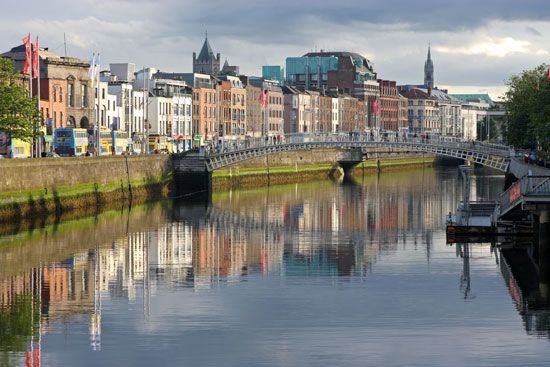
- River Liffey: Rising in the Wicklow Mountains, this 50-mile (80 km) river flows through the Kildare lowlands and the city of Dublin before emptying into the Irish Sea.5
- Southeastern Rivers: The Nore, Barrow, and Suir are significant waterways that drain the southeastern region of the island.4
- Southern Rivers: The Blackwater, Lee, and Bandon are prominent rivers flowing through the southern landscape.4
- Other Notable Rivers: The Boyne in the east and the Clare and Moy in the west are also recognized as major rivers, many of which are celebrated for their salmon fisheries.4
How do rivers in Ireland support salmon fishing?
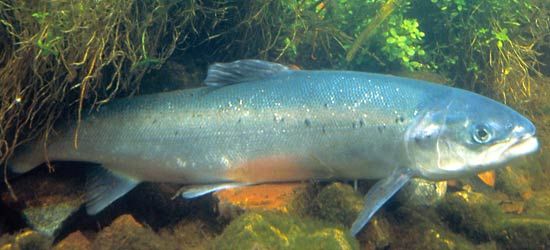
Rivers in Ireland support salmon fisheries by providing essential habitats for the species’ complex life cycle. As anadromous fish, Atlantic salmon migrate from the ocean into freshwater rivers to spawn, utilizing the specific environmental conditions of these waterways to ensure the survival of their offspring.678
The physical characteristics of Irish rivers—such as their cold, swift currents and gravel beds—are critical for spawning. Females dig pits in the stream gravel to deposit their eggs, which are then fertilized and covered for protection. These rivers provide a stable environment for the eggs to incubate and for the young salmon to feed and grow for one to three years before they migrate seaward.673
Because salmon possess a strong homing instinct, they return to their specific natal streams to reproduce, guided largely by their sense of smell. This reliance on specific river systems makes the health and management of these waterways vital for maintaining salmon populations, which are highly valued in Ireland for both commercial and sport fishing.687910
What is the significance of the Wicklow Mountains to Irish rivers?
The Wicklow Mountains are significant to Irish rivers primarily as a vital source and watershed for several major waterways in eastern Ireland. Rising in these mountains, rivers such as the Liffey and those forming the Avoca river system—including the Avonmore, Avonbeg, and Aughrim—carve through the range’s deep, scenic valleys.3212
The range’s topography, characterized by granite hills and steep terrain, influences the flow and character of these rivers. As they descend from the mountains, many exhibit features like gorges and waterfalls. The upper basin of the Liffey, for instance, is utilized for the Pollaphuca reservoir, which serves the city of Dublin and supports a large hydroelectric plant, demonstrating the economic importance of these mountain-fed waters.12
Furthermore, the glacial history of the Wicklow Mountains has shaped the surrounding landscape, influencing the paths these rivers take as they flow toward the Irish Sea. By acting as a high-elevation catchment area, the range ensures a consistent water supply for both urban infrastructure and the surrounding agricultural lowlands.1213
Sources
- River Slaney — Encyclopædia Britannica
- River Liffey — Encyclopædia Britannica
- Ireland - Drainage of Ireland — Encyclopædia Britannica
- River Shannon — Encyclopædia Britannica
- Ireland — Encyclopædia Britannica
- salmon — Encyclopædia Britannica
- Atlantic salmon — Encyclopædia Britannica
- protacanthopterygian - Life cycle and reproduction — Encyclopædia Britannica
- protacanthopterygian - Behaviour and locomotion — Encyclopædia Britannica
- Northern Ireland - Agriculture, forestry, and fishing — Encyclopædia Britannica
- Northern Ireland - Plant and animal life — Encyclopædia Britannica
- Wicklow Mountains — Encyclopædia Britannica
- Wicklow — Encyclopædia Britannica
- Ireland - Relief — Encyclopædia Britannica
Published on · 3 min read