River Ettrick
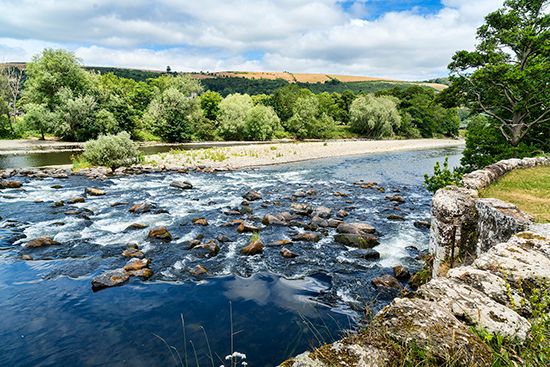
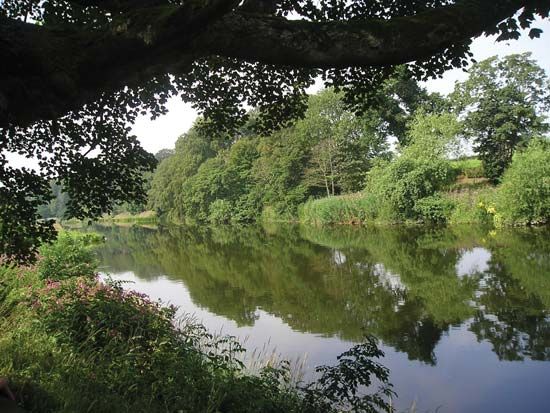
The River Ettrick is a river located in the Scottish Borders council area of Scotland. It rises in the extreme southwest of the region and flows northeast…
What is River Ettrick?
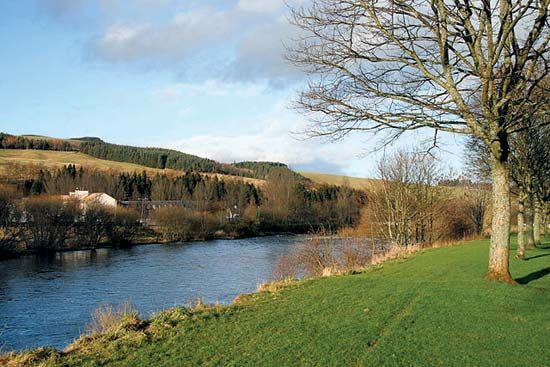
The River Ettrick is a river located in the Scottish Borders council area of Scotland. It rises in the extreme southwest of the region and flows northeast for 32 miles (51 km) before joining the River Tweed.12
The river is well-known for its trout and salmon fishing. Its valley, known as Ettrickdale, holds significant historical and cultural importance, featuring connections to the writer Sir Walter Scott. Additionally, the area is home to Buccleuch, a historic stronghold associated with the Scott family, who held the titles of earl and duke.1
Who was Sir Walter Scott and why is he famous?
Sir Walter Scott (1771–1832) was a prominent Scottish novelist, poet, historian, and biographer. He is widely celebrated as the inventor and greatest practitioner of the historical novel, a genre that profoundly influenced European and American literature.34
Scott’s fame stems from several key contributions:
- The Waverley Novels: Beginning with Waverley in 1814, he published a series of historical novels that masterfully blended vivid human drama with deep knowledge of Scottish history and culture. These works captured the manners, speech, and customs of various social echelons, from nobility to commoners.34
- Literary Innovation: He combined techniques such as the omniscient narrator, regional dialect, and realistic characterization within romantic settings, effectively establishing the historical novel as a dominant literary form.4
- Poetry and Ballads: Before his success in prose, he gained public recognition for his narrative poetry, such as The Lady of the Lake, and his anthology Minstrelsy of the Scottish Border, which helped preserve and restore traditional ballads.34
- Global Reach: While his early works focused on Scotland, he later expanded his scope to include medieval England in Ivanhoe and 15th-century France in Quentin Durward.34
What are the main characteristics of the River Tweed?
The River Tweed is a significant waterway in southeastern Scotland and northeastern England, characterized by the following features:
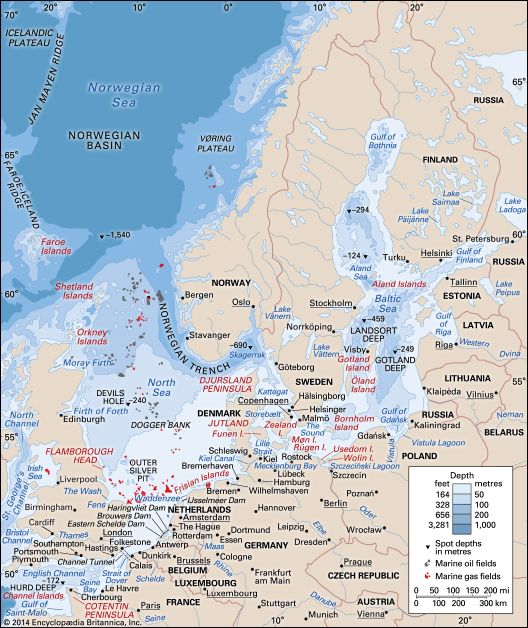
- Course and Geography: The river rises at Tweed’s Wells and flows eastward for 97 miles (156 km). It forms the border between Scotland and England for 17 miles (27 km) and flows through England for its final 2 miles (3 km) before entering the North Sea at Berwick-upon-Tweed.26
- Topography: Its path begins in a flat-floored valley, transitions into a gorgelike valley through the Southern Uplands, and eventually flows through the broad agricultural basin known as the Merse.2
- Tributaries: The river is fed by several systems, including Talla Water, Lyne Water, the Leithen, the Gala, the Ettrick-Yarrow system, and the Teviot.27
- Economic and Cultural Significance: The towns along the Tweed valley are historically centers for woolen manufacturing, markets, and tourism, and the region is noted for its famous abbeys.2
What is the significance of the Southern Uplands in Scotland?
The Southern Uplands are a significant topographic and cultural region in southern Scotland. Together with the Midland Valley, they form the Lowlands cultural area, which has historically been distinguished from the Highlands by language and social traditions.89
The region is characterized by several key features:
- Topography: The Southern Uplands feature a more subdued relief than the Highlands, with elevations generally not exceeding 2,800 feet (850 meters). The landscape is defined by broad plateaus separated by numerous dales and valleys.810
- Geographic Variation: To the east, the hills are rounded, grass-covered, and gently sloping, providing excellent grazing for sheep and opening into the fertile farming land of the Merse along the River Tweed. To the west, the terrain is rougher, with more peaty soil and granitic intrusions.810
- Geological Context: The region is separated from the Highlands by the Midland Valley rift. Its structural influence extends into Northern Ireland, where the uplands in counties Down and Armagh are considered a western continuation of the Scottish Southern Uplands.10
Sources
- River Ettrick — Encyclopædia Britannica
- River Tweed — Encyclopædia Britannica
- What did Sir Walter Scott write? — Encyclopædia Britannica
- English literature - The novel: From the Gothic novel to Austen and Scott — Encyclopædia Britannica
- Sir Walter Scott — Encyclopædia Britannica
- River Teviot — Encyclopædia Britannica
- Tweed — Merriam-Webster
- Scotland - Relief of Scotland — Encyclopædia Britannica
- Southern Uplands — Merriam-Webster
- United Kingdom - The highland zone — Encyclopædia Britannica
- Lowlands — Encyclopædia Britannica
- Celtic literature - Developments of the 18th century — Encyclopædia Britannica
Published on · 3 min read