River Forth
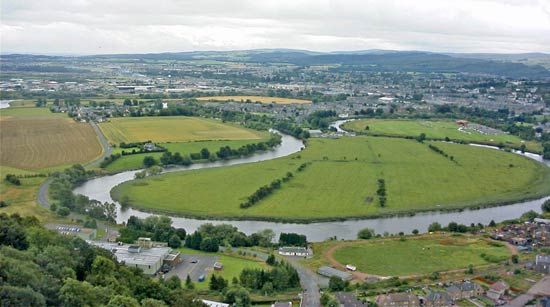
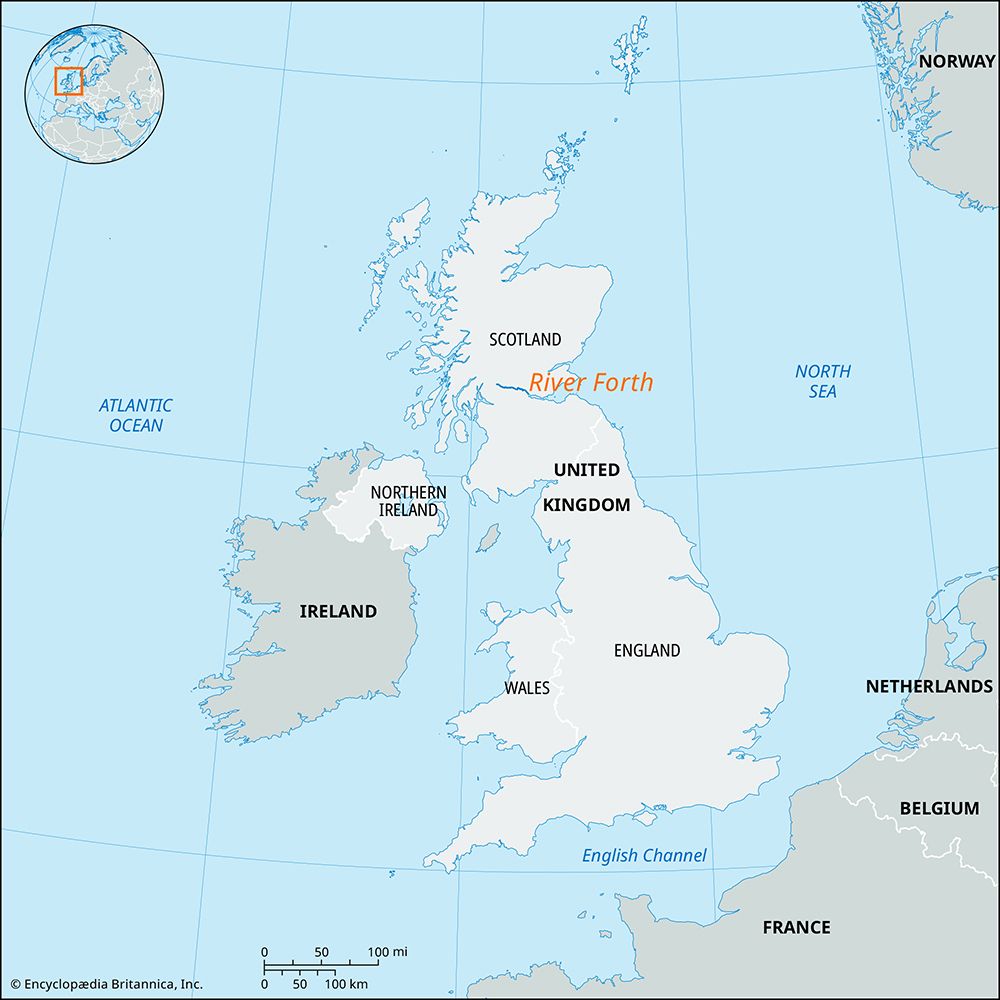
The River Forth is located in eastern Scotland. It flows from west to east, originating on the eastern slopes of Ben Lomond and continuing to the Firth of…
What is the geographical location and length of the River Forth in Scotland?
The River Forth is located in eastern Scotland. It flows from west to east, originating on the eastern slopes of Ben Lomond and continuing to the Firth of Forth near Kincardine. The river spans a length of 55 miles (90 km).1
What are the major historical and cultural significance of the River Forth?
The River Forth holds significant historical and cultural importance in Scotland, serving as a central artery for the nation’s military, industrial, and economic development.
Historical Significance
The river’s lowland stretch, known as the Links of Forth, was the site of the pivotal Battle of Bannockburn in 1314, where Scottish forces achieved a major victory against the English. The region’s strategic value is further evidenced by the presence of the Roman Antonine Wall and various historical forts near its banks. Additionally, the area surrounding the estuary has long been a hub for royal and religious activity, with nearby sites like Dunfermline Abbey serving as the final resting place for several Scottish kings.
Industrial and Cultural Impact
The Forth has been vital to Scotland’s industrial evolution. The Forth and Clyde Canal, completed in 1790, facilitated trade before being superseded by railways. In the modern era, the river remains a focal point for infrastructure and tourism, featuring iconic landmarks such as the Forth Bridge, the Falkirk Wheel, and the Kelpies sculptures.
What are the notable bridges that span the River Forth, and what is their importance?
Several notable bridges span the Firth of Forth, the estuary of the River Forth, serving as critical infrastructure for transportation in Scotland:
- Forth Bridge: Opened in 1890, this iconic railway bridge is a masterpiece of engineering. Designed by Benjamin Baker and John Fowler, it was one of the world’s first major cantilever bridges and held the record for the longest span upon its completion. It is celebrated for its “pure structure,” where every element serves a functional purpose, and it remains a vital railway link today.
- Forth Road Bridge: Completed in 1964, this suspension bridge features a main span of 1,000 metres (3,300 feet). It provides essential road connectivity across the estuary, working in tandem with the nearby railway bridge.
- Kincardine Bridge: Bridging the river at Kincardine since 1936, this structure marks the western end of the firth, facilitating movement across the upper reaches of the estuary.
These bridges are significant not only for their role in modern transit but also as landmarks of industrial history and structural innovation.
What are the main tributaries that flow into the River Forth?
Near its tidal limit at Stirling, the River Forth receives two important left-bank tributaries: the Allan and the Teith.1
Sources
- River Forth — Encyclopædia Britannica
- Forth River — Encyclopædia Britannica
- Scotland - The Industrial Revolution — Encyclopædia Britannica
- Forth — Merriam-Webster
- Falkirk — Encyclopædia Britannica
- Fife — Encyclopædia Britannica
- Forth Bridge — Encyclopædia Britannica
- bridge - Railway bridges — Encyclopædia Britannica
- Edinburgh - Transportation — Encyclopædia Britannica
- Scotland - Drainage — Encyclopædia Britannica
Published on · 2 min read