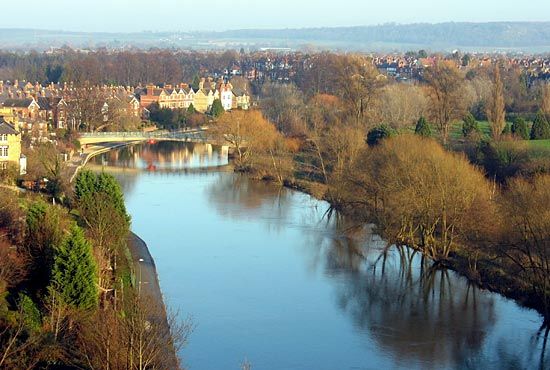
River Severn
The River Severn has an average discharge of 2,170 cubic feet (61.5 cubic metres) per second, as measured at Bewdley.
What is the River Severn’s average flow rate, and how does it compare to other major rivers in the UK?
The River Severn has an average discharge of 2,170 cubic feet (61.5 cubic metres) per second, as measured at Bewdley.1
While the Severn is recognized as Britain’s longest river—stretching approximately 180 miles (290 km) to its tidal waters—comparisons regarding flow rates across other major UK rivers are limited by the available data. The United Kingdom’s drainage systems are diverse, with rivers like the River Thames dominating southeastern England and draining a basin of nearly 4,000 square miles (10,000 square km). Other significant systems, such as those flowing into the Humber or the Wash, also play major roles in the country’s hydrology, though specific comparative flow statistics for these rivers are not provided in the current knowledge base.123
Where does the River Severn originate, and what is its total length?
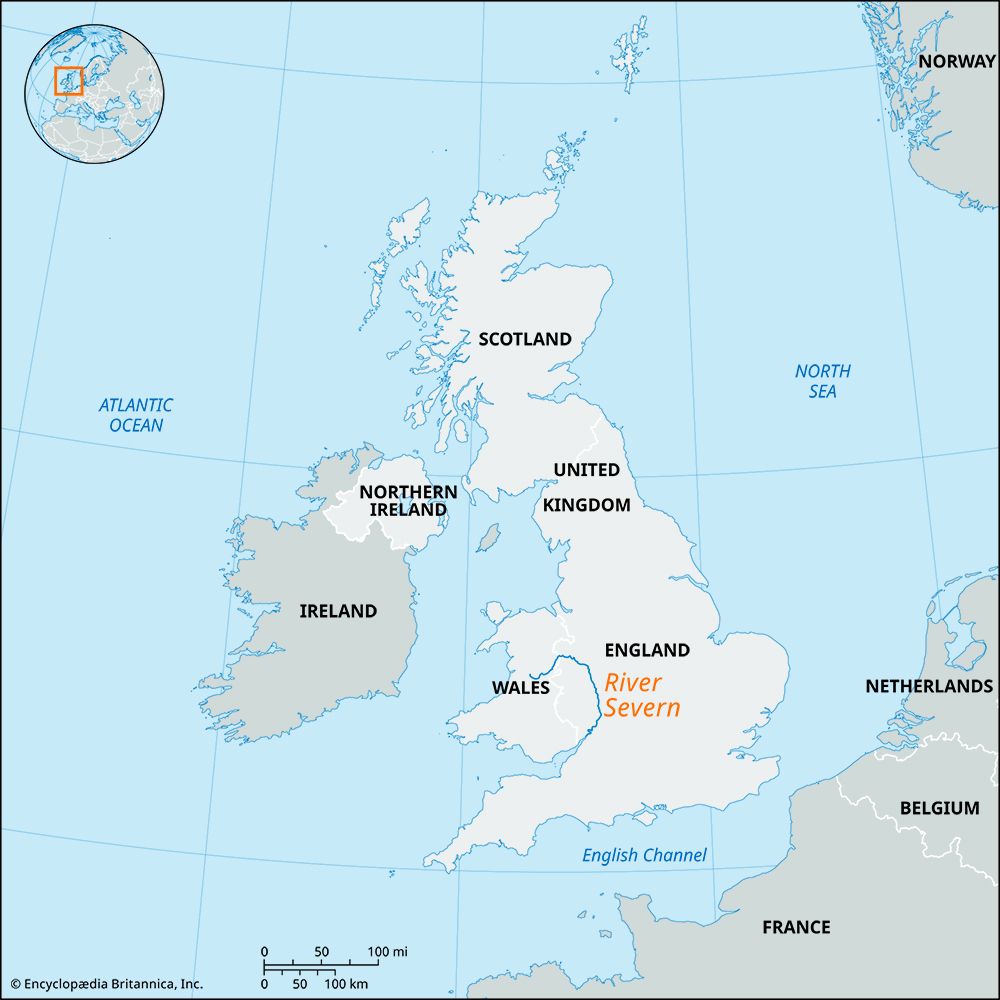
The River Severn originates on the northeastern slopes of Plynlimon in Wales.
The river has a total length of approximately 180 miles (290 km) from its source to its tidal waters, with the Severn estuary adding an additional 40 miles (64 km) to its total length.1
How has the River Severn been used for transportation and trade throughout history?
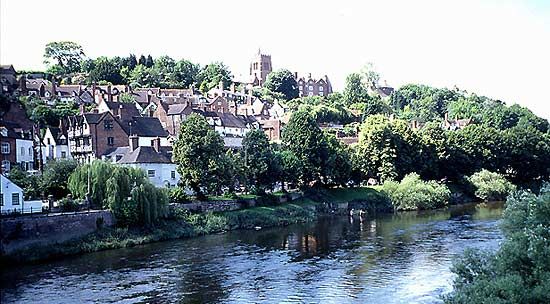
Throughout history, the River Severn has served as a vital artery for trade and industrial development in Britain. Its role was particularly significant during the 18th century, when the river facilitated the transport of raw materials between ironworks and other industries in the Shropshire region. The proximity of the river to Coalbrookdale was a key factor in the area becoming a major hub of manufacturing, with ferries used to move goods across the water.14
However, reliance on the river for transport presented challenges. Seasonal fluctuations—such as shallow water in summer and dangerously fast currents in winter—made river crossings unreliable, eventually necessitating the construction of the Ironbridge to improve connectivity.45
In later years, navigation on the tidal sections near Gloucester was improved by the opening of a ship canal in 1827. While the river was historically linked to the Midlands and the River Thames via a network of canals, many of these connections are now virtually disused, with modern transportation relying on infrastructure like the Severn Bridge and the Prince of Wales Bridge.1
What are some of the notable bridges that cross the River Severn?
Several notable bridges span the River Severn, reflecting both the river’s industrial history and its role in modern transportation:
- Ironbridge: Completed in 1779, this is widely considered the world’s first cast-iron bridge. Located in Shropshire, it served as a vital trade link during the Industrial Revolution and is now a UNESCO World Heritage site. It remains open to pedestrian traffic today.54
- Severn Bridge: Opened in 1966, this suspension bridge features a 3,240-foot (990-metre) main span. It was a pioneering design that utilized a shallow, aerodynamically shaped steel box deck to reduce wind resistance, a technique later adopted for other major bridges worldwide.17
- Prince of Wales Bridge: Formerly known as the Second Severn Crossing, this bridge opened in 1996 to accommodate increasing automobile traffic. It carries the M4 motorway, providing a critical link between England and South Wales.1
Sources
- River Severn — Encyclopædia Britannica
- United Kingdom - Drainage — Encyclopædia Britannica
- England - Drainage of England — Encyclopædia Britannica
- Ironbridge — Encyclopædia Britannica
- Ironbridge: Top Questions — Encyclopædia Britannica
- Severn River — Encyclopædia Britannica
- bridge - Lessons of the disaster — Encyclopædia Britannica
Published on · 3 min read