River Thames
The River Thames has served as London’s primary artery for transportation and commerce for centuries. Historically, the river was the city's main highway…
How has the River Thames been used for transportation and commerce throughout history?
The River Thames has served as London’s primary artery for transportation and commerce for centuries. Historically, the river was the city’s main highway; until the 1750 opening of Westminster Bridge, London Bridge was the only crossing, making boat travel essential for both passengers and goods. The Thames watermen, regulated since the 14th century, were central to this transit system.1
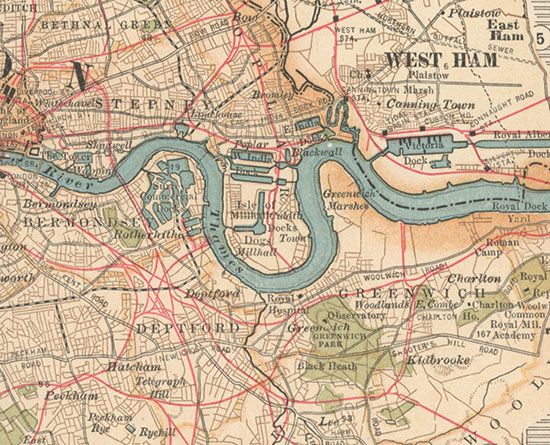
As a commercial hub, London remained the world’s busiest port until World War II, with the Port of London Authority managing extensive docks and heavy industry along the riverbanks. Upstream, the river supported cargo traffic reaching as far as Lechlade, facilitated by a system of locks and canal links.23
However, the 20th century brought significant decline. Containerization and competition led to the collapse of traditional shipping in London between 1968 and 1981. Modern cargo operations were consolidated at Tilbury, while the historic London riverfront was transformed into residential and commercial space. Today, the river is primarily a site for recreation, tourism, and water management.243
What major bridges span the River Thames, and what is their historical significance?
Numerous bridges span the River Thames, each reflecting different eras of engineering and historical development in London.
Notable Bridges and Their Significance
- London Bridge: Historically the most significant crossing, it was London’s sole bridge for centuries until 1750. The medieval “Old London Bridge” (completed 1209) was a stone arch structure lined with shops and houses. It served as a vital commercial hub but was also the site of frequent calamities, including fires and structural collapses due to ice. It was eventually replaced by John Rennie’s 1831 bridge, which was later dismantled and moved to Arizona. The current structure, completed in 1972, is a modern concrete design.6
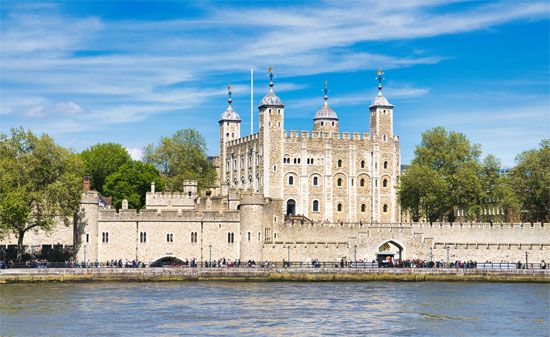
- Tower Bridge: Completed in 1894, this iconic movable bridge features a double-leaf bascule design. It was built to complement the nearby Tower of London and remains the only central-city bridge downstream of London Bridge.78
- Blackfriars Bridge: The current bridge (1860–69) replaced an earlier 1760s structure. The site is also notable for its railway bridges, which have connected the area to the rail network since the late 19th century.4
- Westminster Bridge: Opened in 1750, it was the first bridge to challenge the monopoly of London Bridge. Its construction, led by Charles Labelye, utilized innovative timber caissons for sinking foundations, setting a high standard for future British bridge engineering.5
- Millennium Bridge: Opened in 2000, this is the only bridge across the Thames dedicated exclusively to pedestrians, offering striking views of landmarks like St. Paul’s Cathedral.9
How has the River Thames been portrayed in literature, art, and popular culture?
The River Thames has long served as a profound source of inspiration in literature and art, capturing both the pastoral beauty of its upper reaches and the industrial drama of its urban course.
Literature
The river’s character varies significantly in literary portrayals. In the upper reaches, the Thames—often referred to by its literary epithet, the “Isis”—is associated with idyllic, pastoral life. The author Kenneth Grahame famously immortalized the joys of “messing about in boats” along the river in his classic work, The Wind in the Willows. The river also flows through the landscape of the 19th-century designer and poet William Morris, whose home, Kelmscott Manor, sits near its banks.5
Art
The Thames was a central subject for the renowned painter J.M.W. Turner, who held a lifelong fascination with watery subjects. His works often used the river to explore themes of technological change and the sublime power of nature:
- The Fighting Temeraire: This painting depicts a historic warship being towed up the Thames to be broken up, serving as a poignant commentary on the transition from the age of sail to the era of steam-powered industry.11
- The Burning of the Houses of Lords and Commons: Turner witnessed this 1834 fire from a boat on the Thames. His resulting painting captures the dramatic reflection of the flames on the water, pushing the boundaries between reality and abstraction.11
Through these diverse portrayals, the Thames has been established as both a tranquil playground and a dynamic witness to history.
How long is the River Thames, and what are its major tributaries?
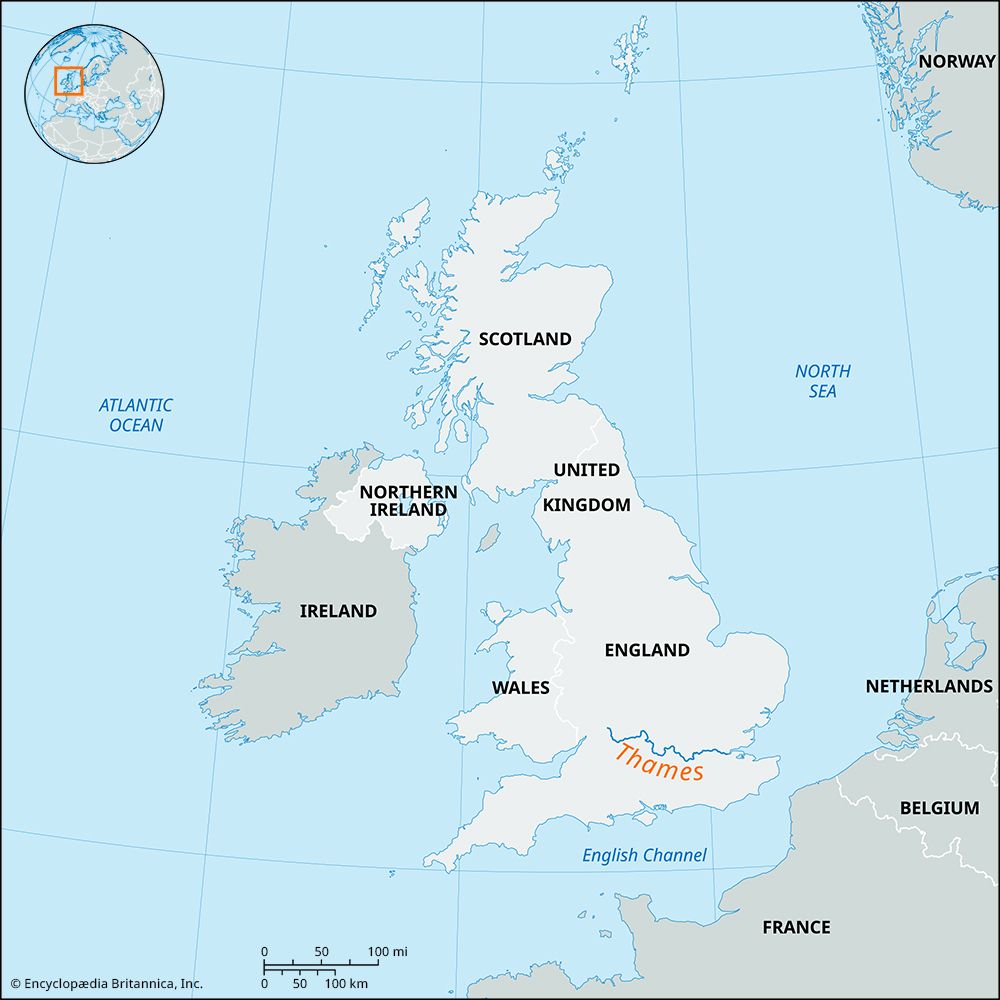
The River Thames is approximately 205 miles (330 km) long. This total length consists of 140 miles (226 km) from its source at Thames Head to the tidal limit at Teddington Lock, and a further 65 miles (104 km) as an estuary from that point to The Nore sandbank.13
The river is fed by numerous tributaries throughout its course:
- Upper Thames: The river is reinforced by the Rivers Windrush, Evenlode, and Cherwell from the north, as well as the River Ock, the River Pang, and the River Kennet.5
- Lower and Tidal Thames: As it approaches and flows through London, it is joined by the River Colne, the Brent, the Wandle, the Ravensbourne, the Lea, and the Darent.5
- Major Tributary: The river’s greatest tributary is the River Medway, which joins the Thames at Rochester and drains much of the Weald area.513
Sources
- River Thames - Economic factors — Encyclopædia Britannica
- London - Shipping — Encyclopædia Britannica
- London - The valley of the Thames — Encyclopædia Britannica
- London - The Thames — Encyclopædia Britannica
- River Thames - Touring the Thames — Encyclopædia Britannica
- London Bridge — Encyclopædia Britannica
- Blackfriars — Encyclopædia Britannica
- Tower Bridge — Encyclopædia Britannica
- bridge - Stone arch bridges — Encyclopædia Britannica
- Tower of London — Encyclopædia Britannica
- River Thames - Physical features — Encyclopædia Britannica
- 5 J.M.W. Turner Paintings with Fascinating Stories Behind Them — Encyclopædia Britannica
- River Thames — Encyclopædia Britannica
Published on · 4 min read