River Weaver
The River Weaver is a 45-mile (72 km) river in England that rises on the border between Shropshire and Cheshire. It flows north, passing through dairy…
What is River Weaver?
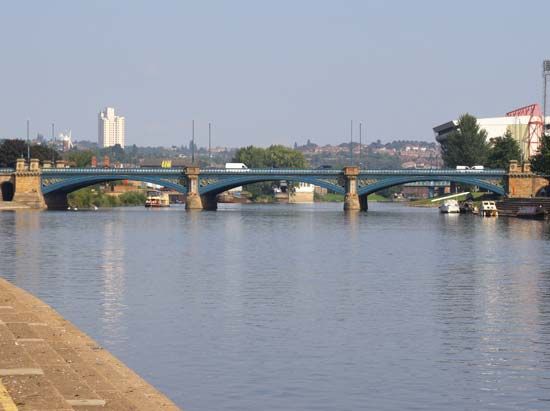
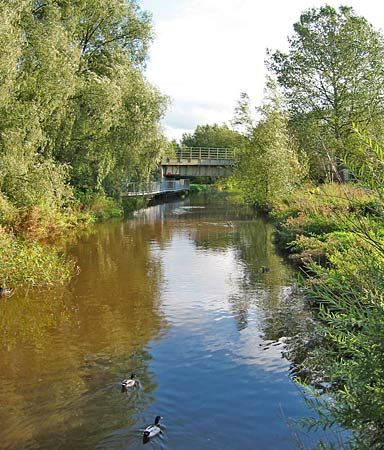
The River Weaver is a 45-mile (72 km) river in England that rises on the border between Shropshire and Cheshire. It flows north, passing through dairy farming regions and towns such as Nantwich, Winsford, and Northwich, before reaching the Irish Sea via the River Mersey estuary west of Runcorn.1
While the river’s upper reaches are characterized by rural landscapes, its lower course is marked by significant industrial development. The river runs parallel to the Trent and Mersey Canal for a portion of its length. Historically, the area surrounding the Weaver and its tributary, the River Dane, has been significant for its salt deposits, which fueled the prosperity of local towns like Northwich and Nantwich starting in the 17th and 18th centuries.12
What is the significance of the Trent and Mersey Canal?
The Trent and Mersey Canal, historically known as the Grand Trunk Canal, was a vital component of the Industrial Revolution in Great Britain. Its primary significance lay in its role as a cross-England route that linked the River Mersey to the River Trent, effectively opening up the Midlands to trade and industry.3
By providing a reliable water transport network, the canal facilitated the movement of goods and raw materials, contributing significantly to Britain’s economic prosperity in the decades before the rise of the railway era. It served as a crucial artery for exports to European markets and helped stimulate the growth of industrial centers. Over time, the canal underwent improvements to remain competitive, including the construction of a new tunnel at Harecastle in Staffordshire by the noted civil engineer Thomas Telford. While it is little used for commercial transport today, its historical impact on the development of the British canal network remains profound.345
How did salt mining influence the towns along the River Weaver?
Salt mining has been the foundational economic driver for towns along the River Weaver, particularly Northwich and Winsford. In Northwich, the exploitation of local brine springs dates back to Roman times, establishing a long-standing tradition of salt production that eventually evolved into the region’s modern chemical industry.78
While this industry fostered significant growth, it also brought severe environmental challenges. During the 18th and 19th centuries, the uncontrolled extraction of salt led to widespread subsidence, causing structural damage to buildings in Northwich and affecting the surrounding countryside. Winsford also gained prominence for its rock salt mine, further cementing the area’s identity as a hub for brine-based production. Today, the legacy of this ancient trade remains visible in the area’s industrial landscape, even as traditional extraction methods have declined.78
We could dive deeper into the history of the chemical industry in Cheshire or explore how other natural resources shaped English towns.
What are the main differences between the River Weaver and the River Mersey?
The River Weaver and the River Mersey in England are distinct waterways with different origins and roles in the regional landscape. It is important to note that there is also a River Mersey in Tasmania, Australia, which is unrelated to the English river system.1
Regarding the English rivers, their primary differences include:
- Origins and Course: The River Weaver rises on the border of Shropshire and Cheshire and flows 45 miles north to join the Mersey estuary. The River Mersey is formed at Stockport by the junction of the Goyt and Tame rivers and flows 70 miles westward to the Irish Sea.910
- Relationship: The Weaver acts as a major left-bank tributary to the Mersey, joining it at Runcorn.910
- Geography and Use: The Weaver flows through dairy farming country and industrial areas like Northwich and Winsford. The Mersey drains the Lancashire and Cheshire plains, flows through the Manchester suburbs, and is heavily modified by the Manchester Ship Canal.910
- Estuary: The Mersey forms a large, tidal estuary that is vital for the Port of Liverpool, whereas the Weaver reaches the sea via this shared estuary.910
Sources
- River Weaver — Encyclopædia Britannica
- Cheshire — Encyclopædia Britannica
- Bridgewater Canal — Encyclopædia Britannica
- River Trent — Encyclopædia Britannica
- canals and inland waterways - Great Britain — Encyclopædia Britannica
- Thomas Telford — Encyclopædia Britannica
- Northwich — Encyclopædia Britannica
- Vale Royal — Encyclopædia Britannica
- River Mersey — Encyclopædia Britannica
- River Mersey — Encyclopædia Britannica
Published on · 3 min read