River Trent
Sorry, the Britannica knowledge base does not contain information regarding specific flood control measures implemented along the River Trent.
How have flood control measures been implemented along the River Trent?
Sorry, the Britannica knowledge base does not contain information regarding specific flood control measures implemented along the River Trent.
What are some of the major tributaries of the River Trent?
The River Trent in the English Midlands is fed by several significant tributaries that originate in the Peak District. These tributaries are notably powerful and provide a greater volume of water to the river system than the upper Trent itself.1
The major tributaries include:
These rivers contribute significantly to the flow of the Trent as it moves through its broad floodplain toward the Humber estuary.1
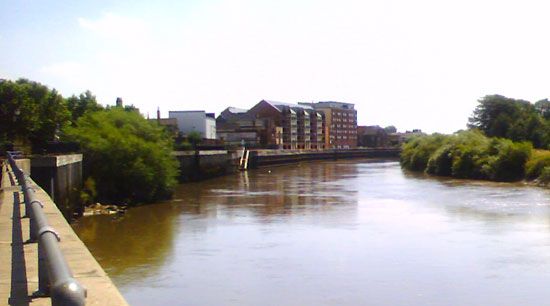
How does the River Trent compare to other major rivers in the United Kingdom?
The River Trent is a major waterway in the English Midlands that plays a significant role in the drainage of England. Unlike rivers that rise in the Cotswolds, such as the Thames—the longest river in England—the Trent originates in the Pennines.13
Key comparisons include:
- Course and Direction: While many rivers in western England flow short distances to the Atlantic Ocean or Irish Sea, the Trent follows an eastward path toward the North Sea, a characteristic it shares with other Pennine-fed rivers like the Tyne and Tees.13
- Drainage Systems: The Trent is part of a significant estuary grouping; it coalesces with rivers such as the Ouse and Aire to form the Humber estuary. This contrasts with rivers like the Welland and Nen, which drain into the Wash.3
- Hydrology: The Trent is notable for being tidal for 50 miles and for its powerful tributaries from the Peak District, which provide more water than the upper Trent itself.4
What is the source and length of the River Trent?
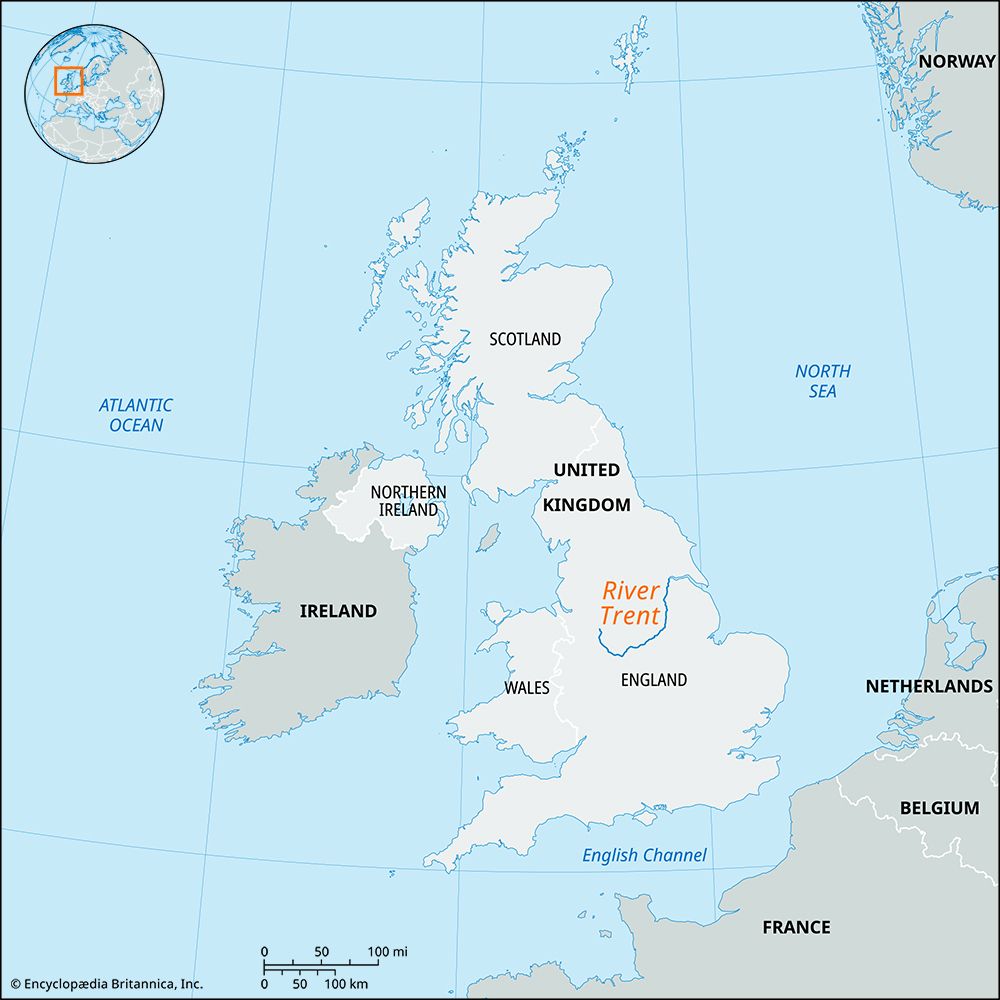
The River Trent rises in the county of Staffordshire in the English Midlands. It flows for a total length of 168 miles (270 km) before entering the Humber estuary.1
Sources
- River Trent — Encyclopædia Britannica
- Trent — Merriam-Webster
- England - Drainage of England — Encyclopædia Britannica
- United Kingdom - Drainage — Encyclopædia Britannica
Published on · 2 min read