Great Britain
While these terms are often used interchangeably, they refer to distinct geographic and political entities.
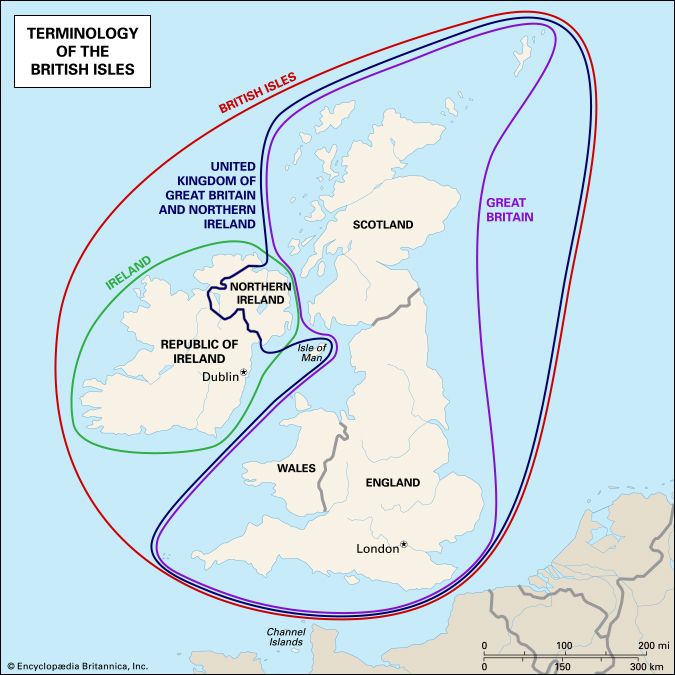
What is the difference between Great Britain, the United Kingdom, and the British Isles?
While these terms are often used interchangeably, they refer to distinct geographic and political entities.1
- British Isles: This is a purely geographic term for the group of islands off the northwestern coast of Europe, which includes the two largest islands—Great Britain and Ireland—along with many smaller surrounding islands.123
- Great Britain: This is a geographic term referring specifically to the largest island in the archipelago. Politically, it refers to the part of the United Kingdom composed of England, Scotland, and Wales.13
- United Kingdom: This is an independent sovereign country. It is a political entity that encompasses all of Great Britain and Northern Ireland.13
In summary, the United Kingdom is the political state, Great Britain is the primary island it occupies, and the British Isles is the broader geographic archipelago containing both Ireland and Great Britain.13
What are the main countries and regions that make up Great Britain?
Great Britain is a geographic term referring to the largest island in the British Isles. Politically, it consists of three distinct countries:16
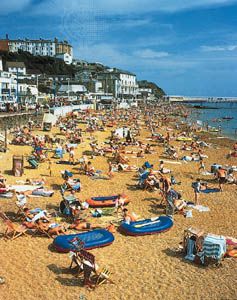
- England: Occupying the southern and central parts of the island, it includes various outlying islands such as the Isle of Wight and the Isles of Scilly.16
- Scotland: Located in the northern part of the island, it encompasses several island groups, including the Hebrides, the Orkney Islands, and the Shetland Islands.16
- Wales: Situated to the west of England, it includes the island of Anglesey.16
While these three countries form Great Britain, it is important to note that they are also part of the United Kingdom, which additionally includes Northern Ireland.136
How did Great Britain form as an island, and when did it separate from continental Europe?
Great Britain is a geographic entity that was once physically connected to the European mainland by a land bridge known as Doggerland. This region spanned what is now the southern part of the North Sea, linking the island to present-day Denmark and the Netherlands.8
The separation of Great Britain from continental Europe was a gradual process driven by rising sea levels between 9,000 and 7,000 years ago, which inundated the land bridge. Some scientists also hypothesize that a catastrophic tsunami—triggered by the Storegga slides, a series of massive submarine landslides that occurred approximately 8,400–7,800 years ago—may have washed away the remaining land connections, finalizing the island’s isolation.8
Geologically, the island’s diverse landscape is characterized by underlying rock structures that are westward extensions of European formations, with the shallow waters of the English Channel and the Strait of Dover concealing these former land links.9
How does Great Britain’s climate differ from that of continental Europe?
Great Britain’s climate is defined by its marginal position between the vast European landmass to the east and the relatively warm Atlantic Ocean to the west. While it shares a maritime climate with other western European regions, its specific conditions are heavily influenced by its island status and oceanic currents.1415
The primary factor moderating Britain’s climate is the thermohaline circulation, specifically the North Atlantic Drift. This extension of the Gulf Stream transports warm, saline water northward, which releases heat into the atmosphere and prevents the harsh, freezing winters often experienced at similar latitudes in the interior of the European continent.1416
Key differences and characteristics include:
- Thermal Moderation: Britain’s winter temperatures are largely influenced by maritime air masses, which create a temperature distribution less dependent on latitude than continental regions.14
- Variability: British weather is characterized by rapid fluctuations in atmospheric systems, whereas continental Europe often experiences more stable, extreme seasonal temperature ranges.1415
- Precipitation: While rain is well-distributed throughout the year, Britain’s highland zones receive significant orographic rainfall, contrasting with the more varied patterns found across the diverse European landscape.14
Sources
- What’s the Difference Between Great Britain and the United Kingdom? — Encyclopædia Britannica
- British Isles — Merriam-Webster
- United Kingdom - Land — Encyclopædia Britannica
- Belfast: Top Questions — Encyclopædia Britannica
- Why Is Ireland Two Countries? — Encyclopædia Britannica
- Great Britain — Encyclopædia Britannica
- Northern Ireland — Encyclopædia Britannica
- Storegga slides — Encyclopædia Britannica
- United Kingdom - Bronze Age — Encyclopædia Britannica
- English Channel — Encyclopædia Britannica
- English Channel — Merriam-Webster
- Europe - Cenozoic igneous provinces — Encyclopædia Britannica
- United Kingdom — Encyclopædia Britannica
- United Kingdom - Climate — Encyclopædia Britannica
- Climate - Thermohaline circulation — Encyclopædia Britannica
- Europe - Maritime climate — Encyclopædia Britannica
Published on · 3 min read