River Witham
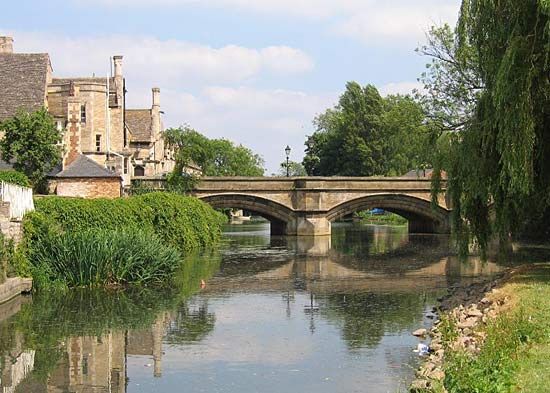
The River Witham is the primary river of Lincolnshire, England, spanning approximately 80 miles (130 km) in length.
What is River Witham?
The River Witham is the primary river of Lincolnshire, England, spanning approximately 80 miles (130 km) in length.1
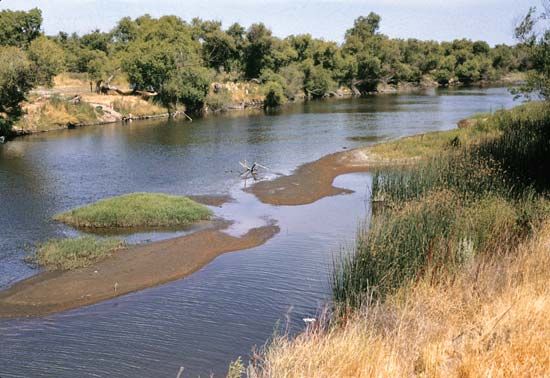
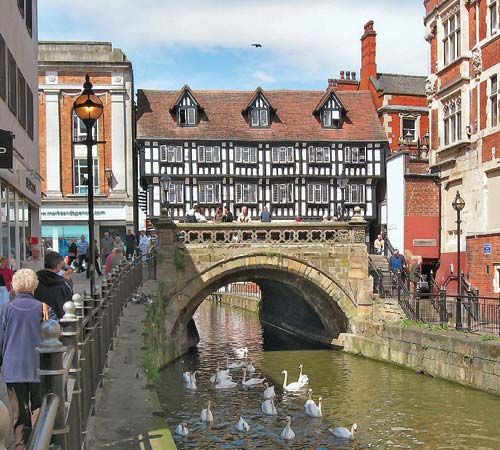
Originating in the northeastern Midlands, the river flows northward past Grantham to Lincoln, where it passes through a steep-sided gap in the Lincoln Edge limestone ridge. From Lincoln, the river travels eastward and then southeastward across the drained Fens before emptying into The Wash, a shallow North Sea embayment, at Boston. It is characterized as a sluggish stream that has been straightened in its upper reaches for drainage purposes and is embanked along its entire course below Lincoln.1
What are the Fens and why were they drained?
The Fens are a natural region of reclaimed marshland in eastern England, stretching between Lincoln and Cambridge. This area is essentially a low-lying clay plain covered by a thick layer of peat, which historically made the region a thinly settled, waterlogged waste.2
The primary motivation for draining the Fens was to transform this unproductive marshland into valuable agricultural territory. While piecemeal efforts occurred during the Middle Ages, large-scale drainage began in the mid-17th century under the 4th earl of Bedford, who hired Dutch engineer Cornelius Vermuyden to create artificial channels like the Old and New Bedford Rivers.2
However, drainage created a persistent environmental challenge: as the land dried, the peat surface sank significantly, often leading to reinundation. This necessitated the continuous use of technology—from windmills to steam-pumping stations and modern diesel engines—to protect the land from high-riding rivers. Today, the region is one of England’s richest arable areas, supporting diverse crops.2
How does the Lincoln Edge affect the river’s path?
The Lincoln Edge acts as a significant geological barrier that dictates the course of the River Witham. As the river flows northward from the Midlands, it encounters this limestone escarpment and is forced to cut through it via a steep-sided gap at the city of Lincoln.1
This passage through the ridge serves as a pivotal turning point for the river’s trajectory. After navigating this gap, the river shifts its direction from northward to eastward, and subsequently southeastward, as it moves across the low-lying Fens toward its eventual outlet at The Wash.1
What is the historical importance of the town of Boston?
Boston, located in Lincolnshire, England, has served as a significant port and market town since the 13th century. During the Middle Ages, it was a prominent member of the Hanseatic League, facilitating trade in commodities such as wool, wine, and leather.
The town holds deep historical importance regarding the migration of Puritans to the New World. In 1607, notable Pilgrims, including William Bradford and William Brewster, were imprisoned in the town’s Guildhall. This connection to the Puritan movement directly influenced the naming of Boston, Massachusetts, which was established in 1630 by settlers from the Massachusetts Bay Company who sought to distance themselves from the Church of England.
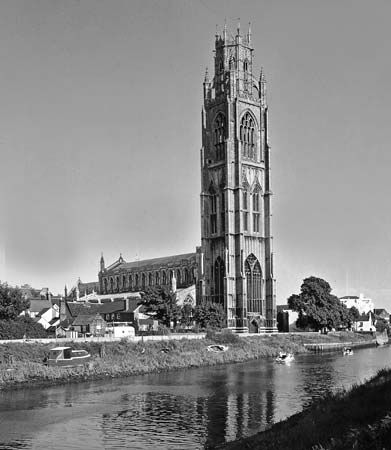
Architecturally, the town is defined by its landmark church, which features the “Boston Stump,” the tallest parish church tower in England. While the town’s original prosperity declined due to the silting of the River Witham, it remains an important center for agricultural processing and trade.
Sources
- River Witham — Encyclopædia Britannica
- Fens — Encyclopædia Britannica
- Fenland — Encyclopædia Britannica
- Lincolnshire — Encyclopædia Britannica
- Boston — Encyclopædia Britannica
- Boston - Settlement and growth — Encyclopædia Britannica
Published on · 2 min read