River Welland
The River Welland is a river located in the eastern Midlands of England. It rises in Leicestershire and flows eastward for approximately 70 miles (110 km)…
What is River Welland?
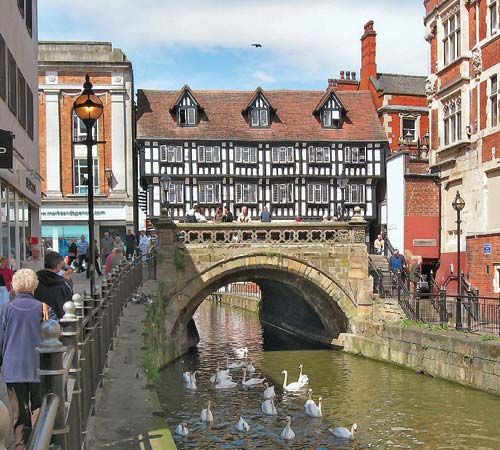
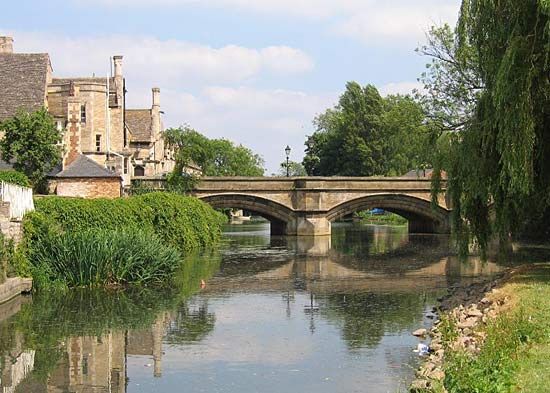
The River Welland is a river located in the eastern Midlands of England. It rises in Leicestershire and flows eastward for approximately 70 miles (110 km) through Market Harborough and Stamford before entering The Wash, an inlet of the North Sea, in Lincolnshire.1
The river’s course across the drained Fens, from Market Deeping past Spalding, is embanked, and it was historically canalized upstream to Stamford. Additionally, the Eye Brook, a left-bank tributary, has been dammed to provide a reservoir for the town of Corby.1
It is worth noting that the city of Welland in Ontario, Canada, was named after this English river in 1856.2
What are the Fens and why were they drained?
The Fens are a natural region of reclaimed marshland in eastern England, stretching between Lincoln and Cambridge. This area is essentially a flooded clay plain characterized by marine silts, clays, and deep deposits of peat.3
Why the Fens Were Drained
While the Romans cultivated parts of the region, the peatlands remained largely untouched until the mid-17th century. The primary motivation for drainage was to transform the thinly settled, marshy waste into productive agricultural land. The 4th earl of Bedford commissioned Dutch engineer Cornelius Vermuyden to drain the southern peat area, known as the Bedford Level, by constructing artificial channels like the Old and New Bedford Rivers.3
However, this drainage caused the peat surface to sink significantly, leading to recurring flooding issues. Over time, windmills, steam-pumping stations, and eventually diesel engines were employed to manage water levels. Today, the Fens serve as one of England’s most fertile arable regions, supporting crops such as wheat, potatoes, and vegetables.3
What is the significance of The Wash in England?
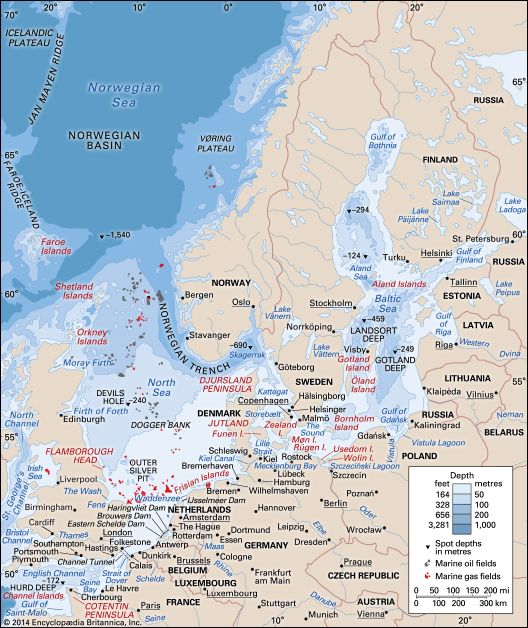
The Wash is a shallow bay of the North Sea located between the counties of Lincolnshire and Norfolk in eastern England. Its significance lies in its role as a geological remnant and a vital drainage outlet for the region.45
Historically, the bay was much larger, extending as far inland as Peterborough and Cambridge. Over time, it has been significantly infilled by sediment and silt brought in by coastal currents and rivers, including the Witham, Welland, Nen, and Ouse. This process of sedimentation and subsequent artificial land reclamation helped shape the Fens into the fertile agricultural region they are today.43
Today, The Wash serves as a critical maritime gateway. At low tide, the river waters navigate through shallow creeks between banks of sand and mud. The two primary channels, known as Boston and Lynn Deeps, provide essential anchorage for small vessels trading to the ports of Boston and King’s Lynn.4
How do canals like the Welland Canal function?
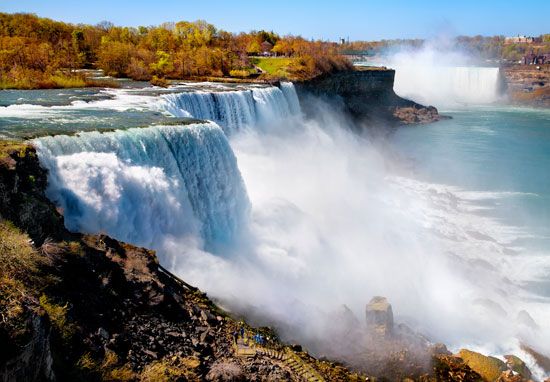
The Welland Canal functions as a vital waterway that allows large vessels to bypass the impassable Niagara River and its falls, connecting Lake Erie and Lake Ontario. To overcome the 100-metre (327-foot) difference in elevation between these two lakes, the canal utilizes a system of eight locks.67
A navigation lock is an enclosed basin with gates at each end that allows water levels to be raised or lowered to move vessels between different elevations. The process functions as follows:8
- Filling: When a vessel enters from a lower level, the upstream gates remain closed. The chamber is filled with water until it reaches the level of the upper pound, at which point the upstream gates are opened to allow the vessel to pass.8
- Emptying: To move a vessel to a lower level, the upstream gates are closed after the vessel enters. Water is then drawn out of the chamber until the level matches the lower pound, allowing the downstream gates to be opened.8
These locks use sluices—often located in culverts within the lock structure—to manage the flow of water, ensuring the process is completed with minimal turbulence.8
Sources
- River Welland — Encyclopædia Britannica
- Welland — Encyclopædia Britannica
- Fens — Encyclopædia Britannica
- The Wash — Encyclopædia Britannica
- Wash, The — Merriam-Webster
- Welland Canal — Encyclopædia Britannica
- lock — Encyclopædia Britannica
- St. Lawrence Seaway - Construction of the seaway — Encyclopædia Britannica
- New York State Canal System — Encyclopædia Britannica
Published on · 3 min read