Sacramento River
The Sacramento River has been a foundational force in the development of California's Central Valley, serving as a vital artery for transportation…
How has the Sacramento River influenced the development of California’s Central Valley?
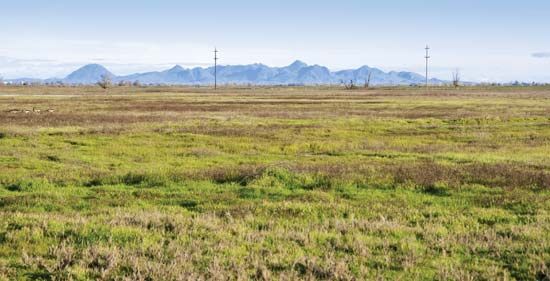
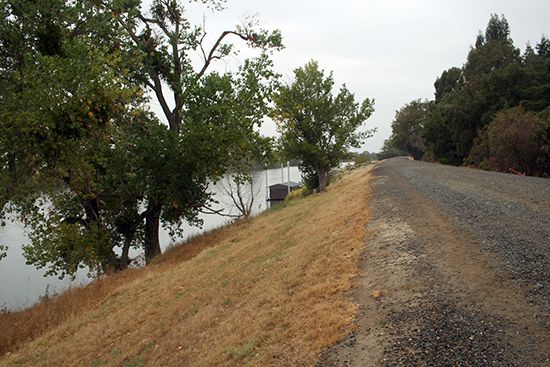
The Sacramento River has been a foundational force in the development of California’s Central Valley, serving as a vital artery for transportation, agriculture, and industry.
- Agriculture and Irrigation: The river is essential to the region’s status as one of the world’s most productive agricultural areas. Through extensive irrigation projects, including major dams like Shasta and Keswick, the river provides the water necessary to support the cultivation of hundreds of crops, such as rice, fruits, and nuts.12
- Transportation and Trade: Historically, the river facilitated early settlement and the California Gold Rush by serving as a primary transport route. The city of Sacramento grew as a hub for river steamers, and later, dredging and canal construction allowed it to become a year-round deepwater port.23
- Economic Growth: The river supported the rise of Sacramento as a state capital and industrial center, providing the infrastructure for early rail links and food processing industries that define the region’s economy today.3
What role does the Sacramento River play in California’s water supply and agriculture?
The Sacramento River is the primary water source for the Central Valley, California’s most significant agricultural region. As the state’s largest river, it provides an average annual runoff of 22 million acre-feet, which is essential for sustaining the valley’s massive output of over 300 different crops, including rice, fruits, nuts, and vegetables.21
The river’s role in water management is facilitated by major infrastructure projects, including the Shasta and Keswick dams. These facilities, along with extensive canal systems, allow for the irrigation of vast farmland and provide water to the southern portions of the state. By capturing snowmelt and rainfall from the Sierra Nevada, the river system ensures a reliable water supply that enables the Central Valley to produce approximately one-fourth of the food consumed in the United States. Additionally, the river serves as a critical transportation artery, navigable for 256 miles and capable of accommodating oceangoing vessels as far inland as the city of Sacramento2.21

What are the major tributaries of the Sacramento River?
The Sacramento River is fed by several significant waterways that contribute to its substantial drainage area of approximately 27,100 square miles. Its principal tributaries include:
- Pit River
- McCloud River
- Feather River
- American River
These rivers play a crucial role in the hydrology of the Sacramento Valley, with the Feather River, in particular, being central to major irrigation and power projects that support the region’s agricultural productivity.2
Where does the Sacramento River originate, and where does it end?
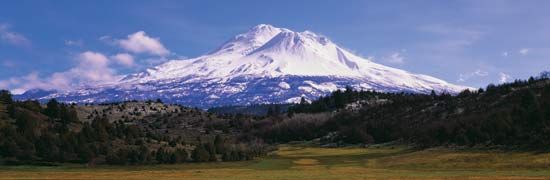
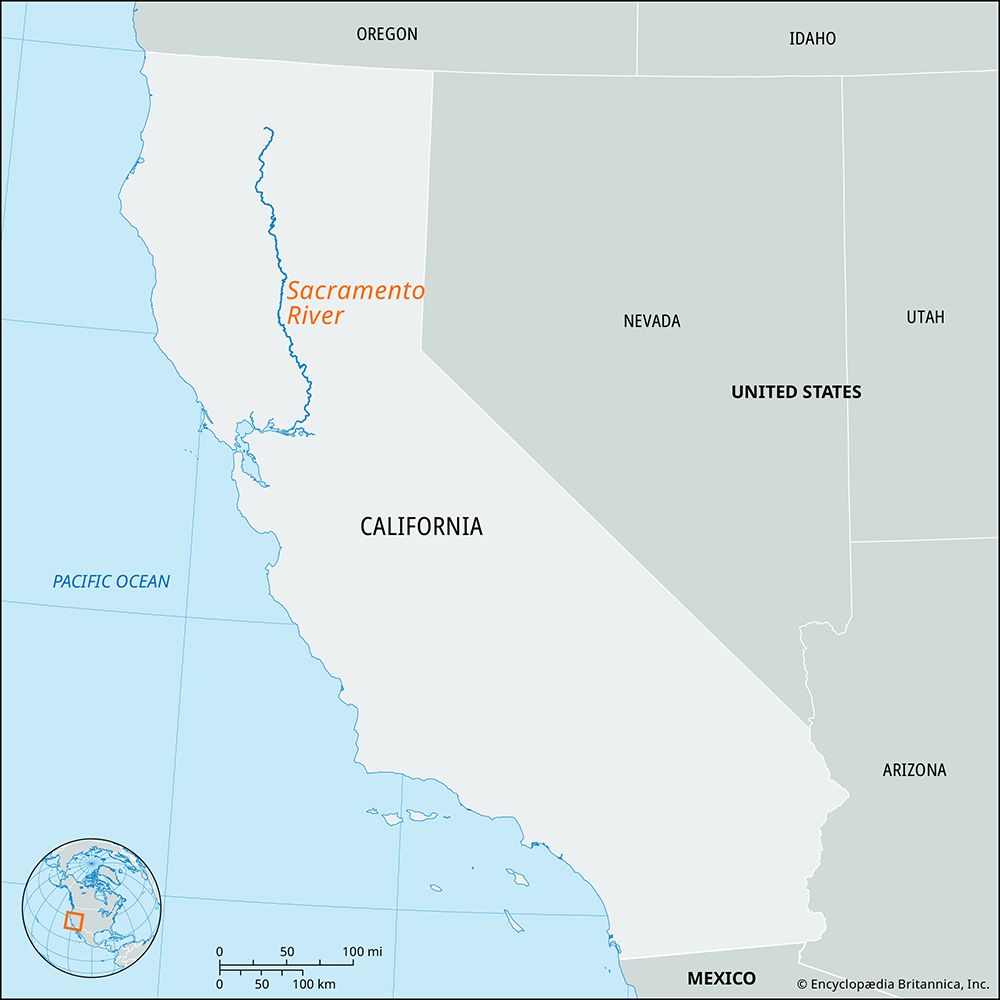
The Sacramento River rises in the Klamath Mountains near Mount Shasta in northern California.2
The river flows for 382 miles through the Sacramento Valley before forming a common delta with the San Joaquin River. It ultimately empties into Suisun Bay, which serves as the northern arm of San Francisco Bay.2
Sources
- Central Valley — Encyclopædia Britannica
- Sacramento River — Encyclopædia Britannica
- Sacramento — Encyclopædia Britannica
- Central Valley — Merriam-Webster
- San Joaquin River — Encyclopædia Britannica
Published on · 2 min read