San Francisco Bay
San Francisco Bay is a large, nearly landlocked drowned river valley located in western California, U.S. Formed by the submergence of a river valley during…
What is San Francisco Bay?
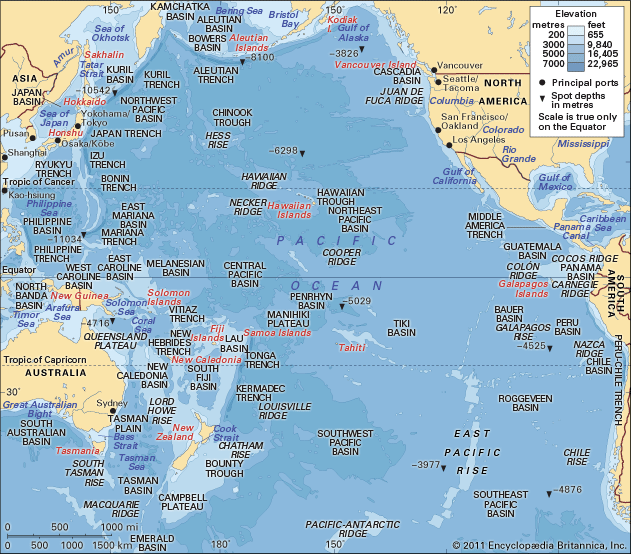
San Francisco Bay is a large, nearly landlocked drowned river valley located in western California, U.S. Formed by the submergence of a river valley during the melting of the last glacial ice sheet, the bay spans approximately 60 miles (97 km) in length and varies from 3 to 12 miles (5 to 19 km) in width.12
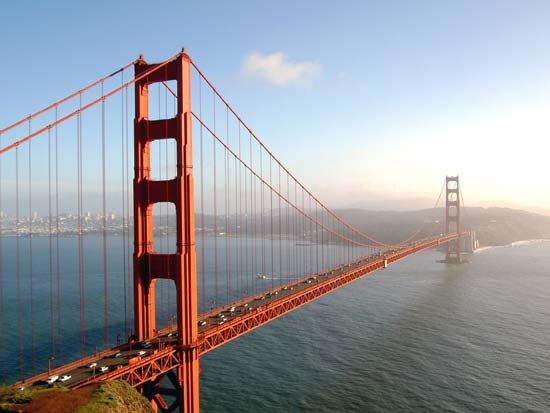
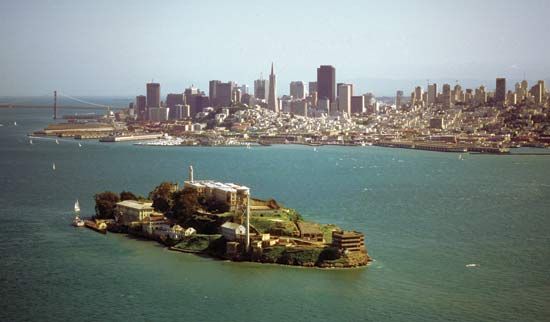
It is connected to the Pacific Ocean by a narrow strait known as the Golden Gate, which features the deepest point of the bay at 357 feet (109 meters). Recognized as one of the world’s finest natural harbors, the bay contains several islands, including Alcatraz and Yerba Buena.12
Surrounding the bay are major metropolitan centers, including San Francisco and Oakland. While historically larger, the bay’s surface area has been reduced by the filling of tidelands, a practice now regulated by the Bay Conservation and Development Commission.12
How was the Golden Gate strait formed?
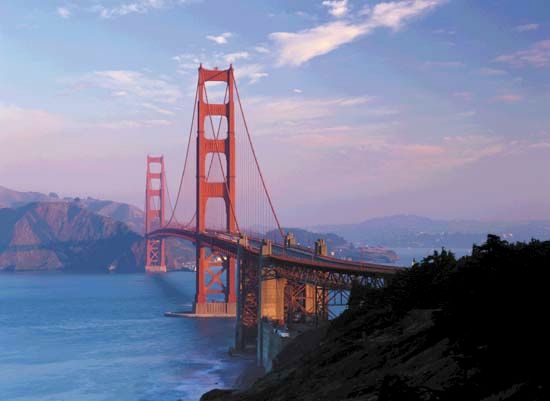
The Golden Gate is an ancient river mouth that serves as a narrow strait connecting San Francisco Bay to the Pacific Ocean.53
Its formation is tied to the geological history of the region, specifically the creation of the bay itself. San Francisco Bay is a drowned river valley that was submerged during the melting of the last glacial ice sheet. As sea levels rose following the glacial period, the ocean flooded the existing river valley, creating the bay and the narrow channel now known as the Golden Gate, which separates the San Francisco peninsula from Marin County to the north.65
Today, this strait remains a vital geographical feature, serving as the primary ocean gateway for the bay’s port cities and the Sacramento–San Joaquin river system.53
What is the history of Alcatraz Island?
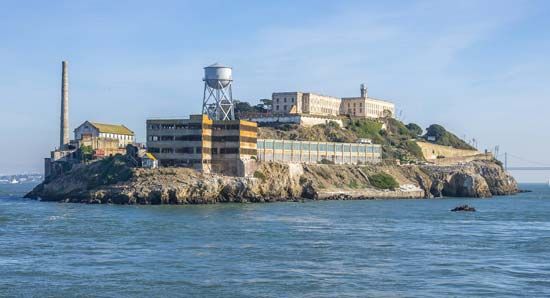
Alcatraz Island, located in San Francisco Bay, has a diverse history spanning military, penal, and activist roles. Explored in 1775 by Juan Manuel de Ayala, it was sold to the U.S. government in 1849 and became the site of California’s first lighthouse in 1854.8
By 1861, the island served as a military prison, housing diverse inmates, including Hopi activists and soldiers from the Philippine-American War. In 1934, it transitioned into a federal penitentiary for high-profile criminals like Al Capone and Robert Stroud. The facility closed in 1963 due to high maintenance costs.89
Following its closure, Native American activists, including members of the American Indian Movement, occupied the island from 1969 to 1971 to protest government neglect. In 1972, the island became part of the Golden Gate National Recreation Area and is now a popular public museum.89
Why was the Bay Conservation and Development Commission created?
The Bay Conservation and Development Commission (BCDC) was created by the California state legislature in 1965 to address the rapid loss of the San Francisco Bay area.
Historically, the bay’s size was significantly reduced by the “enthusiastic and profitable filling of the tidelands,” which caused the surface area at mean high tide to shrink from approximately 700 square miles in 1880 to only 435 square miles. By establishing the commission, the state sought to regulate and control further landfill projects to prevent the continued destruction of this coastal feature.3
Sources
- San Francisco Bay — Encyclopædia Britannica
- San Francisco - Exploration and early settlement — Encyclopædia Britannica
- San Francisco - City site — Encyclopædia Britannica
- San Joaquin River — Encyclopædia Britannica
- Golden Gate — Encyclopædia Britannica
- Golden Gate — Merriam-Webster
- Where does the Golden Gate Bridge get its name? — Encyclopædia Britannica
- Alcatraz Island — Encyclopædia Britannica
- Alcatraz — Encyclopædia Britannica
Published on · 3 min read