Central Valley
The Central Valley of California is a vast basin spanning approximately 18,000 square miles. It extends roughly 450 miles from Shasta County in the north to…
What are the geographical boundaries and main features of California’s Central Valley?
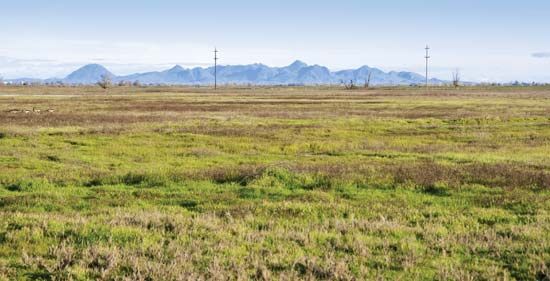
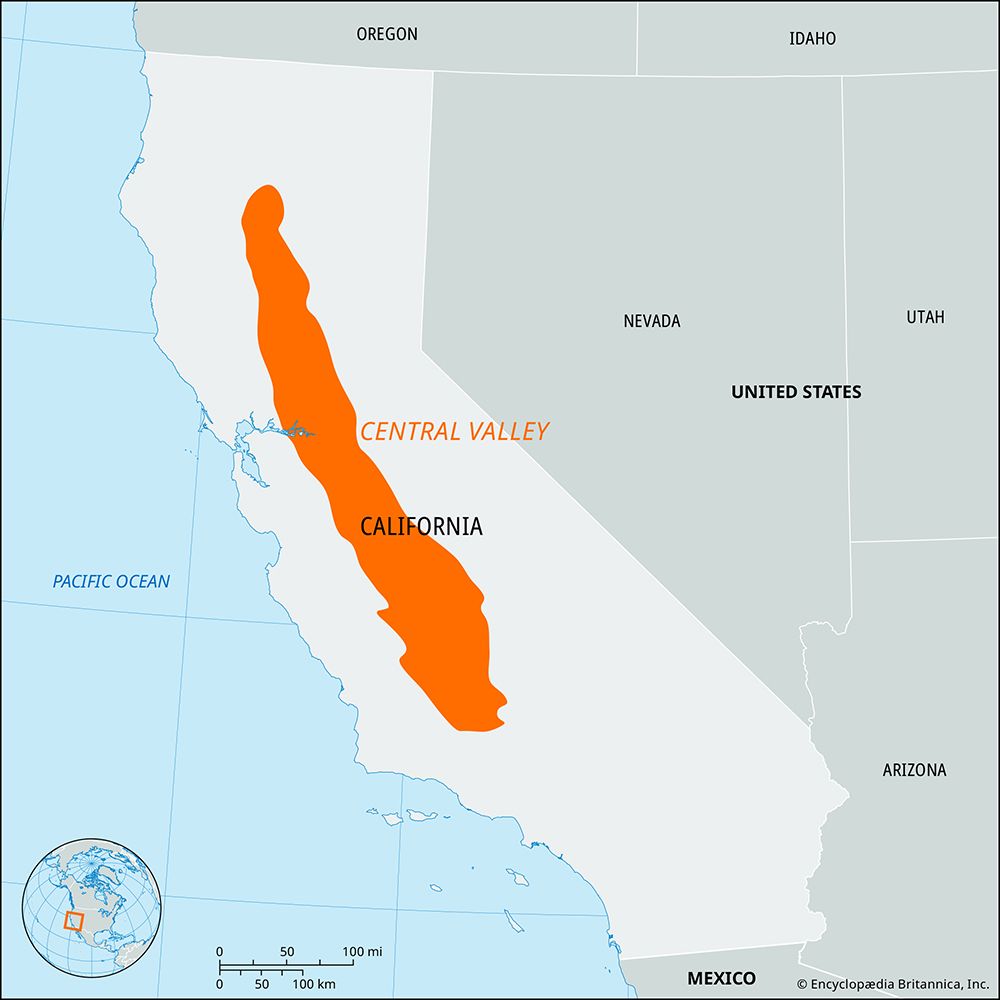
The Central Valley of California is a vast basin spanning approximately 18,000 square miles. It extends roughly 450 miles from Shasta County in the north to Kern County in the south, averaging about 40 miles in width.1
Geographical Boundaries
The valley is almost entirely enclosed by major mountain ranges:
- North: Klamath Mountains1
- East: Sierra Nevada1
- South: Tehachapi Mountains1
- West: Pacific Coast Ranges1
Main Features
The region is divided into the Sacramento Valley in the north and the San Joaquin Valley in the south. The Sacramento and San Joaquin rivers serve as the primary drainage systems, eventually meeting at the Delta Lands to flow into San Francisco Bay, which provides the valley’s only outlet to the Pacific Ocean.1
Renowned for its agricultural productivity, the valley utilizes extensive irrigation to produce over 300 crops, accounting for roughly one-fourth of the food consumed in the United States. Additionally, the basin contains significant deposits of natural gas and petroleum.1
How does the Central Valley contribute to California’s agricultural production?
The Central Valley serves as a cornerstone of California’s agricultural economy, producing approximately half of the state’s farm output and roughly one-fourth of the food consumed in the United States.13
Agricultural Significance
Following the California Gold Rush, the region transformed into one of the most productive farming areas in the country. With a growing season of up to 300 days per year, the valley supports the cultivation of over 300 different crops, including:
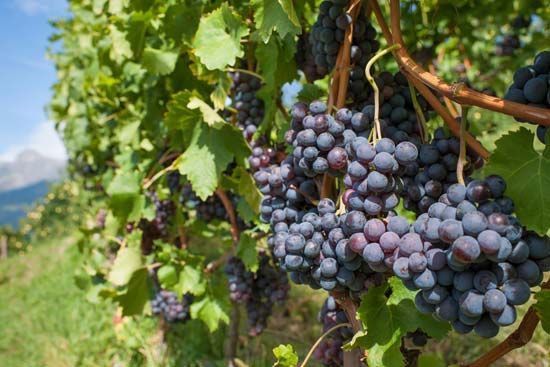
- Fruits and Nuts: Peaches, apricots, wine grapes, almonds, and pistachios.1
- Grains and Vegetables: Rice, wheat, cotton, and various vegetable crops.1
Infrastructure and Techniques
The valley’s immense productivity is sustained by a complex network of irrigation systems, including dams, canals, and pumping plants that distribute water throughout the basin. This infrastructure is vital for managing water distribution, particularly given the state’s susceptibility to periodic droughts. Research institutions, such as the University of California, Davis, further enhance this output by providing scientific guidance on crop specialization and industry practices.13
What are the major cities located in the Central Valley?
The Central Valley is home to several significant urban centers that serve as hubs for government, industry, and the region’s extensive agricultural economy. Key cities include:
- Sacramento: As the capital of California, Sacramento is located in the northern portion of the valley. It serves as a major center for government, services, and agriculture-related industries, and it functions as a year-round deepwater port.15
- Stockton: Situated along the San Joaquin River, Stockton is a major inland port and a key market for the valley’s agricultural produce, including fruits, vegetables, and wine.6
- Fresno: Located in the San Joaquin Valley, Fresno is central to one of the most productive agricultural regions in the United States, with a local economy heavily tied to the cultivation of crops like cotton, figs, and grapes.73
- Visalia: Positioned in the south-central part of the valley, Visalia developed as a center for livestock shipping and agriculture, now supported by light manufacturing.7
- Red Bluff: Located in the far north, this city marks the southern boundary of the Anderson Valley, a northern extension of the Sacramento Valley.1
What are the main crops grown in the Central Valley and how has this changed over time?
The Central Valley is one of the most productive agricultural regions in the United States, currently producing over 300 different crops. Key agricultural products include:
- Fruits and Nuts: Peaches, apricots, wine grapes, almonds, and pistachios.
- Grains and Vegetables: Rice, wheat, cotton, and a variety of vegetable crops.
Historical Evolution
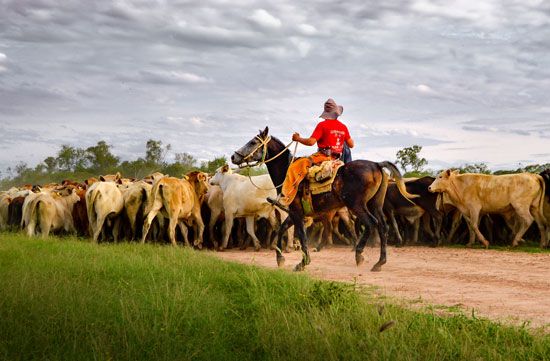
The trajectory of agriculture in the valley changed significantly following the California Gold Rush of 1849. Prior to this, early regional agriculture—such as that seen in neighboring areas like Napa—was characterized by cattle ranching and wheat cultivation, often tied to the mission system and later Mexican land grants.
The modern agricultural landscape of the Central Valley was made possible by the development of extensive irrigation infrastructure, including numerous dams and canals. This technological shift allowed the region to move beyond basic ranching and grain production into the highly diversified, high-yield crop production that defines its economy today.
Sources
- Central Valley — Encyclopædia Britannica
- Central Valley — Encyclopædia Britannica
- California - Agriculture, forestry, and fishing — Encyclopædia Britannica
- Origins of agriculture - Irrigation — Encyclopædia Britannica
- Stockton — Encyclopædia Britannica
- Visalia — Encyclopædia Britannica
- Sacramento — Encyclopædia Britannica
- Napa — Encyclopædia Britannica
Published on · 3 min read