Mount Shasta
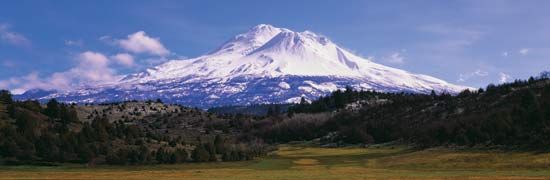
Mount Shasta, a prominent dormant volcano located in northern California, offers several popular recreational opportunities for outdoor enthusiasts.
What are some of the popular recreational activities available on Mount Shasta?
Mount Shasta, a prominent dormant volcano located in northern California, offers several popular recreational opportunities for outdoor enthusiasts.
The mountain’s rugged terrain and significant elevation make its slopes a favored destination for:
- Climbing: The peak has a long history of mountaineering, with the first recorded ascent dating back to 1854.1
- Skiing: The slopes of the mountain are well-regarded for skiing activities.1
Additionally, the mountain serves as a central feature of the Whiskeytown-Shasta-Trinity National Recreation Area, which provides a broader landscape for exploration within the Cascade Range. Access to the higher elevations is facilitated by a highway that extends up the slopes to 8,000 feet (2,400 metres).1
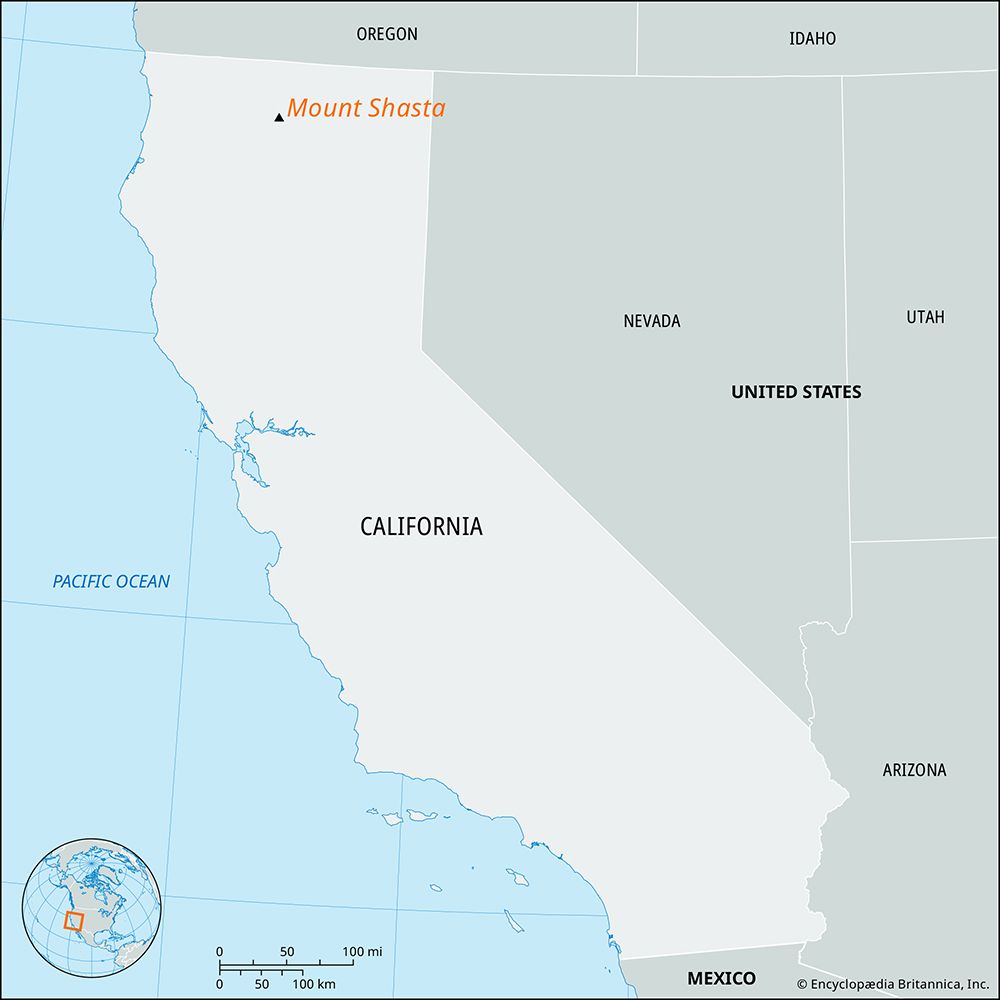
What is the elevation of Mount Shasta, and how does it compare to other peaks in California?
Mount Shasta stands at an elevation of 14,162 feet (4,317 metres).12
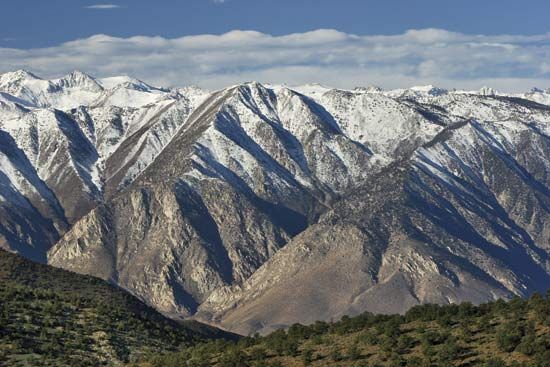
When compared to other peaks in California, it is among the state’s highest mountains, though it is surpassed by Mount Whitney. Located in the Sierra Nevada, Mount Whitney is the highest peak in the conterminous United States, reaching an elevation of 14,494 feet (4,418 metres). While Mount Shasta is a prominent volcanic peak within the Cascade Range, it remains lower than the culminating summit of the Sierra Nevada.341
What is the history of volcanic activity on Mount Shasta, and is it still considered an active volcano?
Mount Shasta is classified as a dormant volcano, not an extinct one. While it is currently in a state of dormancy, the area remains tectonically active, and earthquakes are relatively common in the region.1
Regarding its history of activity, the mountain is a double-peaked structure that has shaped the surrounding landscape for miles. Its most recent recorded eruption occurred in 1786. Despite its current dormant status, the mountain continues to exhibit signs of geothermal activity, such as the presence of steam vents on its slopes. These geological features, along with the glaciers that feed major regional waterways like the Sacramento River, underscore the mountain’s ongoing role in the region’s physical environment.1
How do volcanoes like Mount Shasta form?
Mount Shasta is a stratovolcano, a type of volcanic landform also known as a composite volcano. These mountains form over thousands of years through repeated eruptions that deposit alternating layers of ash, lava flows, and pyroclastic material.15
The formation of volcanoes like Mount Shasta is primarily driven by subduction, a process occurring at plate boundaries. In the case of the Cascade Range, the Juan de Fuca Plate is forced beneath the North American Plate. As the oceanic plate sinks, water and carbon dioxide trapped in seafloor sediments reduce the melting temperature of the mantle, creating magma.67
This magma rises through the continental crust, becoming enriched in silica and increasingly viscous. Because this viscous magma does not flow easily, it builds up pressure, often resulting in the explosive eruptions characteristic of stratovolcanoes. Over time, these successive eruptions pile up material around the vent, creating the tall, conical peaks that define the landscape.6751
Sources
- Mount Shasta — Encyclopædia Britannica
- United States - The Western Cordillera — Encyclopædia Britannica
- Shasta, Mount — Merriam-Webster
- Mount Whitney — Encyclopædia Britannica
- volcano - Subduction volcanoes — Encyclopædia Britannica
- volcano - Determinants of size and shape — Encyclopædia Britannica
- Pacific mountain system - Geology — Encyclopædia Britannica
- Pacific Ocean - Geology — Encyclopædia Britannica
- volcano - Stratovolcanoes — Encyclopædia Britannica
- stratovolcano — Encyclopædia Britannica
Published on · 2 min read