Saline River
The name "Saline River" refers to at least two distinct waterways in the United States:
What is Saline River?
The name “Saline River” refers to at least two distinct waterways in the United States:
- Kansas: A river in northern Kansas that rises near Oakley and flows approximately 340 miles eastward. It passes through Sylvan Grove and Lincoln before joining the Smoky Hill River near Salina. West of Sylvan Grove, the river is dammed to create Wilson Lake, which serves as a flood-control, irrigation, and recreation site.1
- Arkansas: A river in central Arkansas that flows past the city of Benton, which serves as the seat of Saline County.2
How do rivers get their names?
Rivers receive their names through a variety of historical, cultural, and descriptive processes, often reflecting the layers of populations that have inhabited a region over time. Because river names are highly conservative, they are frequently adopted by successive groups, serving as enduring markers of a landscape’s history.3
Common naming origins include:
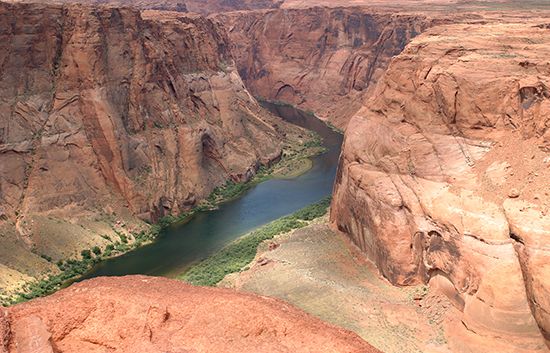
- Descriptive Characteristics: Many rivers are named for their physical appearance. For example, the Colorado River likely earned its name from early Spanish explorers who described its silt-heavy, reddish waters as colorado (meaning “colored” or “reddish”).4
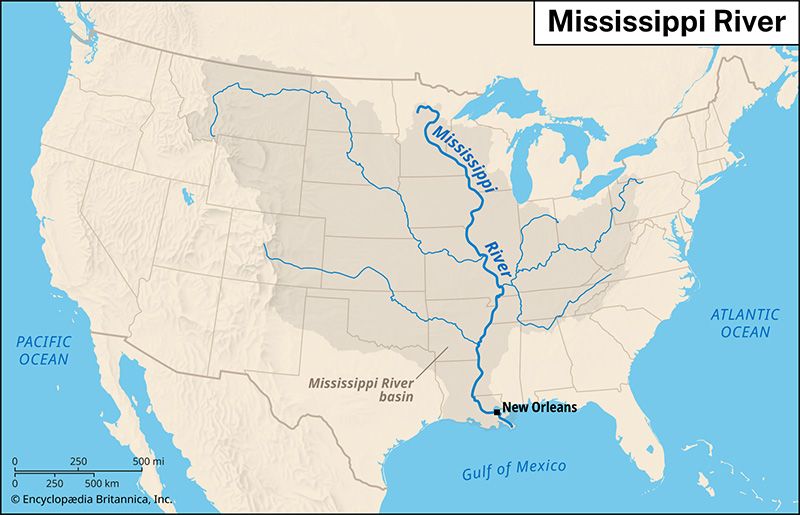
- Indigenous Origins: Numerous rivers retain names derived from Indigenous languages, which often describe the river’s nature or surroundings. Examples include the Mississippi River (from Ojibwe for “big river”), Connecticut River (Mohegan for “long river”), and Minnesota River (Dakota for “cloudy water”).5
- Political and Cultural Shifts: Names are sometimes altered to reflect changes in political power, ideology, or regional identity. A river may be renamed to honor a state or political figure, or to replace names associated with previous regimes.43
- Exploration and Mapping: Early explorers and mapmakers often applied names based on their own languages or cultural references, sometimes leading to confusion or the duplication of names across different regions.4
What is the purpose of building dams like Wilson Lake?
Dams like Wilson Lake and other large-scale water projects are constructed to regulate river flow and manage water resources for human use. Their primary purposes include:
- Flood Control: Dams impound water during periods of high flow, preventing downstream flooding and protecting crops, property, and populations.91011
- Water Storage and Supply: They create reservoirs that collect and store water, ensuring a reliable supply for drinking, industrial use, and irrigation during periods of low flow or drought.91011
- Hydroelectric Power: Many dams are equipped with turbines and generators that convert the pressure of falling water into hydroelectric power, providing a renewable energy source.1291011
- Navigation and Recreation: Reservoirs can help regulate water levels to support river navigation and provide sites for recreational activities.91011
While these structures are vital for economic and industrial development, they often face criticism due to significant environmental and social impacts, including the displacement of human populations, the destruction of ecosystems, and the disruption of fish migration.9101314
How do rivers contribute to the development of cities?
Rivers have been fundamental to the development of cities throughout history, serving as the lifeblood for early settlements and modern urban centers alike. Their influence on urbanization can be categorized into several key roles:
Foundation of Early Civilizations
Many of the world’s earliest permanent settlements, often called hydraulic civilizations, emerged in fertile river valleys such as the Tigris-Euphrates, the Nile, and the Indus. These rivers provided the water necessary for irrigation and agriculture, creating food surpluses that allowed populations to grow and diversify beyond subsistence farming.715
Transportation and Trade
Rivers historically provided the most efficient means of communication, exploration, and trade. Before the development of extensive road networks, rivers acted as natural highways for settlers, traders, and conquerors. In the United States and other regions, cities often “mushroomed” at river junctures or points where transport modes changed, as these locations served as vital hubs for collecting and shipping raw materials.716
Industrial and Urban Utility
As cities grew, rivers became essential for industrial and municipal needs:
- Power and Cooling: Rivers provided the energy required for early mills and, later, the massive quantities of water needed for cooling in industrial facilities like steel and petrochemical plants.715
- Infrastructure: Rivers sustained urban populations by providing drinking water and serving as natural sewers for waste disposal.7
- Strategic Siting: Many national capitals, such as Vienna and Budapest, were established on major rivers, and control over river crossing points often led to the rise of fortified bridge towns.7
While rivers fostered growth, they also presented challenges, including the need for complex flood defense engineering and the risk of environmental degradation, such as soil salinization or the spread of waterborne diseases.7
Sources
- Saline River — Encyclopædia Britannica
- Benton — Encyclopædia Britannica
- Why are there two Colorado Rivers? — Encyclopædia Britannica
- rivers — Merriam-Webster
- South American Indian languages - Vocabulary — Encyclopædia Britannica
- Name - Place-names reflecting historical influences — Encyclopædia Britannica
- river - Significance in early human settlements — Encyclopædia Britannica
- Indigenous languages of North America - Language contact — Encyclopædia Britannica
- Did you know? — Merriam-Webster
- reservoir — Encyclopædia Britannica
- water infrastructure in India - Dams — Encyclopædia Britannica
- Nile River - Dams and reservoirs — Encyclopædia Britannica
- dam - Rise of environmental and economic concerns — Encyclopædia Britannica
- Jinping-I Dam: Top Questions — Encyclopædia Britannica
- river - Significance to trade , agriculture, and industry — Encyclopædia Britannica
- United States - Classic patterns of siting and growth — Encyclopædia Britannica
Published on · 3 min read