Samana Cay
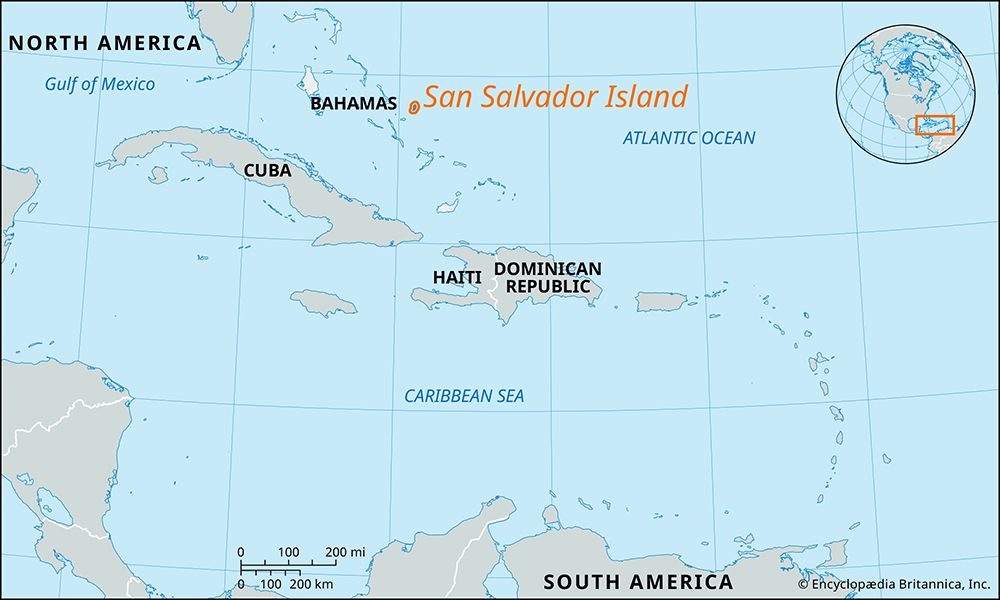
Samana Cay is an islet located in the eastern Bahamas, situated 22 miles (35 km) northeast of Acklins Island.
What is the geographical location and size of Samana Cay?
Samana Cay is an islet located in the eastern Bahamas, situated 22 miles (35 km) northeast of Acklins Island.1
Regarding its dimensions, the cay is approximately 10 miles (16 km) long and reaches a width of up to 2 miles (3 km). The island is bound by reefs and is characterized by its verdant landscape. Although it is currently uninhabited, archaeological evidence suggests it was once home to Lucayan Indians during the era of Christopher Columbus’ voyages.1
What legends or folklore, if any, are associated with Samana Cay?
There are no specific legends or folklore associated with Samana Cay in the provided records.
The primary historical significance attributed to the island is its connection to the Christopher Columbus voyages. In 1986, the National Geographic Society proposed that Samana Cay was the site of Columbus’s first landfall in the New World on October 12, 1492, based on computer analyses of his route and descriptions in his journal. This claim remains a subject of historical debate, as it challenges the traditional identification of San Salvador Island (formerly Watling Island) as the landing site.1
While archaeological findings, such as pottery shards and figurines, confirm that the island was inhabited by Lucayan Indians around the time of these voyages, these are historical artifacts rather than elements of folklore.1
How accessible is Samana Cay to tourists, and what activities can visitors do there?
Samana Cay is currently uninhabited and lacks the infrastructure, such as airports or regular ferry services, that typically supports tourism on other Bahamas islands. While the Out Islands are generally served by mail boats and interinsular aircraft, Samana Cay is not listed as a destination with visitor accommodations or facilities.145
Because the island is bound by reefs and remains largely undeveloped, there are no established tourist activities or public amenities available there. Its primary significance remains historical and archaeological, centered on its potential role in the voyages of Christopher Columbus and the remnants of the Lucayan people who once lived there.1
We could dive deeper into the transportation networks of the more accessible Bahamian islands or explore the history of the Lucayan people if you are interested.
How has Samana Cay’s role in the Bahamas changed over time?
Samana Cay’s role in the Bahamas has evolved from a site of indigenous habitation to a focal point of historical and geographical debate.
Historically, the island was home to Lucayan Indians, as evidenced by the discovery of pottery shards, figurines, and other artifacts dating to the period of Christopher Columbus’s voyages. Following this period, the cay remained uninhabited for centuries, largely due to its geography, which is bound by reefs and lacks modern infrastructure.1
In the mid-1980s, the island’s role shifted from an obscure, uninhabited islet to a center of international historical inquiry. In 1986, the National Geographic Society proposed that Samana Cay was the true site of Columbus’s first landfall in the New World in 1492. This claim, supported by computer modeling of transatlantic routes and journal descriptions, challenged the long-standing tradition that identified San Salvador Island as the landing point. Today, the island remains an uninhabited, protected space of significant archaeological interest.1
Sources
- Samana Cay — Encyclopædia Britannica
- Exuma Cays — Encyclopædia Britannica
- Dominica - History — Encyclopædia Britannica
- The Bahamas - Transportation — Encyclopædia Britannica
- list of islands - The Bahamas — Encyclopædia Britannica
Published on · 2 min read