San Salvador Island
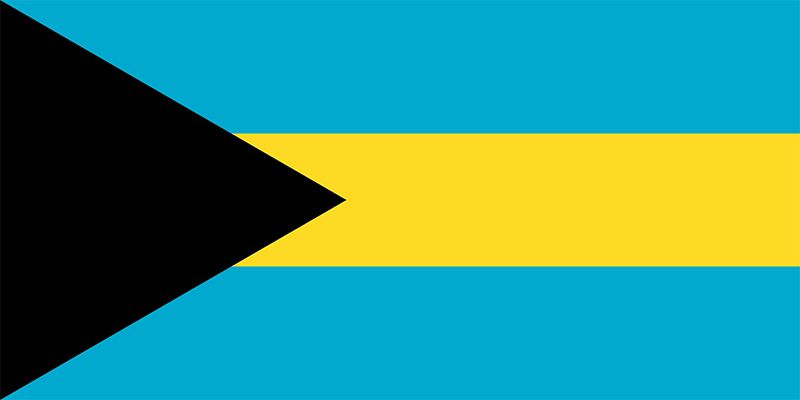
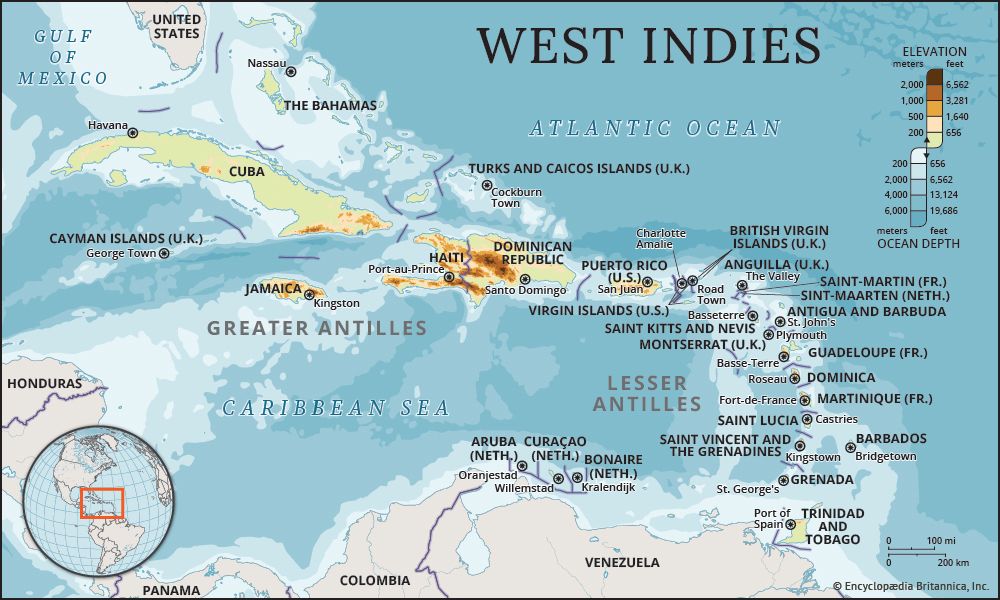
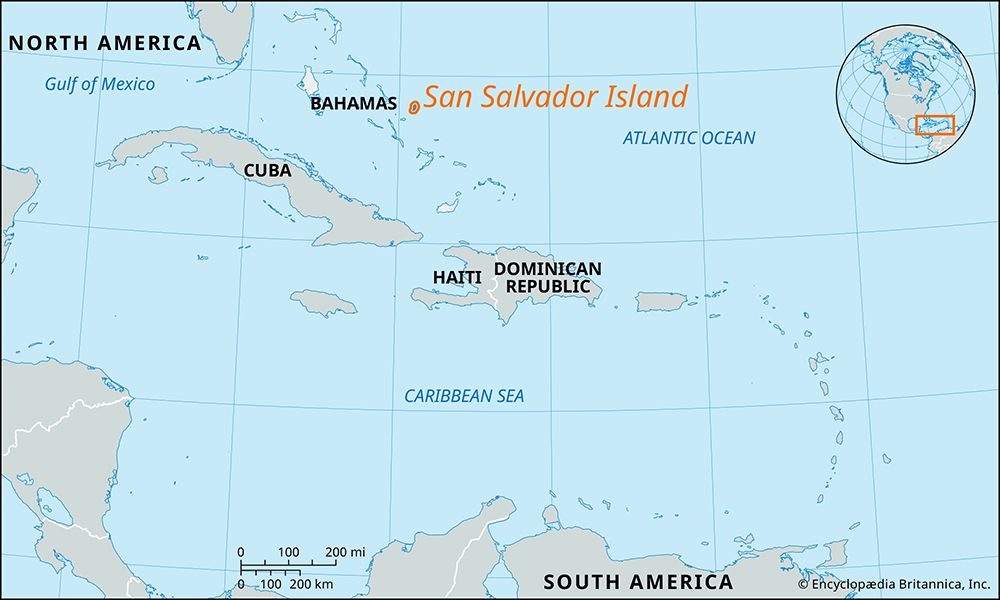
San Salvador Island is an island located in The Bahamas, within the West Indies.
What is San Salvador Island?
San Salvador Island is an island located in The Bahamas, within the West Indies.1
It is widely recognized by many scholars as the island of Guanahani, the site where Christopher Columbus is believed to have made his first landing in the New World on October 12, 1492. However, this identification is not universally accepted, as some researchers argue that the actual site of Guanahani was Samana Cay, located 65 miles (105 km) to the southeast.1
The island measures approximately 13 miles (21 km) in length and 5 miles (8 km) in width, covering an area of 63 square miles (163 square km). Historically, it was also known as Watlings Island, named after a famous buccaneer. It is important to distinguish this island from San Salvador, which is the capital city of the Central American nation of El Salvador.12
Who were the Lucayan people who lived on the island before Columbus arrived?
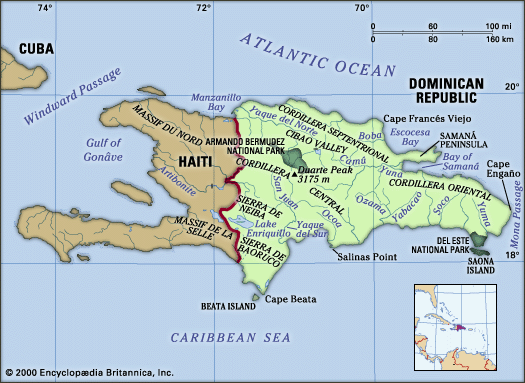
The Lucayan people were a peaceful group of Taino Indians who settled the Bahamian archipelago by 800 CE, having migrated from Hispaniola. They spoke an Arawakan language and are recognized as the original inhabitants of the islands at the time of Christopher Columbus’s arrival in 1492.56
The history of the Lucayans is marked by a profound tragedy. Following Columbus’s arrival, the Spanish made little effort to settle the islands, but they engaged in the systematic exploitation of the native population. Between 1492 and 1508, Spanish raiders forcibly removed approximately 40,000 Lucayans to work in the mines of Hispaniola. This brutal practice led to the total depopulation of the islands, which remained empty of inhabitants for more than a century before English settlers eventually arrived. Today, archaeological evidence of their presence, such as pottery shards and figurines, has been discovered on various islands, including Samana Cay.567
What other islands in the Bahamas are associated with Columbus’s first voyage?
While San Salvador Island is the most widely cited location for Christopher Columbus’s first landfall in the New World, the exact identity of the island the native inhabitants called Guanahani remains a subject of historical debate.179
Several other locations in the Bahamas have been proposed by scholars as the site of this initial encounter, including:
- Samana Cay: Some researchers, supported by computer analyses of Columbus’s route and journal descriptions, argue this is the true site of the first landing.579
- Cat Island: This island has also been identified by some historians as a potential candidate for the first landfall.9
- Rum Cay and the Plana Cays: These locations are occasionally mentioned in scholarly discussions as alternative possibilities for the site of Guanahani.7
Beyond the initial landing site, Columbus explored other nearby islands in the archipelago before continuing his voyage to Cuba and Hispaniola.7910
How did the arrival of Europeans change the lives of Indigenous people in the Caribbean?
The arrival of Europeans in the Caribbean initiated a period of profound and often catastrophic change for Indigenous peoples, characterized by rapid depopulation and the systematic dismantling of their societies.
Demographic Collapse
The most immediate impact was a drastic decline in the Indigenous population. While estimates suggest millions inhabited the region in 1492, they were decimated within generations by Old World diseases, such as smallpox, to which they had no immunity. This demographic crisis was exacerbated by forced labour and the harsh conditions of the encomienda system, which effectively functioned as a form of enslavement.111213141516
Social and Cultural Disruption
The Spanish colonial administration fundamentally reshaped Indigenous life to serve European economic interests, particularly in mining and agriculture.1413
- The Encomienda System: Indigenous groups were entrusted to Spanish proprietors who exacted tribute and labor. This system disrupted traditional social structures, as Indigenous people were forced into new types of work and relocated to support colonial enterprises.1416
- Cultural Erasure: The imposition of European norms, the collapse of traditional chiefdoms, and the loss of Indigenous political and class structures led to the near-total disappearance of many native cultures.13
- Intermixture: As the Indigenous population dwindled, survivors often intermixed with Europeans and enslaved Africans, leading to the emergence of new, hybrid populations and the loss of distinct Indigenous cultural identities.111315
While some reformers, such as Bartolomé de Las Casas, advocated for the humane treatment of Indigenous peoples, these efforts were largely ineffective against the prevailing colonial policies and the economic pressures of the era.111216
Sources
- San Salvador Island — Encyclopædia Britannica
- El Salvador - Climate — Encyclopædia Britannica
- El Salvador - Early history — Encyclopædia Britannica
- San Salvador — Encyclopædia Britannica
- The Bahamas - History — Encyclopædia Britannica
- Lucayo — Merriam-Webster
- Samana Cay — Encyclopædia Britannica
- The Bahamas — Encyclopædia Britannica
- Christopher Columbus - The first voyage of Christopher Columbus — Encyclopædia Britannica
- Where did Columbus land? — Encyclopædia Britannica
- West Indies - Discovery — Encyclopædia Britannica
- Western colonialism - Spanish colonial policies — Encyclopædia Britannica
- history of Latin America - Indians and Spaniards — Encyclopædia Britannica
- Central American and northern Andean Indian - Modern developments — Encyclopædia Britannica
- Taíno: Top Questions — Encyclopædia Britannica
- Encomienda — Encyclopædia Britannica
- West Indies - Emancipation — Encyclopædia Britannica
Published on · 3 min read