San Salvador Island
The name San Salvador Island refers to two distinct geographical locations:
What is San Salvador Island?
The name San Salvador Island refers to two distinct geographical locations:
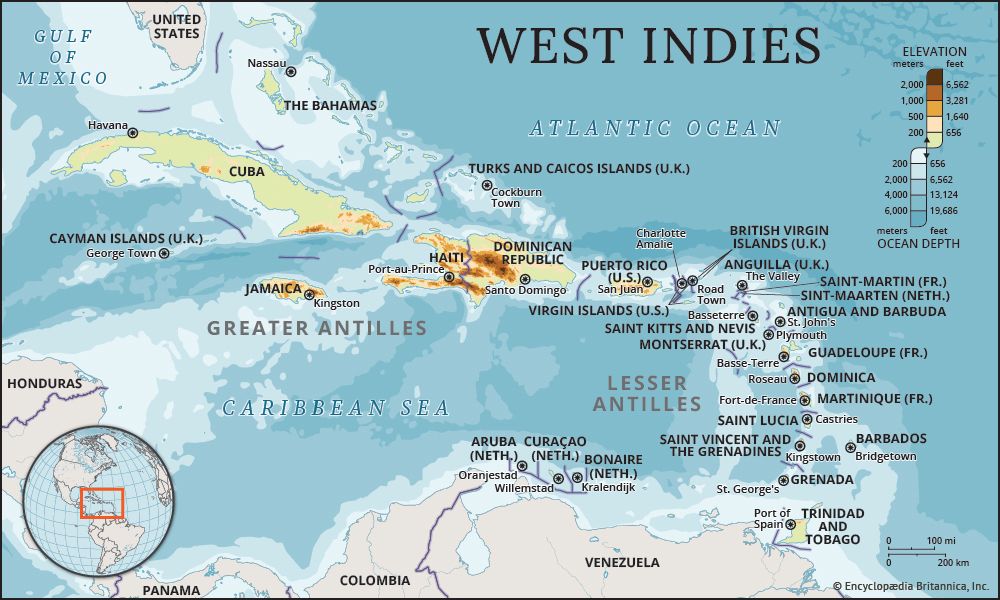
- In The Bahamas: Located in the West Indies, this island is widely believed by many scholars to be the site of Christopher Columbus’s first landing in the New World in 1492, historically known as Guanahani. Formerly called Watlings Island, it covers approximately 63 square miles. However, some researchers argue that the actual landing site may have been Samana Cay or Cat Island.12
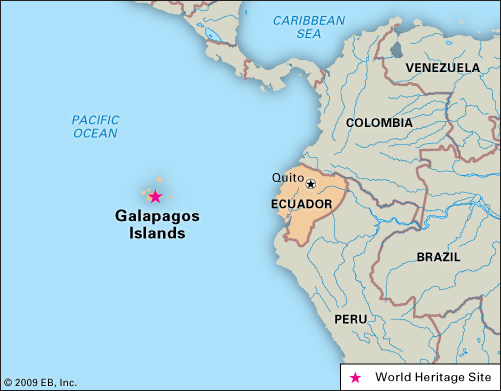
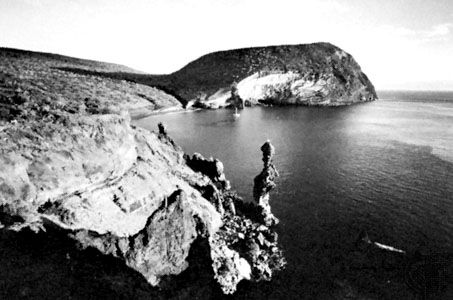
- In the Galápagos Islands: Situated in the eastern Pacific Ocean, this island is part of the Galápagos Islands belonging to Ecuador. Also known as Santiago or York, it is dominated by two volcanoes and is noted for its flamingo colony. It was historically visited by Charles Darwin and is currently only inhabited on a temporary basis.3
Note that the country of El Salvador is a separate sovereign nation in Central America and should not be confused with these islands.4
Who were the Lucayan Taino people?
The Lucayan Taino were the original inhabitants of the Bahama Islands, having settled the archipelago from Hispaniola by approximately 800 ce. They were a peaceful people who spoke an Arawakan language and shared the cultural characteristics of the broader Taino population found throughout the Greater Antilles.52
The history of the Lucayan people is marked by a tragic encounter with European colonization. Following Christopher Columbus’s arrival in 1492, the islands were subjected to Spanish raids. Between 1492 and 1508, Spanish raiders forcibly removed approximately 40,000 Lucayans to work in the mines of Hispaniola. This systematic exploitation led to the depopulation of the islands for more than a century.5
Today, the legacy of the Lucayan Taino persists in the name of their former home; many historians believe the name “Bahamas” is derived from their language, though some attribute it to the Spanish term bajamar, meaning “shallow water”.6
Why is the exact location of Columbus’s first landing still debated?
The exact location of Christopher Columbus’s first landfall in the New World, known to the Indigenous inhabitants as Guanahani, remains a subject of historical debate because primary accounts are limited and subject to interpretation. While San Salvador Island (formerly Watlings Island) is the traditional and most widely accepted site, other locations—including Samana Cay, Rum Cay, the Plana Cays, and the Turks and Caicos Islands—have been proposed by various scholars.789
The uncertainty stems from several factors:
- Interpretive Challenges: Columbus’s original journal for the first voyage is lost, and researchers must rely on later reconstructions and quotations, which may contain inaccuracies or editorial biases.710
- Conflicting Evidence: Proponents of different sites use varying methodologies, including computer analyses of transatlantic routes, interpretations of scenic descriptions in Columbus’s journals, and archaeological evidence such as the discovery of Lucayan artifacts.9
- Navigational Discrepancies: Columbus’s own navigational calculations were based on inaccurate geographic assumptions, which complicates modern attempts to trace his precise path through the Bahamas.11
What are the main differences between the Bahamas and the Galapagos Islands?
The Bahamas and the Galapagos Islands are distinct archipelagos with significant differences in their geography, origins, and economic foundations.
Geographic and Geological Differences
- Location: The Bahamas is an archipelago located on the northwestern edge of the West Indies in the Atlantic Ocean. In contrast, the Galapagos Islands are situated in the eastern Pacific Ocean, lying across the Equator approximately 600 miles west of mainland Ecuador.1415
- Formation: The Galapagos are geologically young, volcanic islands formed by lava piles and shield volcanoes. The Bahamas, by comparison, are not volcanic in origin.1514
Ecology and Biodiversity
- Endemism: The Galapagos are world-renowned for their unique, endemic species—such as giant tortoises, marine iguanas, and Galapagos finches—which were instrumental in the development of Charles Darwin’s theories on natural selection. The Bahamas are primarily known for their agreeable climate and picturesque beaches rather than a high concentration of endemic evolutionary species.1514
Economy and Society
- Economic Drivers: The Bahamas has a market economy heavily dependent on tourism and international financial services. While tourism is also a major activity in the Galapagos, the islands’ economy is further defined by fishing and agriculture, with a strong emphasis on scientific research and wildlife conservation.1615
- Cultural Heritage: The society of The Bahamas is a blend of European and African heritages, shaped by its history as a British colony and the legacy of the slave trade. The Galapagos are a province of Ecuador, with a population primarily composed of Ecuadorans.1415
Sources
- San Salvador Island — Encyclopædia Britannica
- The Bahamas - History — Encyclopædia Britannica
- San Salvador Island — Encyclopædia Britannica
- El Salvador - Services — Encyclopædia Britannica
- West Indies - The Pre-Columbian period — Encyclopædia Britannica
- The Bahamas — Encyclopædia Britannica
- Samana Cay — Encyclopædia Britannica
- Christopher Columbus - The first voyage of Christopher Columbus — Encyclopædia Britannica
- Where did Columbus land? — Encyclopædia Britannica
- Christopher Columbus - Calculations — Encyclopædia Britannica
- Columbus Day — Encyclopædia Britannica
- Christopher Columbus — Encyclopædia Britannica
- Christopher Columbus - Written sources — Encyclopædia Britannica
- Galapagos Islands — Encyclopædia Britannica
- The Bahamas - Economy of the The Bahamas — Encyclopædia Britannica
- The Bahamas - Climate of the The Bahamas — Encyclopædia Britannica
Published on · 4 min read