Sansevieria
While often referred to as Sansevieria, this group is no longer considered a distinct genus. Based on phylogenetic data, these approximately 70 species of…
What is Sansevieria?
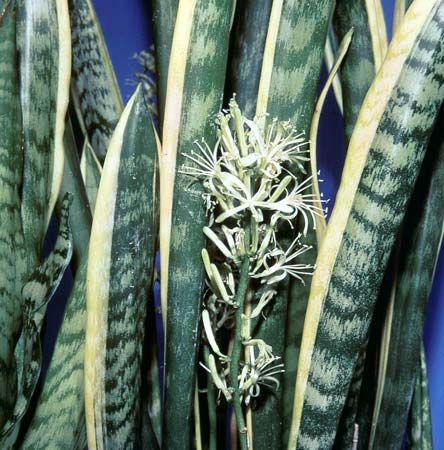
While often referred to as Sansevieria, this group is no longer considered a distinct genus. Based on phylogenetic data, these approximately 70 species of flowering plants in the asparagus family have been reclassified into the genus Dracaena.1
Native primarily to tropical Africa, these plants are characterized by their sword-shaped, often mottled leaves. Historically, the water-resistant fibres found in their leaves were utilized to manufacture ropes and bowstrings. Today, they are widely recognized as popular ornamental houseplants, most notably the mother-in-law’s tongue (Dracaena trifasciata), which is frequently still sold under the name Sansevieria.12
Why was the Sansevieria genus reclassified into Dracaena?
The genus Sansevieria was reclassified into the genus Dracaena in 2018 following the analysis of new phylogenetic data.13
In modern plant taxonomy, scientists use advanced methods—such as measuring the degree of molecular similarity in DNA molecules—to determine the natural evolutionary relationships between different plant groups. When this quantitative evidence reveals that a group of species is more closely related to an existing genus than previously understood, taxonomists reorganize the classification to reflect these findings. Consequently, the former genus Sansevieria is now considered defunct, and its species have been integrated into the broader, more diverse genus Dracaena to accurately represent their biological lineage.4351
What are the best conditions for growing snake plants indoors?
Snake plants (Dracaena trifasciata), formerly known as Sansevieria, are highly valued as indoor plants due to their resilience and striking foliage. While the provided search results confirm their identity as popular ornamentals, they do not contain specific horticultural instructions regarding light, water, or soil requirements for indoor cultivation.1
Because the current knowledge base does not provide detailed care guidelines for these plants, I cannot offer specific advice on the best conditions for growing them indoors.
How do plants like the snake plant help improve indoor air quality?
Houseplants, including the snake plant (Dracaena trifasciata), contribute to improved indoor air quality by absorbing airborne pollutants through their leaves during their natural gas-exchange process.63
Once these toxins are taken in, the plant transports them to its root system. There, specialized microbes living in the soil feed on the pollutants, effectively detoxifying them. Members of the Dracaena genus are specifically noted for their ability to remove harmful chemicals, such as formaldehyde, from the air. While experts suggest that using a variety of plants is most effective for air purification, the snake plant remains a popular and functional choice for indoor environments due to its ability to process these pollutants while maintaining its characteristic upright, ornamental foliage.63
Sources
- Sansevieria — Encyclopædia Britannica
- sansevieria — Merriam-Webster
- Dracaena — Encyclopædia Britannica
- Botany - Taxonomic aspects — Encyclopædia Britannica
- taxonomy - The taxonomic process — Encyclopædia Britannica
- 11 Questions About Useful Plants Answered - Can houseplants help the quality of air in my house? — Encyclopædia Britannica
Published on · 2 min read