Sarthe River
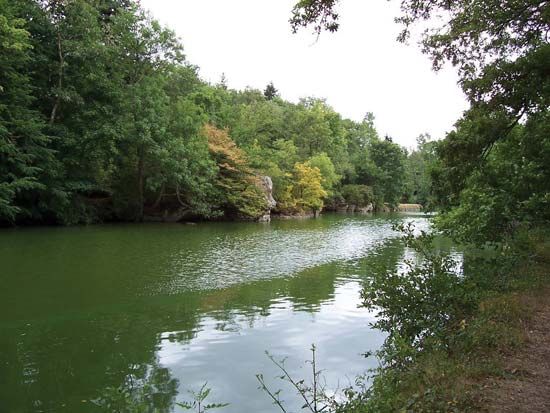
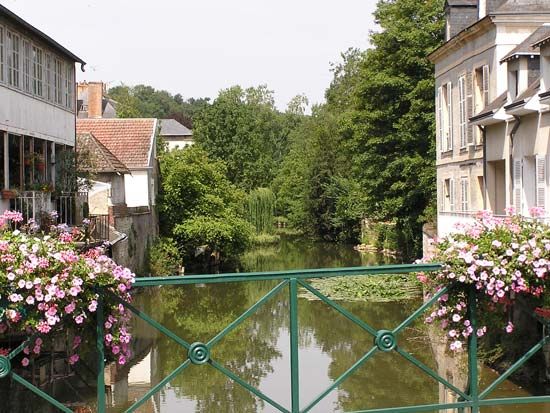
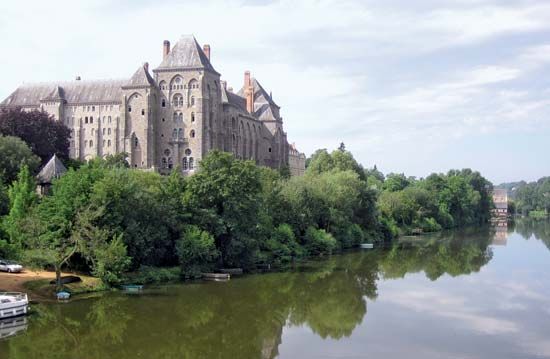
The Sarthe River is a 177-mile (285-km) waterway located in northwestern France. It originates in the Perche hills, north of Mortagne-au-Perche, and flows in…
What is Sarthe River?
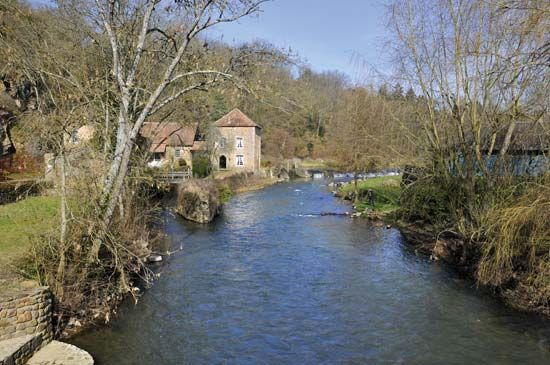
The Sarthe River is a 177-mile (285-km) waterway located in northwestern France. It originates in the Perche hills, north of Mortagne-au-Perche, and flows in a generally westward and southward direction.1
Key features of the river include:
- Confluence: Near Angers, the Sarthe joins the Mayenne River and the Loire River to form the Maine, which is a tributary of the Loire.1
- Tributaries: The Loir River serves as an affluent of the Sarthe, joining it north of Angers. Additionally, the Huisne river joins the Sarthe at Le Mans.21
- Navigation: The river is navigable by small craft for the portion of its course below Le Mans.1
- Basin: The river drains a basin covering approximately 3,100 square miles (8,000 square km).1
What is the Maine River and how is it formed?
The Maine River is a short, 7-mile (12-km) waterway located in the Maine-et-Loire département of western France.3
The river is formed through a complex confluence involving the Sarthe River and the Mayenne River:3
- The southward-flowing Sarthe and the southeastward-flowing Mayenne are linked by a branch approximately 2.5 miles upstream from their primary meeting point.3
- The two rivers converge again at the lower point of the heart-shaped island of Saint-Aubin, north of Angers, to officially form the Maine.34
- The Maine then flows in a southwesterly direction through the city of Angers before joining the westward-flowing Loire River about 5 miles downstream.3
What are some notable cities located along the Sarthe River?
Several notable cities and towns are situated along the Sarthe River in northwestern France:
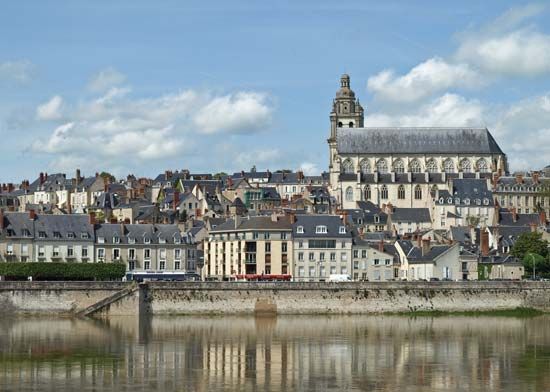
- Le Mans: Located in the center of the Sarthe département, this city is positioned at the confluence of the Sarthe and Huisne rivers. It is historically significant as the former capital of the Cenomani tribe and later the seat of the counts of Maine. Today, it is globally recognized for the 24 Hours of Le Mans automobile race.15
- Angers: While the Sarthe joins the Mayenne and Loire rivers to form the Maine near this city, Angers is a primary urban center associated with the river’s lower course.1
- Mortagne-au-Perche: This town is located near the source of the Sarthe in the Perche hills.1
- La Flèche: Although situated on the Loir River—a major tributary of the Sarthe—this town is part of the broader river system that eventually flows into the Sarthe north of Angers.2
How does the Loir River contribute to the Sarthe river system?
The Loir River serves as a significant affluent of the Sarthe River system in northwest-central France.2
Its contribution is characterized by the following:
- Hydrological Role: Stretching 193 miles (311 km), the Loir drains a basin of approximately 2,700 square miles (7,000 square km) and maintains an average annual discharge of 35 cubic meters per second.2
- Course and Confluence: Rising north of Illiers, the river flows in a west-southwest direction through towns such as Châteaudun, Vendôme, and La Flèche. It ultimately joins the Sarthe River just north of Angers, where the combined waters eventually contribute to the formation of the Maine River.21
- Navigability: Approximately 70 miles (114 km) of the Loir’s course are navigable, supporting the broader connectivity of the Sarthe river network.2
Sources
- Sarthe River — Encyclopædia Britannica
- Loir River — Encyclopædia Britannica
- Maine River — Encyclopædia Britannica
- Mayenne River — Encyclopædia Britannica
- Le Mans — Encyclopædia Britannica
Published on · 3 min read