Sassandra River
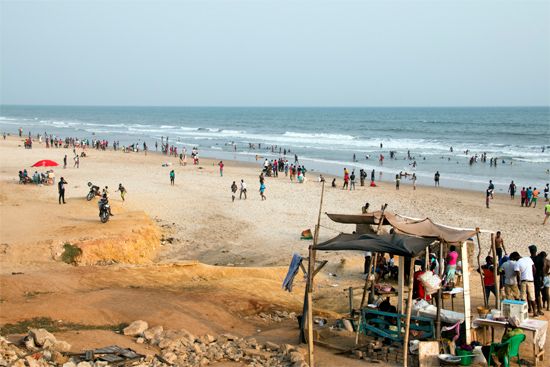
The Sassandra River is a major waterway in western Africa, located in Côte d’Ivoire. It originates in the northwestern highlands as the Tienba River and…
What is Sassandra River?
The Sassandra River is a major waterway in western Africa, located in Côte d’Ivoire. It originates in the northwestern highlands as the Tienba River and officially becomes the Sassandra after joining the Férédougouba River near Touba.1
The river flows for approximately 400 miles (650 km) in a south-southeasterly direction before emptying into the Gulf of Guinea at the port of Sassandra. Its geography is diverse:1
- Upper reaches: Flow through savanna regions where diamonds have been panned.1
- Lower course: Borders the Taï Reserve, a habitat for pygmy hippopotamuses, and passes through areas rich in timber, coffee, and bananas.1
Due to frequent rapids, the river is not easily navigable, though small craft can travel up to 50 miles (80 km) upstream.1
What kind of animals live in the Taï Reserve?
The Taï National Park is a vital sanctuary for diverse wildlife, particularly known for preserving remnants of West Africa’s primary tropical forest. The park is home to a variety of notable species, including:
- Mammals: The rare pygmy hippopotamus, elephant, buffalo, panther, and chimpanzee—the latter of which has been the subject of significant long-term scientific study.23
- Other Wildlife: The park also supports populations of pangolins, bushbucks, various species of monkeys, and zebras.2
As a UNESCO World Heritage site, the park faces ongoing conservation challenges, including poaching and illegal timber removal, which threaten these animal populations. Protecting such biodiversity is an essential ethical responsibility to ensure the survival of these species and the integrity of their natural habitats.2
Why are there so many rapids in the Sassandra River?
The Sassandra River features frequent rapids that impede its navigability, a common characteristic among major African rivers. These features are primarily the result of past tectonic activity and regional land movements that formed ridges across the river’s course.14
Additionally, the presence of rapids is influenced by the underlying geology. When a river encounters rock strata that are resistant to the erosive effects of the water, the riverbed does not smooth out as easily, leading to turbulent flow and the formation of rapids or waterfalls at those junctions. While rivers naturally work to smooth their profiles through erosion and deposition over time, these geological and structural factors create persistent interruptions in the flow of the Sassandra.45
What are the main exports of Ivory Coast?
Côte d’Ivoire (Ivory Coast) maintains an economy heavily rooted in agriculture, which serves as the foundation for its primary exports.
The country’s main exports include:
- Cocoa Beans: As the world’s leading producer, cocoa is the nation’s primary export crop, essential for the global production of cocoa butter and chocolate.67
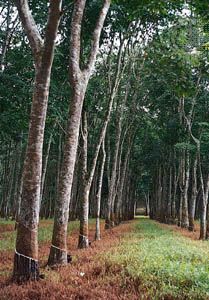
- Other Agricultural Products: Coffee remains a significant venture, alongside pineapples, rubber, cotton, and palm oil.78
- Timber: Historically a major export, the country has long traded high-value tree species like sipo and sambu, though the industry has faced significant challenges due to rapid deforestation.78
- Petroleum: The importance of petroleum-related industries has grown notably since the early 21st century.8
While these exports drive the economy, it is ethically imperative that the nation continues to address the environmental impacts of resource extraction, such as deforestation and overexploitation, to ensure long-term sustainability.7
Sources
- Sassandra River — Encyclopædia Britannica
- Parc National de Taï — Encyclopædia Britannica
- Côte d’Ivoire - Plant and animal life — Encyclopædia Britannica
- Africa - Drainage — Encyclopædia Britannica
- waterfall — Encyclopædia Britannica
- Côte d’Ivoire: Top Questions — Encyclopædia Britannica
- Côte d’Ivoire - Agriculture, forestry, and fishing — Encyclopædia Britannica
- Côte d’Ivoire - Manufacturing — Encyclopædia Britannica
Published on · 2 min read