Sea Eagle
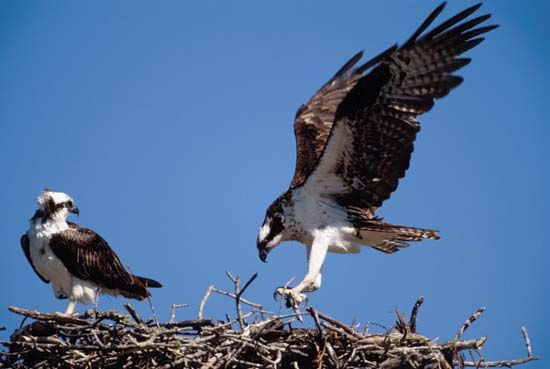
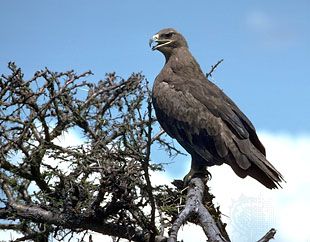
Sea eagles, also known as fish or fishing eagles, are large birds of prey that primarily inhabit areas near rivers, large lakes, and tidewaters.
How do sea eagles hunt and what is their primary diet?
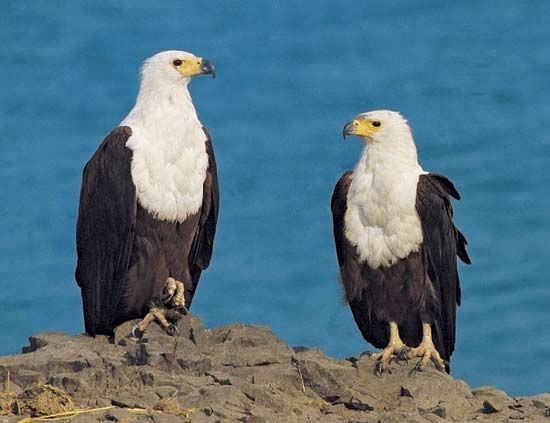
Sea eagles, also known as fish or fishing eagles, are large birds of prey that primarily inhabit areas near rivers, large lakes, and tidewaters.12
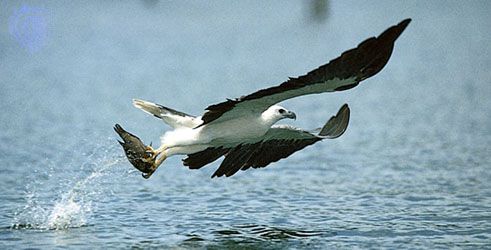
Their diet consists largely of fish, which they hunt by snatching directly from the water’s surface. In addition to active hunting, they consume a significant amount of carrion. These birds are also known to engage in kleptoparasitism, frequently robbing their primary competitor, the osprey, of its catch.12
To facilitate their specialized hunting, sea eagles possess distinct physical adaptations. Their lower legs are bare, and the undersurfaces of their toes are roughened, which provides the necessary grip to secure slippery prey. While they are powerful predators, they are generally less suited for aerial pursuit than other eagles, preferring to rely on their specialized grasping abilities to secure food from aquatic environments.12
How do sea eagles compare to other types of eagles in terms of size and appearance?
Sea eagles are among the largest and most distinct members of the eagle family, characterized by their specialized aquatic lifestyle and robust physical features.
Size and Physical Appearance
While eagle sizes vary significantly—ranging from small species with wingspans under 1 meter to massive raptors—sea eagles are consistently categorized as very large birds. The Steller’s sea eagle is widely considered the largest eagle in the world, weighing up to 9 kg (20 pounds) with a wingspan that can reach 2.70 meters (8.85 feet).23
In terms of appearance, sea eagles are distinguished by:
- Beaks and Legs: They possess exceptionally large, high-arched beaks and bare lower legs, which differ from many other eagles that have fully feathered legs.34
- Grasping Adaptations: The undersurfaces of their toes are roughened, an evolutionary trait that provides the grip necessary to secure slippery fish.34
- General Build: Unlike other eagles that may resemble vultures or are adapted for hunting terrestrial prey, sea eagles are built for life along rivers, lakes, and coastlines.34
While other eagles, such as the harpy eagle or golden eagle, are powerful predators, they often feature feathered heads or legs and are adapted to hunt land-based animals.4
What are the distinguishing physical characteristics of sea eagles?
Sea eagles, which belong primarily to the genus Haliaeetus, are distinguished by several specific physical characteristics adapted for their aquatic lifestyle:
- Beak Structure: They possess exceptionally large, high-arched beaks, which are well-suited for their diet of fish and carrion.23
- Legs and Feet: Unlike many other eagles that have fully feathered legs, sea eagles have bare lower legs. Furthermore, the undersurfaces of their toes are roughened, a specialized adaptation that provides the necessary grip to secure slippery prey.23
- Size: These birds are among the largest eagles in the world. Some species reach 1 meter (3.3 feet) in length with wingspans nearly twice that size. The Steller’s sea eagle is the largest, with a wingspan that can reach 2.70 meters (8.85 feet) and a weight of up to 9 kg (20 pounds).234
These physical traits allow them to effectively hunt along rivers, large lakes, and coastlines, distinguishing them from other eagles that are typically adapted for hunting terrestrial prey.23
What are some of the different species of sea eagles, and how do they differ?
Sea eagles, primarily belonging to the genus Haliaeetus, are large, fish-eating raptors found globally, excluding South America. While they share common traits like high-arched beaks and bare lower legs, they vary significantly by region and specific physical markings.
Notable Sea Eagle Species
- Steller’s sea eagle: The largest of all sea eagles, native to Korea, Japan, and Russia’s Far East. It can weigh up to 9 kg (20 pounds) with a wingspan exceeding 2 meters (6.6 feet).
- Bald eagle: The only sea eagle native to North America, ranging across Canada, the United States, and northern Mexico.
- White-tailed sea eagle: A bulky, long-winged species found across Europe, the Middle East, and parts of Asia. It is distinguished by its short, wedge-shaped white tail.
- White-bellied sea eagle: Frequently seen along the coasts of Australia, this species ranges from New Guinea and Indonesia through Southeast Asia to India and China.
- African fish eagle: A well-known species found along water bodies from south of the Sahara to the Cape of Good Hope.
- Asian Fishing Eagles: These include the gray-headed (greater) fishing eagle and the lesser fishing eagle, which belong to the genus Ichthyophaga.
Sources
- sea eagle — Merriam-Webster
- Sea eagle — Encyclopædia Britannica
- Eagle — Encyclopædia Britannica
- What is the wingspan of an eagle? — Encyclopædia Britannica
- white-tailed sea eagle — Merriam-Webster
Published on · 4 min read