Sea of Azov
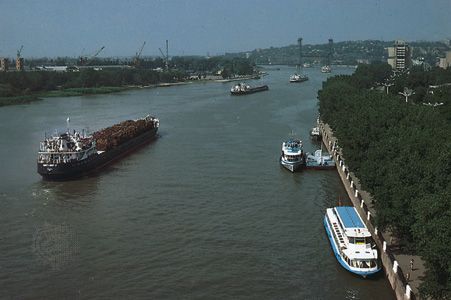
The Sea of Azov receives significant freshwater inflow from the Don River and the Kuban River, along with smaller streams such as the Mius, Berda…
What major rivers flow into the Sea of Azov, and how do they influence its water composition?
The Sea of Azov receives significant freshwater inflow from the Don River and the Kuban River, along with smaller streams such as the Mius, Berda, Obitochnaya, and Yeya.1
These rivers play a critical role in determining the sea’s water composition. Because river water has a much lower salinity than seawater, the massive discharge from the Don and Kuban ensures that the Sea of Azov remains relatively low in salinity, becoming nearly fresh in the Taganrog Gulf nearly fresh in the Taganrog Gulf. Additionally, these rivers transport vast quantities of silt and essential nutrients into the sea, which supports a rich variety of marine life.12
However, human activities—such as water diversion for irrigation and the creation of artificial reservoirs—have reduced the volume of river water reaching the sea. This decrease in freshwater discharge has caused the salinity of the Sea of Azov to rise, which negatively impacts its biological productivity and fish populations.3
How does the Sea of Azov connect to the Black Sea, and what role does the Kerch Strait play?
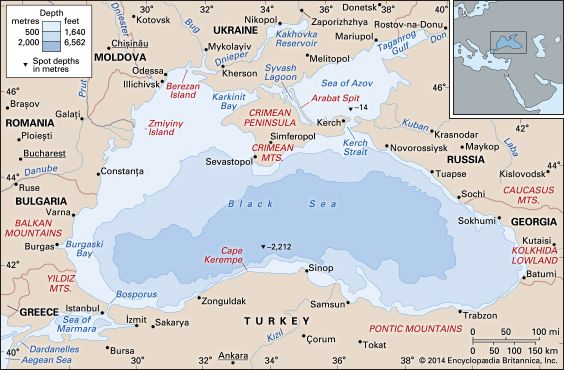
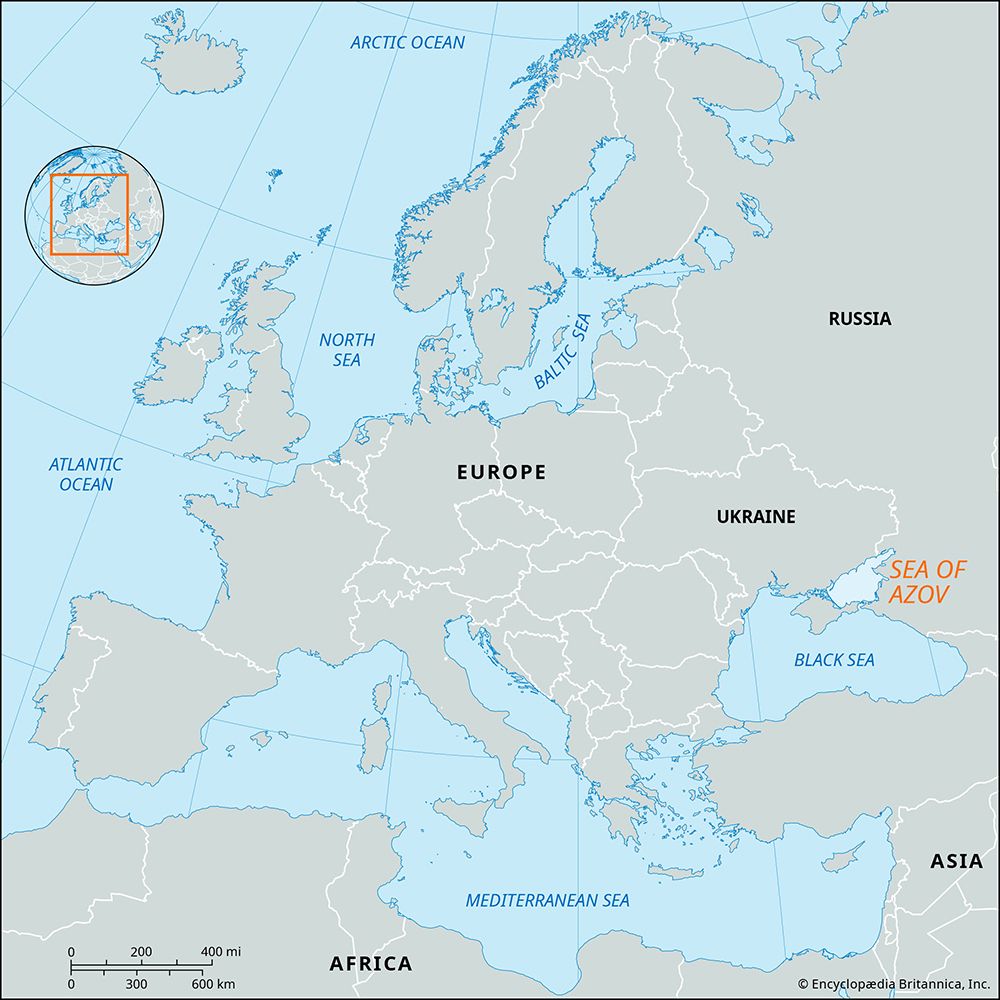
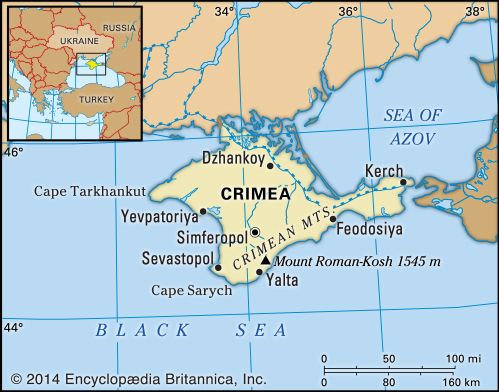
The Sea of Azov is a northern extension of the Black Sea, connected to it by the Kerch Strait. Historically known as the Cimmerian Bosporus, this narrow waterway lies between the Kerch and Taman peninsulas and serves as the essential maritime link between the two basins.15
The Kerch Strait plays a vital role in the hydrology of both seas. Water exchange between the basins occurs through the strait, influenced by factors such as wind, atmospheric pressure, and the overall water balance of the region.6
Beyond its hydrological function, the strait holds immense strategic and geopolitical significance. It serves as the primary gateway for maritime traffic entering and exiting the Sea of Azov, making it a critical transit point for commercial shipping. In recent years, the strait has become a focal point of conflict, particularly following the construction of the Kerch Strait Bridge. This infrastructure has been used to project naval power, control access to Ukrainian ports, and facilitate military supply lines, underscoring the strait’s role as a high-stakes corridor in regional security.17
What are the unique geographical features of the Sea of Azov?
The Sea of Azov is defined by several unique geographical characteristics that distinguish it from other marine environments:
- World’s Shallowest Sea: With a maximum depth of only about 46 feet (14 meters), it is the shallowest sea on Earth. In the Taganrog Gulf, the depth can be as little as 3 feet (1 meter) due to heavy silt deposits from the Don and Kuban rivers.1
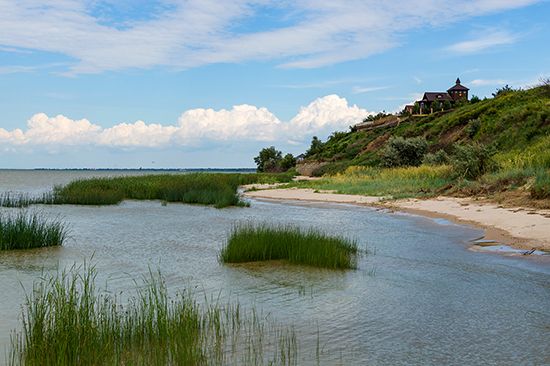
- Distinctive Shorelines: The northern, eastern, and western coasts are characterized by low-lying terrain featuring long sandspits, shallow lagoons, and gulfs in various stages of silting. In contrast, the southern shoreline is notably high and jagged.1
- The Arabat Spit: A prominent feature in the west is the Arabat Spit, a 70-mile (113-kilometer) long sandbar that separates the sea from the Syvash, a system of highly saline, marshy inlets.1
- Hydrological Dynamics: The sea’s floor is generally level. Its water levels are highly sensitive to river influx, and it experiences significant tidal oscillations that can reach up to 18 feet (5.5 meters).1
What are some of the major ports and cities located along the coast of the Sea of Azov?
The Sea of Azov is a vital maritime region, serving as a hub for freight and passenger traffic despite the navigational challenges posed by its shallow waters. Several significant ports and cities are situated along its coast:1
- Mariupol: Located in southeastern Ukraine, this major port city is situated near the estuary of the Kalmius and Kalchik rivers. It has historically served as a critical industrial center, with exports including coal, steel, machinery, and grain.18
- Taganrog: Positioned in the northeast along the Taganrog Gulf, this city is one of the sea’s principal ports.1
- Berdyansk: Also located in southeastern Ukraine, this city and port lies along the Berdyansk Gulf. It is known as both a commercial port and a holiday and health resort.19
- Yeysk: Another of the sea’s principal ports, Yeysk is located on the Russian side of the coast.1
- Kerch: Situated on the Kerch Peninsula, this city is a center for heavy industry, particularly iron ore mining, and is located at the strategic entrance to the Kerch Strait.10
- Azov: While located slightly inland on the Don River, this historic town is closely associated with the sea and has long served as a center for fish processing and manufacturing.111
Sources
- Sea of Azov — Encyclopædia Britannica
- Don River — Encyclopædia Britannica
- Azov, Sea of — Merriam-Webster
- hydrosphere - River and ocean waters — Encyclopædia Britannica
- Kerch Strait — Merriam-Webster
- Black Sea - Hydrology — Encyclopædia Britannica
- Crimea - The Kerch Strait Bridge — Encyclopædia Britannica
- Mariupol — Encyclopædia Britannica
- Berdyansk — Encyclopædia Britannica
- Azov — Encyclopædia Britannica
- Crimea - Geography — Encyclopædia Britannica
Published on · 3 min read