Don River
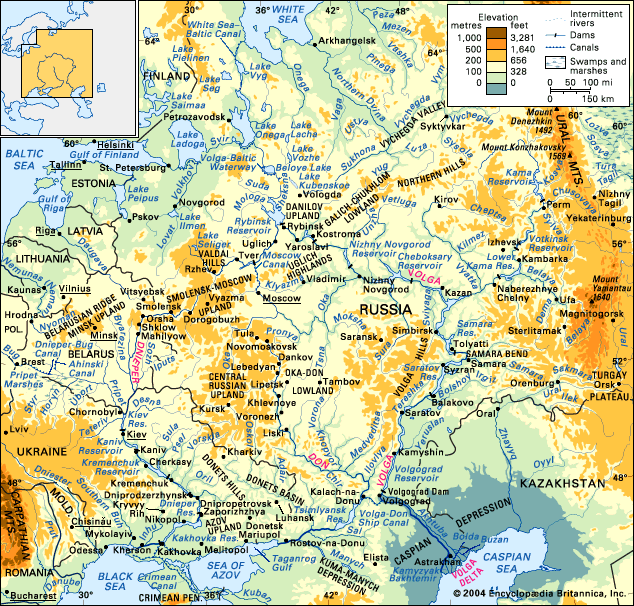
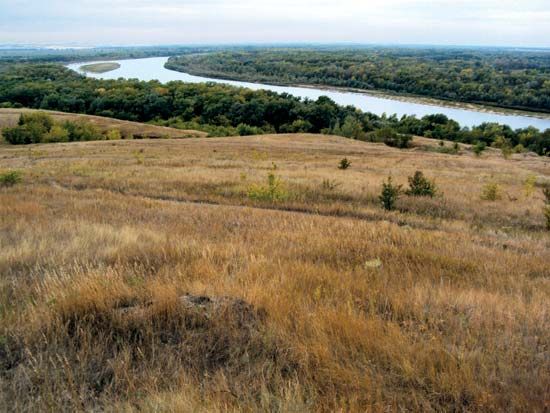
The Don River has a total length of 1,162 miles (1,870 km).
What is the length of the Don River and how does it compare to other major rivers in Russia?
The Don River has a total length of 1,162 miles (1,870 km).12
When compared to other major rivers in Russia, the Don is significantly shorter than the country’s largest waterways. For instance, the Volga River, which is the longest river in Europe, spans 2,193 miles (3,530 km). The major Siberian rivers are even more extensive: the Lena River reaches 2,734 miles (4,400 km), the Yenisey River measures 2,540 miles (4,090 km), and the Ob River extends for 2,268 miles (3,650 km). While the Don is a vital artery for southwestern Russia, its scale is modest relative to these massive Siberian and European systems.12
What significant historical events or battles have taken place along the Don River?
The Don River has served as a critical stage for several pivotal moments in Russian history, particularly regarding the struggle for independence and the evolution of the Russian state.
The Battle of Kulikovo (1380)
One of the most significant military engagements in Russian history occurred near the Don River on September 8, 1380. The Battle of Kulikovo marked the first major victory for Russian forces—led by Dmitry II—over the Golden Horde. Although it did not immediately end Mongol domination, the battle was a symbolic turning point that established the Duchy of Moscow as a rising power and earned the prince the title “Donskoy” (of the Don).
The Role of the Don Cossacks
By the 16th century, the Don region became the heartland of the Don Cossacks. These semi-independent military communities played a complex role in Russian history:
- Frontier Defense: They served as the advance guard for the expansion of the Russian Empire, including the conquest of Siberia.
- Rebellions: When their autonomy was threatened, the Don became a base for major uprisings against the tsarist state, led by figures such as Stenka Razin, Kondraty Bulavin, and Yemelyan Pugachov.
- Civil War: During the Russian Civil War (1918–1920), the Don region was a primary stronghold for the anti-Bolshevik White armies.
How has the construction of the Volga-Don Canal impacted the river and the surrounding region?
The construction of the Volga-Don Canal, completed in 1952, has fundamentally transformed the economic and environmental landscape of southwestern Russia. By linking the lower Volga River with the Don River, the canal created a vital maritime corridor that connects the upper Volga, the Kama River, and the Urals to oceanic commerce via the Sea of Azov and the Black Sea.32
Economic Impact
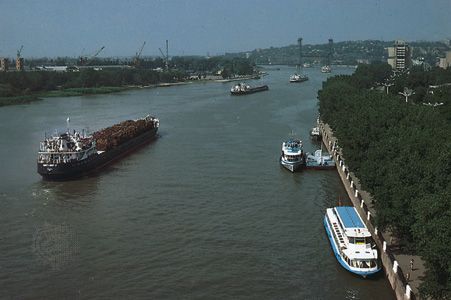
The canal significantly enhanced the navigability of the Don, allowing for the transport of large rivercraft and smaller seagoing vessels. It serves as a major artery for the movement of essential goods, particularly timber moving west and coal moving east. Furthermore, the project is closely tied to the Tsimlyansk Reservoir, which facilitated a massive expansion of regional irrigation—growing from approximately 124,000 acres in 1950 to nearly 2.5 million acres by 1980.32
Environmental Consequences
These large-scale engineering projects have come at a significant ecological cost:
- Reduced Discharge: Water diversion for irrigation and evaporation from artificial reservoirs have substantially reduced the volume of water reaching the mouth of the Don. By 1975, this discharge had decreased by an estimated 20 percent compared to 1950 levels.2
- Increased Salinity: The reduction in freshwater flow has caused the salinity of the Sea of Azov to rise, which has diminished the sea’s biological productivity and negatively impacted fish catches.2
- Habitat Alteration: Similar to the environmental changes seen in the Volga River, the construction of dams and reservoirs has disrupted natural river habitats, affecting native fish populations and their spawning grounds.27
How has the Don River historically influenced trade and transportation in the region?
The Don River has served as a vital artery for trade and transportation in Russia for centuries, evolving from a natural waterway into a sophisticated, engineered maritime corridor.
Historical Development
The river’s potential as a trade route was recognized as early as 1697, when Peter the Great attempted to build a canal connecting it to the Volga River. However, it was not until the completion of the Volga-Don Canal in 1952 that the region’s economic integration was fully realized. This canal allows large rivercraft and smaller seagoing vessels to travel between the upper Volga, the Kama River, and the Urals, providing a direct link to oceanic commerce via the Sea of Azov and the Black Sea.36
Economic Significance
- Cargo Transport: The canal serves as a primary route for essential industrial goods, with timber moving west and coal moving east.3
- Navigation: The river is navigable from its mouth to the city of Liski, a distance of 842 miles. Major ports such as Rostov-na-Donu, Kalach-na-Donu, and Tsimlyansk facilitate this regional and international trade.6
- Infrastructure: The construction of the Tsimlyansk Reservoir in the 1950s significantly improved navigation in the lower course, supporting both shipping and a massive expansion of regional irrigation.6
Sources
- Russia - Rivers — Encyclopædia Britannica
- Don River — Encyclopædia Britannica
- Volga-Don Canal — Encyclopædia Britannica
- Cossack — Encyclopædia Britannica
- Battle of Kulikovo — Encyclopædia Britannica
- Donets River — Encyclopædia Britannica
- Volga River - Environmental changes — Encyclopædia Britannica
Published on · 4 min read