Siamese
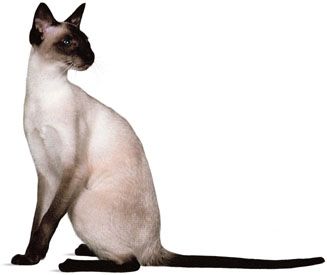
The Siamese is a distinctive, short-haired domestic cat characterized by a lithe, muscular, and long-bodied build with slim legs and a long, slender tail.…
What are the distinctive physical characteristics of Siamese cats?
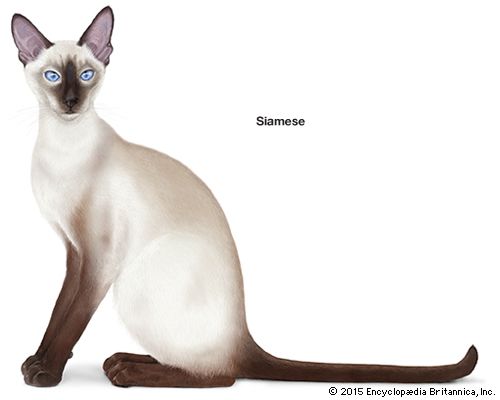
The Siamese is a distinctive, short-haired domestic cat characterized by a lithe, muscular, and long-bodied build with slim legs and a long, slender tail. Its head is notably long and wedge-shaped, complemented by striking blue eyes.12
A defining feature of the breed is its colorpoint pattern, a form of temperature-sensitive albinism where darker pigment is concentrated in the cat’s extremities—specifically the ears, face mask, legs, and tail. While kittens are born white or cream, these dark points develop as they mature. Depending on the specific variety, these points can appear in several colors, including seal (dark brown), blue, chocolate, lilac, or red.13
Despite their graceful and relatively small appearance, Siamese cats are known for being agile and highly intelligent. They are also recognized for being exceptionally vocal, possessing a wide range of distinct cries.1
How did the Siamese cat breed originate and gain popularity outside of Thailand?
The Siamese cat originated in Thailand, which was known as Siam until 1939. While the breed has ancient roots in Asia, its introduction to the West began in the late 19th century. The first documented exports occurred in 1878 to the United States and in 1884 to the United Kingdom.3
The breed’s popularity grew rapidly among Western cat enthusiasts. By 1902, the United Kingdom had established the first cat fanciers’ club specifically dedicated to the Siamese. Shortly thereafter, in 1906, the Cat Fanciers’ Association provided official recognition for the breed.3
The Siamese is distinguished by its unique colorpoint pattern—a result of temperature-sensitive albinism—and its highly intelligent, vocal nature. These traits, combined with their striking blue eyes and elegant, muscular build, helped solidify their status as one of the most popular short-haired breeds globally.3
What are the grooming requirements for Siamese cats?
Because Siamese cats have extremely short hair and lack a thick downy undercoat, they require minimal grooming compared to other breeds. Matting is rarely an issue, and they generally only need regular brushing during their two main shedding periods in the spring and fall.4
Beyond coat maintenance, Siamese cats—like all domestic cats—require routine care to ensure their overall health:
- Dental Care: Regular teeth brushing is essential to prevent dental disease, which can be linked to serious conditions like heart and kidney issues. Use pet-specific toothpaste and consult your veterinarian for annual cleanings.5
- Nail Trimming: Trim the sharp tips of the claws every three to four weeks to protect furniture and prevent accidental scratches. Be careful to avoid the sensitive pink quick.5
- Eye and Ear Maintenance: Keep the area under the eyes clean by wiping away sleep residue with a damp cotton ball. Similarly, gently clean the outer ear flaps if dirt accumulates, but never insert objects into the ear canal.5
Are Siamese cats good with children and other pets?
Siamese cats are generally characterized as affectionate and loyal, making them capable of forming strong bonds with their human families. However, they are also noted for their high intelligence and can sometimes exhibit unpredictable or destructive behavior. Because of their active, vocal, and sometimes demanding nature, their suitability for households with children or other pets often depends on the individual cat’s temperament and the environment provided.1
While the provided information highlights their intelligence and affectionate disposition, it does not explicitly detail their specific interactions with children or other animals. As with any breed, successful integration into a multi-pet household or a home with children typically requires proper socialization and supervised introductions to ensure a positive experience for everyone involved.1
Sources
- Siamese — Encyclopædia Britannica
- cat - Colors and patterns — Encyclopædia Britannica
- Siamese cat — Merriam-Webster
- cats as pets - Shorthaired cats — Encyclopædia Britannica
- cats as pets - Nail, tooth, and ear care — Encyclopædia Britannica
Published on · 3 min read