Siberian Husky
The Siberian Husky is characterized by an active, independent, and playful temperament. Unlike many other breeds that may serve as protective guard dogs, the…
How does the temperament of a Siberian Husky compare to other dog breeds?
The Siberian Husky is characterized by an active, independent, and playful temperament. Unlike many other breeds that may serve as protective guard dogs, the Siberian Husky is notably outgoing toward strangers and generally friendly, which makes it unsuitable for guarding purposes.1
Compared to other breeds, the Siberian Husky is recognized for its gentle nature but is also distinctively strong-willed and independent, which can make it more challenging to train than more biddable breeds. While many dogs are bred for specific tasks like retrieving or guarding, the Husky’s heritage as a working dog emphasizes endurance and pulling, and it is generally not a natural retriever or swimmer.1
Furthermore, while some breeds are known for frequent barking, the Siberian Husky is relatively quiet in that regard, though it is quite vocal in its own way, often communicating through a variety of “woos,” chirps, and howls. Because of its high energy and independent spirit, it requires significant daily exercise and secure containment, as it is prone to roaming.1
What is the history and origin of the Siberian Husky breed?
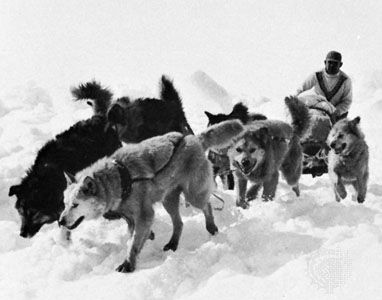
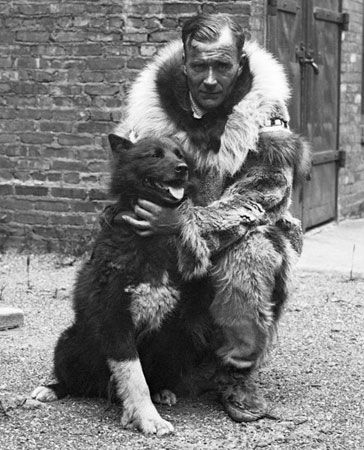
The Siberian Husky originated in Siberia, where it was developed by the Chukchi people as a sled dog and companion. The breed was kept pure for hundreds of years before being introduced to Alaska in 1909 for sled dog racing, where it quickly gained a reputation for its speed and endurance.1
The breed achieved widespread fame in 1925 during the “Great Race of Mercy,” a relay that delivered life-saving serum to Nome during a diphtheria epidemic. The lead dog of the final stretch, Balto, became an international icon, and the event is commemorated annually by the Iditarod Trail Sled Dog Race.1
Recognized by the American Kennel Club in 1930, the Siberian Husky is classified as a working dog. Recent genetic studies have highlighted the breed’s historical diversity, noting that early sled dogs like Balto possessed a mix of ancestry that contributed to their exceptional hardiness in extreme climates.1
What roles have Siberian Huskies played in history and popular culture?
Siberian Huskies have played significant roles in both historical events and popular culture, primarily due to their heritage as resilient working dogs.
Historical Significance
The breed gained international renown during the 1925 “Great Race of Mercy.” When a diphtheria epidemic threatened the isolated city of Nome, Alaska, teams of sled dogs were used to relay life-saving serum across 674 miles of treacherous, blizzard-stricken terrain. The success of this mission saved the city and cemented the status of the Siberian Husky as a symbol of endurance and reliability. The annual Iditarod Trail Sled Dog Race continues to commemorate this historic achievement today.12
Popular Culture
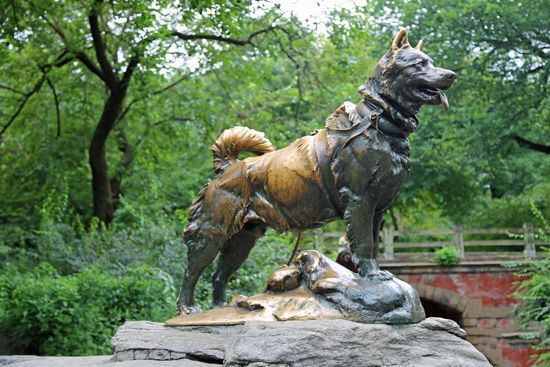
- Balto: The lead dog of the final relay team, Balto, became a global icon. His fame led to a statue being erected in New York City’s Central Park in 1925. Following his death, his preserved body was placed on display at the Cleveland Museum of Natural History.12
- Film Representations: The story of the serum run has inspired various films. The 1995 animated feature Balto provided a heavily fictionalized account of the event, while the 2019 Disney+ film Togo highlighted the contributions of the lead dog from the relay’s most dangerous leg.2
What are the physical characteristics of a Siberian Husky?
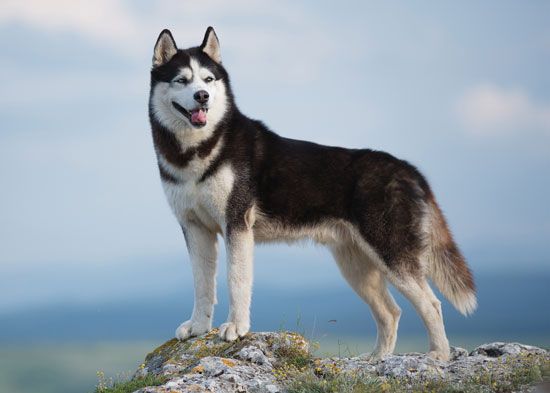
The Siberian Husky is a strong, graceful working dog characterized by its athletic build and endurance. Below are the primary physical specifications and features of the breed:
- Height: 20–24 inches (51–61 cm) at the withers.1
- Weight: 35–60 pounds (16–27 kg).1
- Coat: The breed possesses a dense, soft, and thick double coat that requires weekly brushing, or daily brushing during shedding seasons.1
- Appearance: They have erect, prick ears and often feature distinctive head markings, such as a cap, a mask, or spectacles.1
- Coloration: Their coats are typically gray, tan, or black and white.1
As a breed adapted to cold climates, the Siberian Husky is well-suited for freezing temperatures but is prone to overheating in hot conditions. While they are known for their intelligence and gentle temperament, they are also recognized for being independent and strong-willed.1
Sources
- Siberian Husky — Encyclopædia Britannica
- Balto — Encyclopædia Britannica
- sled dog — Encyclopædia Britannica
- Eskimo dog — Encyclopædia Britannica
Published on · 3 min read