Shropshire
Shropshire is a geographic and historic county in western England that shares a border with Wales. Historically known as Salop, its administrative centre is…
What is Shropshire?
Shropshire is a geographic and historic county in western England that shares a border with Wales. Historically known as Salop, its administrative centre is Shrewsbury. The county is divided by the River Severn into a hilly southwest region and an undulating plain in the northeast.1
The area has a rich history, featuring significant Roman remains and medieval defensive structures like Offa’s Dyke, which once separated the kingdom of Mercia from Wales. During the 18th century, the region became a cradle of the Industrial Revolution, particularly in Ironbridge, which is now a World Heritage site. Despite this industrial legacy, the county remains largely agricultural, known for sheep and cattle farming.1
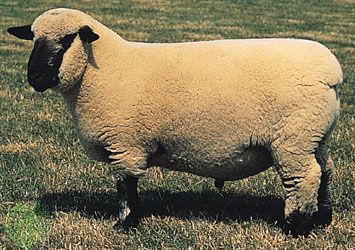
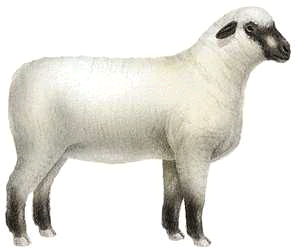
Additionally, the term “Shropshire” refers to a specific breed of dark-faced, hornless sheep originating from the county, valued for both mutton and wool.2
What was the significance of Offa’s Dyke in English history?
Offa’s Dyke is a significant 8th-century earthwork commissioned by Offa, the powerful king of Mercia. Stretching 169 miles from the River Severn to the Dee estuary, it served as a deliberate demarcation line rather than a traditional fortification.4
Its primary historical significance lies in its role as a physical boundary between the Anglo-Saxon kingdom of Mercia and the lands of the Welsh, whom Offa had frequently dispossessed. For centuries, the dyke functioned as a cultural and political frontier; place names to the east of the earthwork are predominantly English, while those to the west are largely Welsh. Although it does not perfectly align with the modern border between England and Wales, it remains a vital symbol of the historical efforts to define the territorial limits of early English kingdoms.45
How did the Ironbridge Gorge change the Industrial Revolution?
The Ironbridge Gorge was a pivotal catalyst for the Industrial Revolution, primarily due to the innovations of the Abraham Darby family in Coalbrookdale.
In 1709, Abraham Darby demonstrated that pig iron could be efficiently produced by smelting iron ore with coke rather than expensive charcoal. This breakthrough significantly lowered production costs and allowed for larger-scale manufacturing, fueling the demand for iron components in emerging technologies like the Newcomen steam engine.
The gorge’s significance was further cemented in 1779 with the completion of the Ironbridge, the world’s first cast-iron bridge. Designed by Thomas Farnolls Pritchard and built by Abraham Darby III, the structure showcased the structural potential of iron. Its survival during the 1795 floods proved the durability of iron in civil engineering, encouraging its widespread adoption in future infrastructure projects. Today, the area is recognized as a UNESCO World Heritage site for its profound impact on global industrial history.
What are some characteristics of the Shropshire breed of sheep?
The Shropshire is a breed of medium-wool, dark-faced, and hornless sheep that originated in the Downs of England. It is highly regarded for its dual-purpose utility, producing both quality wool and mutton.1011
Key characteristics of the breed include:
- Adaptability: The Shropshire is particularly well-suited for farm conditions rather than open range environments. It is noted for its ability to thrive on sparse pasturage more effectively than other breeds like the Hampshire or Suffolk.10
- Physical Traits: The breed is distinguished by an excessive covering of wool on the face, a feature that is more easily managed in a farm setting.10
- Popularity: It remains one of the most popular farm sheep breeds in the Midwestern United States.10
While larger breeds like the Suffolk and Hampshire saw increased popularity following World War II, the Shropshire remains a significant breed within the medium-wool classification.2
Sources
- Shropshire — Encyclopædia Britannica
- Shropshire — Merriam-Webster
- South Shropshire — Encyclopædia Britannica
- Offa’s Dyke — Encyclopædia Britannica
- Offa's Dyke — Merriam-Webster
- Ironbridge: Top Questions — Encyclopædia Britannica
- Abraham Darby — Encyclopædia Britannica
- Ironbridge — Encyclopædia Britannica
- bridge - Early designs — Encyclopædia Britannica
- Shropshire — Encyclopædia Britannica
- Livestock farming - Breeds — Encyclopædia Britannica
Published on · 3 min read