Smilodon
Smilodon is a genus of extinct, prehistoric saber-toothed cats that lived in North and South America during the Pleistocene Epoch. Often popularly referred…
What is Smilodon?
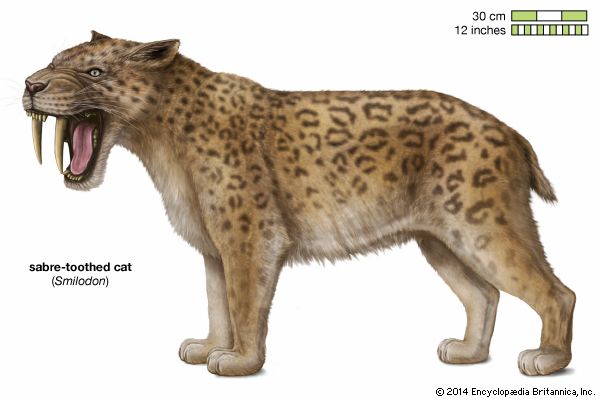
Smilodon is a genus of extinct, prehistoric saber-toothed cats that lived in North and South America during the Pleistocene Epoch. Often popularly referred to as “saber-toothed tigers,” they were not true tigers but members of the subfamily Machairodontinae.123
These predators were characterized by their robust, stocky builds and exceptionally long upper canine teeth, which could reach lengths of up to 20 cm (8 inches). Anatomical features, such as a jaw capable of opening to a 90° angle and powerful neck muscles, suggest they were ambush predators that used their teeth to stab and slash large herbivores.142
While some species like S. fatalis were comparable in size to modern lions or tigers, others such as S. populator were significantly larger and heavier, ranking among the largest cats to ever exist. Many fossils have been famously recovered from the La Brea Tar Pits.142
What other animals lived during the Pleistocene Epoch?
The Pleistocene Epoch was characterized by a phenomenon known as “megafaunal gigantism,” where many terrestrial mammals grew to exceptionally large sizes. This era featured a diverse array of species, many of which are now extinct, while others have modern descendants that remain familiar today.5
Notable Pleistocene Fauna
The fossil record reveals a wide variety of animals that inhabited the Earth during this period:
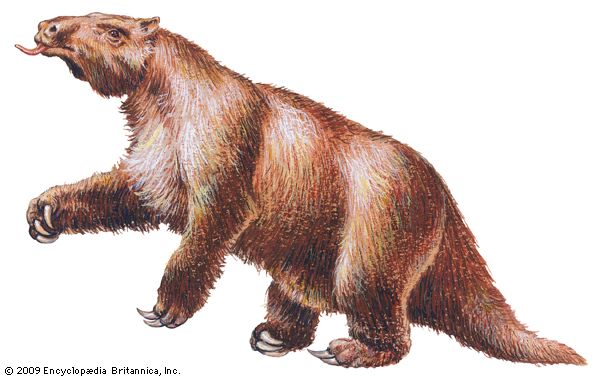
- Large Herbivores: This group included the woolly mammoth, mastodon, woolly rhinoceros, and giant ground sloths like Megatherium. Other grazers and browsers included camels, llamas, stag-moose, various species of bison, and several species of horses.56
- Predators: The landscape was home to formidable carnivores, including the dire wolf, American lion, American cheetah, and the giant short-faced bear of the New World. The cave bear was a prominent predator in the Old World.5
- Other Mammals: The giant beaver and the musk ox were also part of the diverse Pleistocene ecosystem.5
While many of these species were uniquely adapted to the cold tundra or vast grasslands of the time, the end of the epoch saw a significant wave of extinctions, particularly among these larger animals, likely due to a combination of climatic shifts and environmental changes.56
How did the La Brea Tar Pits help scientists study Smilodon?
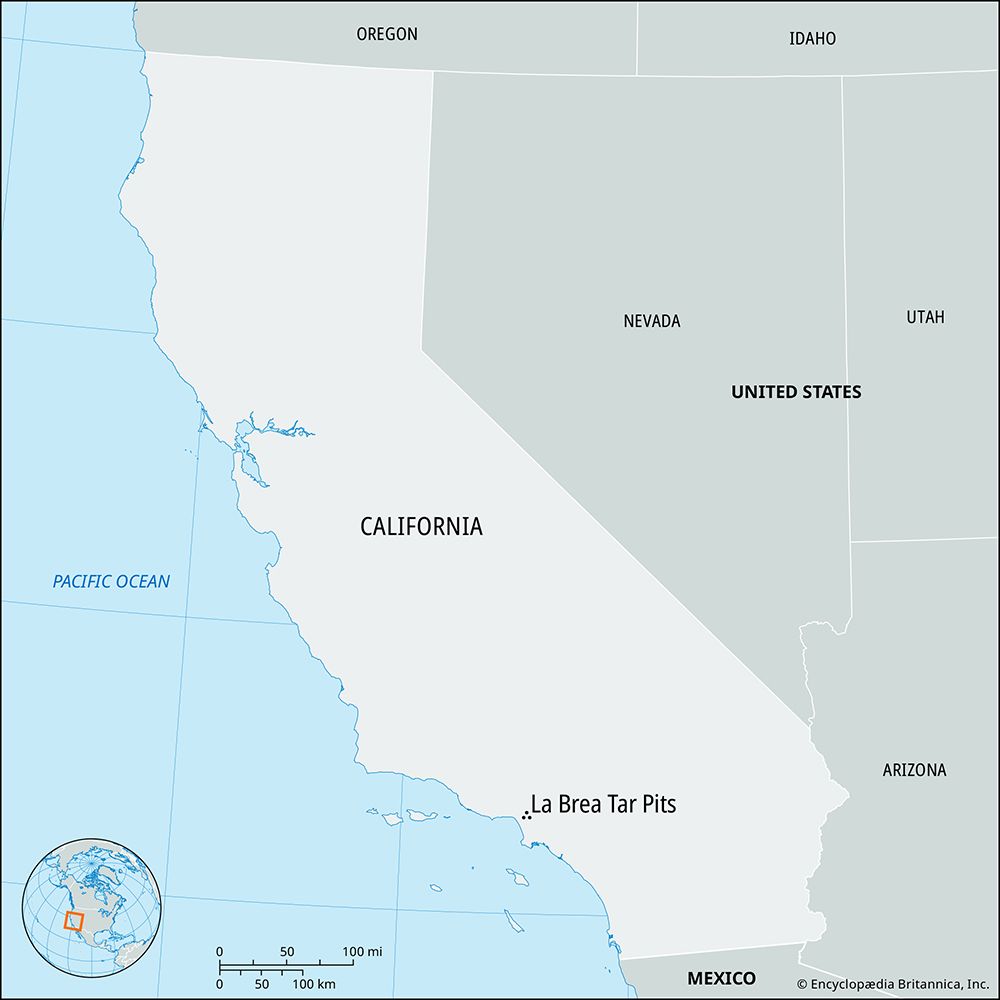
The La Brea Tar Pits have served as a vital resource for paleontologists studying Smilodon by providing a vast collection of well-preserved fossilized remains. These pits, which consist of thick, sticky pools of asphalt, acted as natural traps for prehistoric animals during the Pleistocene Epoch.84
Scientists believe that Smilodon individuals were frequently mired in the tar while attempting to prey on other animals that had already become trapped in the pools. This unique ecological trap has allowed researchers to recover numerous skeletal specimens, which have been instrumental in analyzing the cat’s anatomy, including its specialized skull and jaw structure.41
By examining these fossils, experts have gained significant insights into the physical adaptations of Smilodon, such as the development of powerful neck muscles and the ability to open its jaw to a 90° angle, both of which were essential for its hunting technique.41
What are some other examples of prehistoric megafauna?
The Pleistocene Epoch was a period defined by the presence of megafauna—animals of exceptionally large size. While many of these species are now extinct, they played a significant role in the ecosystems of the time.549
Examples of Pleistocene Megafauna
Beyond the well-known woolly mammoth and sabre-toothed cat, the fossil record highlights a diverse range of giant mammals:510
- Herbivores:
- Mastodon: An elephant-like mammal that persisted throughout the Pleistocene.511
- Irish elk: A massive deer species known for having the largest antlers of any deer, sometimes spanning 4 meters (13 feet) across.12
- Giant Ground Sloth: Large, slow-moving mammals that inhabited forests and plains.59
- Stag-moose: A large, extinct member of the deer family.5
- Camels and Llamas: These animals were widespread in the Americas during the Pleistocene before their eventual extinction in those regions.5
- Predators:
- Dire wolf: A formidable carnivore that hunted alongside other large predators.5
- Cave bear: A large bear species prominent in the Old World.5
- American lion and American cheetah: Large feline predators that roamed the landscape.5
- Giant short-faced bear: A massive bear species native to the New World.5
These animals often displayed extreme physical adaptations, such as the massive size of the giant beaver or the specialized teeth of various predators, which some scientists suggest resulted from an evolutionary “arms race” between hunters and their prey.5
Sources
- How big was a saber-toothed tiger? — Encyclopædia Britannica
- Smilodon — Merriam-Webster
- How big were saber-toothed cats compared to tigers? — Encyclopædia Britannica
- sabre-toothed cat — Encyclopædia Britannica
- Quaternary - Fauna and flora — Encyclopædia Britannica
- Pleistocene Epoch — Encyclopædia Britannica
- Indigenous peoples of the Americas - Early cultural development — Encyclopædia Britannica
- La Brea Tar Pits — Encyclopædia Britannica
- Native American - Paleo-Indian cultures — Encyclopædia Britannica
- megafauna — Merriam-Webster
- Cenozoic Era - Cenozoic life — Encyclopædia Britannica
- megalodon — Encyclopædia Britannica
- Irish elk — Encyclopædia Britannica
Published on · 3 min read