Silverfish
The silverfish (Lepisma saccharina) is a slender, flat, and wingless insect characterized by its silvery scales and three distinct tail bristles. Found…
What is silverfish?
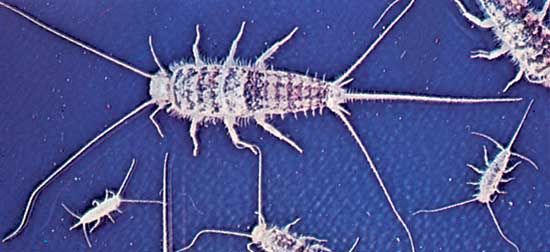
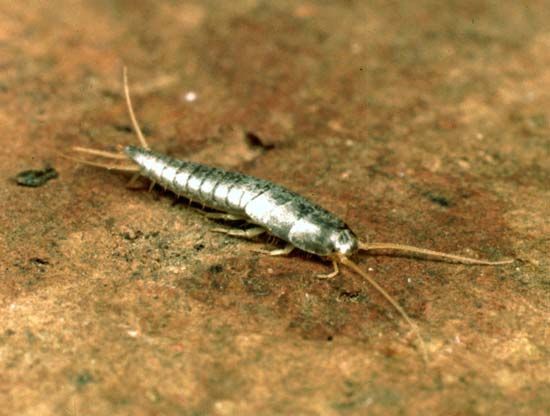
The silverfish (Lepisma saccharina) is a slender, flat, and wingless insect characterized by its silvery scales and three distinct tail bristles1. Found worldwide, these quick-moving creatures typically inhabit indoor environments.1
They are often classified as household pests because they feed on materials rich in starch, such as wallpaper, bookbindings, and paste, which can result in damage to books and fabrics. Belonging to the order Zygentoma, they are closely related to the firebrat are closely related to the firebrat.1
A unique aspect of their biology is their reproductive process: rather than direct copulation, the male deposits a sperm packet for the female to collect. Silverfish continue to molt throughout their lives, which can span two or more years. If an infestation becomes problematic, they can be managed using insecticides.1
What is a firebrat and how does it differ from a silverfish?
The firebrat (Thermobia domestica) and the silverfish (Lepisma saccharina) are both wingless insects belonging to the order Zygentoma, and both are considered household pests that feed on starches, potentially damaging books and fabrics.21
However, they differ in their physical appearance and preferred environments:
- Appearance: The firebrat is a stout-bodied insect, typically white with light and dark spots, measuring about 10 mm in length. In contrast, the silverfish is slender, flat, and covered in silvery scales, and it is distinguished by three prominent tail bristles.21
- Habitat: While both are found indoors, the firebrat specifically thrives in warm locations, such as near furnaces, fireplaces, and water heaters. The silverfish is more generally distributed in indoor environments worldwide.21
Both species can be managed using insecticides if they become a nuisance.21
Why do silverfish continue to molt throughout their entire lives?
Silverfish continue to molt throughout their lives because they are ametabolous insects, meaning they undergo almost no change in form as they grow from young to adult. Unlike many other insects that stop molting once they reach sexual maturity, silverfish retain the ability to shed their exoskeleton periodically for the duration of their two-year or longer lifespan.134
This process, known as ecdysis, is a biological necessity for arthropods because their rigid outer covering limits body growth4. By shedding the old, restrictive skeleton and secreting a new, flexible one, the insect can accommodate continued internal tissue growth. The timing of these molts is regulated by hormonal signals, specifically the steroid hormone ecdysone, which is triggered by factors such as internal tissue distension or environmental cues.456
What are some natural ways to prevent silverfish in a home?
To prevent silverfish from infesting your home, you should focus on eliminating the conditions that attract them. Because these insects thrive in environments that provide food and moisture, maintaining a clean and dry living space is the most effective natural deterrent.
- Reduce Humidity: Silverfish prefer damp, humid areas. Use dehumidifiers in basements, bathrooms, and attics to keep moisture levels low.
- Eliminate Food Sources: Since they feed on starches, store pantry items like flour, sugar, and cereals in airtight containers. Regularly vacuum to remove dust, crumbs, and debris that may serve as a food source.
- Seal Entry Points: Inspect your home for cracks in walls, baseboards, and around windows. Sealing these gaps prevents them from finding hiding spots or entering from the outside.
- Declutter: Remove piles of old newspapers, magazines, or cardboard boxes, as these materials provide both food and shelter for the insects.
While insecticides are an option for control, these preventative measures address the root causes of an infestation.1
Sources
- silverfish — Encyclopædia Britannica
- firebrat — Encyclopædia Britannica
- insect - Types of metamorphosis — Encyclopædia Britannica
- Ecdysis - Triggers — Encyclopædia Britannica
- arthropod - The exoskeleton and molting — Encyclopædia Britannica
- insect - Role of hormones — Encyclopædia Britannica
Published on · 3 min read