Atlas Moth
The atlas moth (Attacus atlas) is a massive saturniid moth native to the tropical and subtropical rainforests of Southeast Asia. It is recognized as one of…
What is atlas moth?
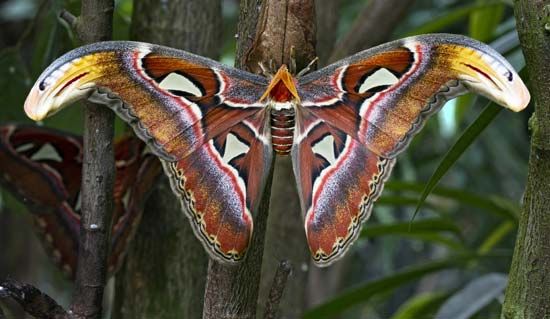
The atlas moth (Attacus atlas) is a massive saturniid moth native to the tropical and subtropical rainforests of Southeast Asia. It is recognized as one of the largest moths in the world, with females reaching wingspans of up to 25 cm (10 inches).1
Adult atlas moths have stout, hairy bodies and broad, vividly colored wings featuring brown, orange, black, red, and white patterns. Their wingtips are uniquely shaped to resemble a snake’s head, likely to deter predators. Because they possess vestigial mouthparts, adults do not feed and typically live only one to two weeks, relying on fat stores accumulated during their larval stage.1
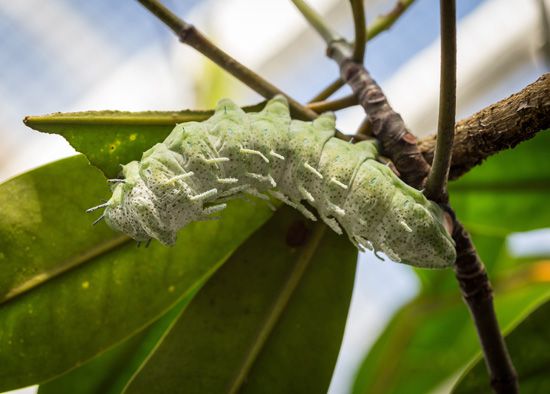
The species is known for its silk production, yielding a durable brown fagara silk, though it is of less economic significance than the silkworm moth. Their life cycle includes an egg, a bluish-green caterpillar with defensive spines, a pupal stage within a silk cocoon, and the adult form.12
How do moths differ from butterflies?
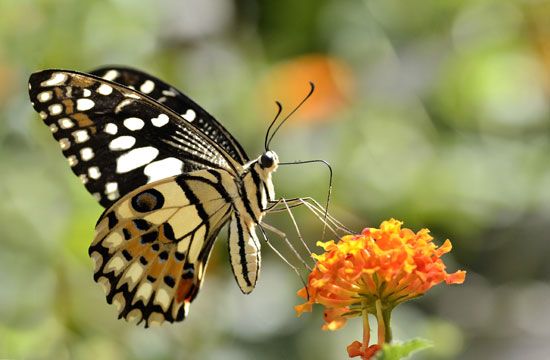
Moths and butterflies are both members of the insect order Lepidoptera, but they exhibit several distinct physical and behavioral differences.4
Physical Characteristics
- Antennae: Most moths possess thick or feathery antennae, whereas butterflies typically have simple, club-tipped antennae.4
- Body Shape: Butterflies generally have slim, dainty bodies, while moths are typically stout and often fuzzy.4
- Coloration: Butterflies are usually colorful with dramatic wing patterns, while moths are often more drab, though there are notable exceptions in both groups.4
Behavioral and Developmental Differences
- Activity: Moths are generally nocturnal (active at night), while butterflies are typically diurnal (active during the day).4
- Resting Position: When at rest, butterflies usually hold their wings vertically over their backs. Moths typically fold their wings tentlike over their bodies, wrap them around their bodies, or hold them extended at their sides.4
- Metamorphosis: During the pupal stage, butterflies form a chrysalis, whereas most moths build a fibrous cocoon for protection.45
What is the process of metamorphosis in insects?
Insects undergo metamorphosis, a biological process involving striking structural and physiological changes regulated by hormones. This development is generally categorized into three patterns:
- Ametabolous: Primitive insects, such as silverfish, experience a simple, gradual increase in size until reaching adult dimensions without significant structural change.6
- Hemimetabolous: Known as gradual metamorphosis, this cycle includes the egg, nymph, and adult stages. Nymphs resemble adults but differ in size and wing development, which occurs externally through a series of molts.6
- Holometabolous: This complete metamorphosis, seen in butterflies and moths, involves four distinct stages: egg, larva, pupa, and adult. The larva differs greatly from the adult, focusing on growth until the inactive pupal stage, where tissues are reorganized into adult structures.6
These changes are controlled by ecdysone, which triggers molting, and juvenile hormone, which inhibits metamorphosis until the final larval stage is reached.78
Why do some adult moths not have mouthparts to eat?
In many moth species, the adult mouthparts have become reduced or vestigial, rendering them nonfunctional for feeding. This evolutionary adaptation occurs independently across various lineages, shifting the primary focus of the adult stage entirely toward reproduction and dispersal.910
Because these adults cannot feed, they rely exclusively on the energy and nutrient reserves accumulated during their larval stage to survive and reproduce. Consequently, these moths typically have very short lifespans, often living only a few days after emerging from their cocoons. A well-known example of this is the luna moth, which lacks mouthparts and must prioritize finding a mate immediately upon emergence.9101112
While most adult Lepidoptera utilize a tubular proboscis to consume liquids like nectar, the loss of these structures in certain groups represents a specialized life-history strategy where the adult serves solely as a vehicle for the next generation.91011
Sources
- atlas moth — Encyclopædia Britannica
- Atlas moth — Merriam-Webster
- saturniid moth — Encyclopædia Britannica
- What’s the difference between moths and butterflies? — Encyclopædia Britannica
- Lepidoptera - Pupa , or chrysalis — Encyclopædia Britannica
- Metamorphosis — Encyclopædia Britannica
- insect - Role of hormones — Encyclopædia Britannica
- Lepidoptera - Growth, molting, and metamorphosis — Encyclopædia Britannica
- Lepidoptera - The adult — Encyclopædia Britannica
- Lepidoptera - Head — Encyclopædia Britannica
- luna moth — Encyclopædia Britannica
- insect - Reproduction — Encyclopædia Britannica
Published on · 3 min read