Smog
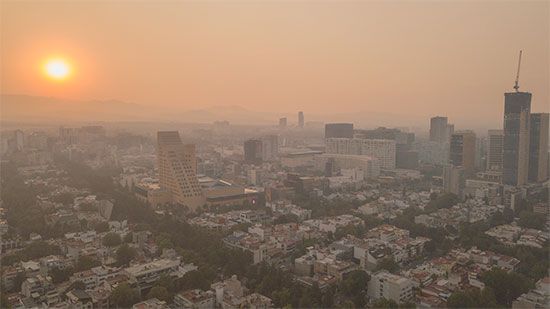
Smog is a form of community-wide air pollution characterized by a pall of pollutants that reduces visibility and poses significant health risks. While the…
What is smog and how does it form in the atmosphere?
Smog is a form of community-wide air pollution characterized by a pall of pollutants that reduces visibility and poses significant health risks. While the term originated as a combination of “smoke” and “fog,” modern smog does not necessarily require either.1
There are two primary types of smog:
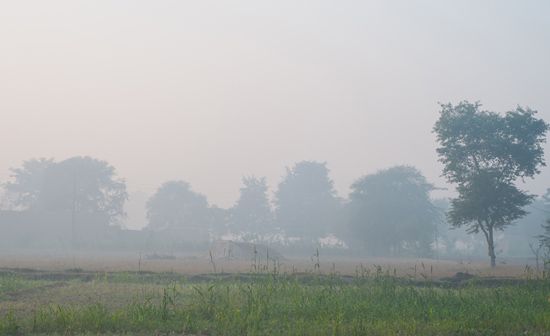
- Sulfurous Smog: Often called “London smog,” this type results from high concentrations of sulfur oxides produced by burning sulfur-bearing fossil fuels, particularly coal. It is aggravated by damp conditions and high levels of suspended particulate matter.1
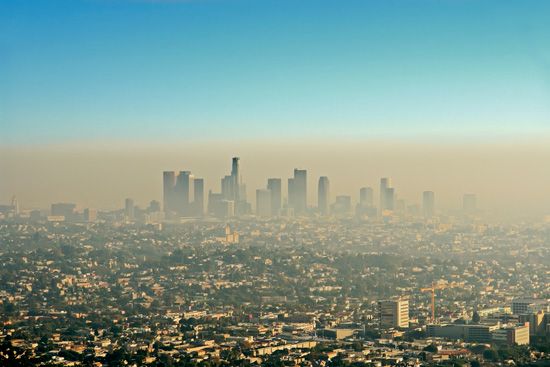
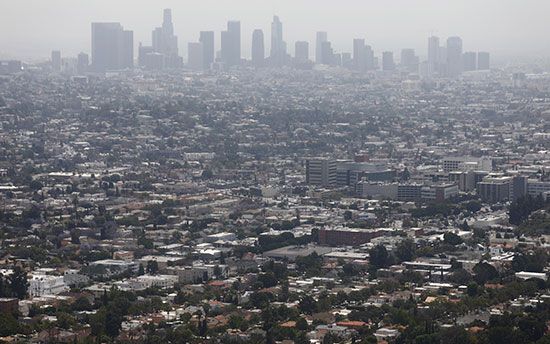
- Photochemical Smog: Known as “Los Angeles smog,” this type occurs in urban areas with heavy automobile traffic. It forms when nitrogen oxides and hydrocarbon vapors undergo photochemical reactions in the lower atmosphere triggered by sunlight. A key product of these reactions is ozone, a highly toxic gas that causes respiratory distress and plant damage.12
What are the main types of smog and how do they differ?
There are two primary types of smog, which differ significantly in their chemical composition, origins, and the environmental conditions required for their formation.4
Sulfurous Smog (“London Smog”)
- Primary Cause: The combustion of sulfur-bearing fossil fuels, particularly coal.4
- Key Components: High concentrations of sulfur oxides and suspended particulate matter.4
- Conditions: This type is aggravated by damp weather and high humidity.4
Photochemical Smog (“Los Angeles Smog”)
- Primary Cause: Emissions from automobiles and other sources, specifically nitrogen oxides and hydrocarbon vapors.14
- Key Components: The reaction of these pollutants in the presence of sunlight creates ozone and nitrogen dioxide.14
- Conditions: It is most common in urban areas with heavy traffic and abundant sunlight. Geographic features like mountains or temperature inversions can trap these pollutants, worsening the effect.1
Unlike sulfurous smog, photochemical smog does not require smoke or fog to form.4
What are the primary sources of pollutants that contribute to smog formation?
Smog formation is driven by both primary pollutants, which are emitted directly into the atmosphere, and secondary pollutants, which form through chemical reactions in the air.4
Primary Sources of Pollutants
The primary pollutants that contribute to smog are released from identifiable sources, including:
- Automobile Emissions: Motor vehicles are a major source of nitrogen oxides and hydrocarbon vapors, which are essential precursors for photochemical smog.51
- Fossil-Fuel Combustion: The burning of coal, fuel oil, and natural gas in power plants and industrial facilities releases sulfur dioxide, nitrogen oxides, and particulate matter.367
- Industrial Processes: Factories and metal processing plants contribute various gaseous pollutants and particulates to the atmosphere.6
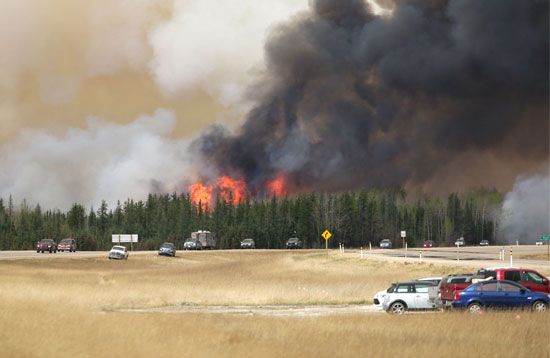
- Other Sources: Fires, construction sites, and unpaved roads also release primary particles that contribute to haze and smog formation.6
Secondary Pollutant Formation
Secondary pollutants, such as ozone, form in the atmosphere when primary pollutants undergo chemical reactions, often driven by sunlight. For example, nitrogen oxides react with hydrocarbon vapors in the presence of sunlight to create ground-level ozone, a key component of photochemical smog.541
What role do volatile organic compounds (VOCs) play in smog creation?
Volatile organic compounds (VOCs) are essential precursors in the formation of photochemical smog, often referred to as “Los Angeles smog.” These organic chemicals, which readily evaporate into the atmosphere, include pure hydrocarbons and various partially oxidized compounds.481
The Role of VOCs in Smog Creation
VOCs contribute to smog through complex chemical interactions in the lower atmosphere:
- Photochemical Reactions: In the presence of sunlight, VOCs react with nitrogen oxides (NOx) emitted by sources such as automobiles and industrial facilities.489
- Ozone Formation: A primary result of these sunlight-driven reactions is the production of ground-level ozone, a highly toxic gas that serves as a key component of photochemical smog.49
- Secondary Pollutants: Beyond ozone, these reactions can produce other irritant compounds, such as peroxyacetyl nitrite, which contribute to the characteristic reddish-brown haze, reduced visibility, and respiratory distress associated with this type of pollution.49
Because VOCs are widely used in fuels, solvents, and industrial production, efforts to mitigate smog focus heavily on regulating these emissions through vehicle controls and industrial standards.41
Sources
- smog — Encyclopædia Britannica
- smog — Merriam-Webster
- air pollution - Criteria pollutants — Encyclopædia Britannica
- air pollution - Photochemical smog — Encyclopædia Britannica
- pollution in India - Industrial emissions — Encyclopædia Britannica
- oxide - Oxides of sulfur — Encyclopædia Britannica
- air pollution - Major air pollutants — Encyclopædia Britannica
- air pollution - Air toxics — Encyclopædia Britannica
- nitrogen dioxide — Encyclopædia Britannica
- oxide - Oxides of nitrogen — Encyclopædia Britannica
Published on · 3 min read