What Is the U.S. Environmental Protection Agency’s Endangerment Finding?
The U.S. Environmental Protection Agency’s (EPA) endangerment finding was a 2009 regulatory rule that determined greenhouse gases (GHGs) posed significant…
What Is the U.S. Environmental Protection Agency’s Endangerment Finding?
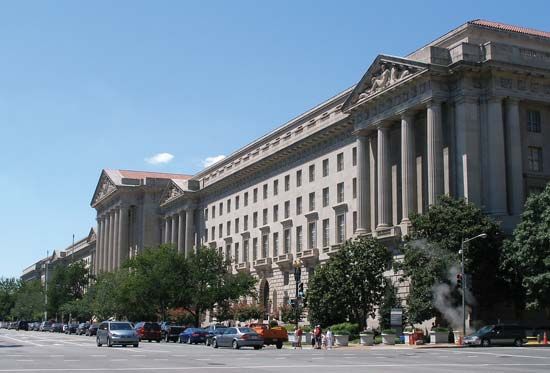
The U.S. Environmental Protection Agency’s (EPA) endangerment finding was a 2009 regulatory rule that determined greenhouse gases (GHGs) posed significant risks to public health and welfare. By classifying these gases as pollutants, the finding empowered the EPA to regulate them under the Clean Air Act.1
This rule served as the primary legal foundation for U.S. climate change policy for over a decade, particularly regarding vehicle emissions and fuel efficiency standards. It followed the 2007 U.S. Supreme Court ruling in Massachusetts v. EPA, which established that the agency had the authority to regulate GHG emissions from motor vehicles.12
However, the endangerment finding was revoked on February 12, 2026, by the Trump administration. The EPA argued that GHG emissions from vehicles did not contribute meaningfully to local air pollution and that the agency lacked explicit congressional authorization to regulate them under the “major questions doctrine”. Critics and legal experts have raised concerns that this repeal removes essential legal tools for emissions regulation and may lead to increased environmental and health risks.12
What is the Clean Air Act and how does it protect public health?
The Clean Air Act (CAA) is a foundational U.S. federal law enacted in 1970 to prevent air pollution, protect the ozone layer, and promote public health. By empowering the Environmental Protection Agency (EPA) to establish national regulatory programs, the act shifted air quality management from a purely state-level responsibility to a federal framework with enforceable standards.34
Protecting Public Health
The centerpiece of the CAA is the establishment of National Ambient Air Quality Standards (NAAQS), which set permissible concentration limits for six “criteria” pollutants known to threaten human health and the environment:352
- Particulate matter
- Carbon monoxide
- Ground-level ozone
- Nitrogen dioxide
- Sulfur dioxide
- Lead
These standards are divided into two categories: primary standards, which provide a margin of safety to protect sensitive populations (such as children, the elderly, and those with asthma), and secondary standards, which protect public welfare, including plants, animals, and property.5
The act also mandates the National Emissions Standards for Hazardous Air Pollutants (NESHAP) to regulate toxic substances and requires industrial entities to implement risk-management programs. These efforts have been highly effective; between 1970 and 2022, total emissions of the six major criteria pollutants dropped by 78 percent, significantly improving the quality of life for millions of Americans.32
How do greenhouse gases contribute to global climate change?
Greenhouse gases contribute to global climate change by driving the greenhouse effect. These molecules absorb infrared radiation—or net heat energy—emitted from Earth’s surface and reradiate it back toward the ground. While this process naturally keeps the planet habitable, human activities have significantly increased the atmospheric concentration of these gases, effectively turning the atmosphere into a “sweltering heat trap.”6789
The primary drivers of this increase include:
- Fossil-fuel combustion: The burning of coal, oil, and natural gas since the Industrial Revolution is the largest contributor to rising levels of carbon dioxide and methane.com/science/carbon-dioxide) and methane.679
- Land-use changes: Deforestation and agricultural practices reduce the planet’s natural ability to act as a “sink” for carbon, further amplifying the carbon load in the atmosphere.10119
- Industrial processes: The release of chlorofluorocarbons and other fluorinated gases adds to the total heat-trapping capacity of the atmosphere.109
This accumulation leads to rising global temperatures, which accelerate the hydrologic cycle, cause sea levels to rise through thermal expansion and melting ice, and disrupt regional weather patterns.11
What are some common sources of air pollution in the United States?
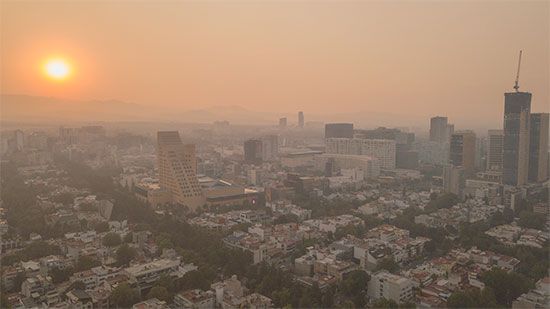
Common sources of air pollution in the United States are diverse, originating from both human activities and natural events. These sources are generally categorized by how they release pollutants into the atmosphere.12
Major Emission Sources
- Transportation: Motor vehicles are a primary source of air pollution, releasing carbon monoxide, nitrogen oxides, and various hydrocarbons. Highway vehicles are the largest consumers of petroleum products in the U.S., and vehicle exhaust remains a major contributor to urban smog.131415
- Energy Generation and Industry: Power plants and factories are significant “point sources” of pollution. They emit primary pollutants such as sulfur dioxide and nitrogen oxides through the combustion of fossil fuels like coal and oil.131216
- Agricultural Activities: Farming operations release pesticides, dust, odors, and smoke. Additionally, the practice of stubble burning—clearing crop residue—contributes significantly to air pollution in certain regions.1317
- Area Sources: These include smaller, numerous contributors such as commercial dry-cleaning facilities, gasoline stations, and residential woodstoves, which collectively release significant amounts of volatile organic compounds (VOCs).15
- Natural Sources: Wildfires are a major natural contributor to air pollution, releasing large quantities of smoke and particulates into the atmosphere.1312
Sources
- What Is the U.S. Environmental Protection Agency’s Endangerment Finding? — Encyclopædia Britannica
- Environmental Protection Agency — Encyclopædia Britannica
- Clean Air Act — Encyclopædia Britannica
- National Ambient Air Quality Standards — Encyclopædia Britannica
- The six criteria air pollutants — Encyclopædia Britannica
- Climate change - Greenhouse gases — Encyclopædia Britannica
- Climate change - Human activities — Encyclopædia Britannica
- Climate change - The human impact: Fossil fuels and greenhouse gas emissions — Encyclopædia Britannica
- hydrosphere - Buildup of greenhouse gases — Encyclopædia Britannica
- greenhouse effect — Merriam-Webster
- 5 Notorious Greenhouse Gases — Encyclopædia Britannica
- air pollution: Top Questions — Encyclopædia Britannica
- transportation economics - The influence of transportation on natural resources — Encyclopædia Britannica
- pollution in India - Modern agricultural practices — Encyclopædia Britannica
- air pollution - Air toxics — Encyclopædia Britannica
- air pollution - Major air pollutants — Encyclopædia Britannica
- air pollution - Nitrogen dioxide — Encyclopædia Britannica
- Paris Agreement - After ratification — Encyclopædia Britannica
Published on · 4 min read