Solovets Islands
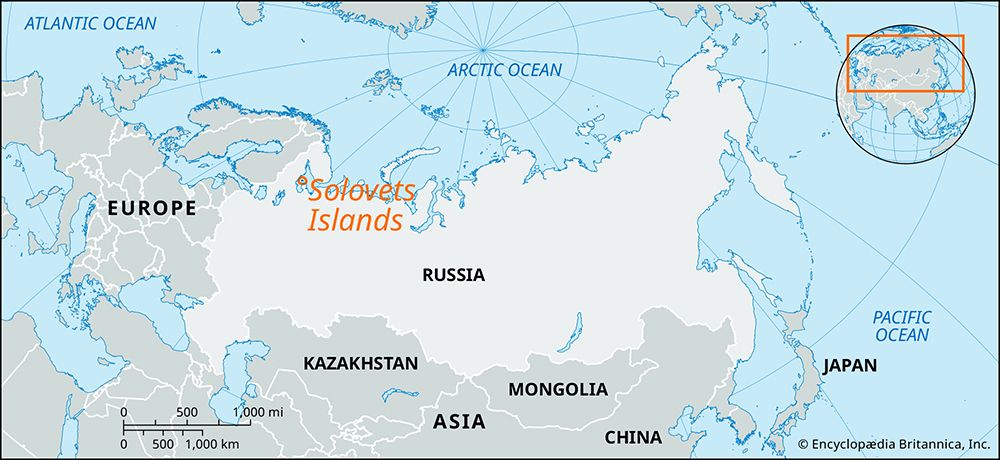
The Solovets Islands (also known as the Solovetsky Islands) are an archipelago located in the White Sea in northwestern Russia. The group consists of three…
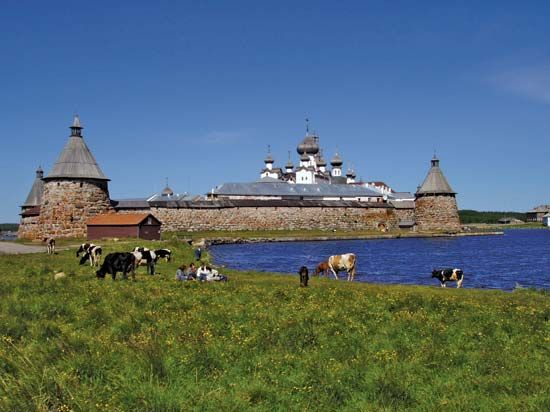
What is Solovets Islands?
The Solovets Islands (also known as the Solovetsky Islands) are an archipelago located in the White Sea in northwestern Russia. The group consists of three main islands—Solovets, Bolshoy Muksalma, and Anzersky—covering a total area of 134 square miles.12
Historically, the islands were home to the Russian Orthodox Solovetsky Monastery, founded in the 15th century and long serving as a major religious and industrial center. However, the site is also infamous for its role in the Soviet era. In 1923, the monastery was converted into the Solovetsky Special Purpose Camp (SLON), a brutal prison facility that became a precursor to the Gulag Archipelago. Between 1923 and 1939, tens of thousands of prisoners perished due to starvation, disease, and state-sanctioned violence.12
Today, the islands are recognized as a state historic and nature preserve. While the former camp site now functions as a tourist attraction, it remains a somber reminder of the human rights abuses perpetrated by the Soviet regime.12
What was the Gulag system in the Soviet Union?
The Gulag was a vast system of Soviet forced-labour camps, prisons, and transit facilities that operated from the 1920s to the mid-1950s. The term is an acronym for the Russian Glavnoye Upravleniye Ispravitelno-Trudovykh Lagerey, or “Chief Administration of Corrective Labour Camps.”34
Under the control of the secret police—including the OGPU, NKVD, and KGB—the system expanded dramatically during Joseph Stalin’s collectivization of agriculture. By 1936, the Gulag held approximately 5 million prisoners, including political prisoners, purged Communist Party members, and innocent victims of state terror.4
Inmates were subjected to brutal conditions, including extreme forced-labour in mines, timber felling, and construction projects. The combination of starvation, harsh climates, and summary executions resulted in the deaths of over a million people. The system’s horrors were brought to international attention through Aleksandr Solzhenitsyn’s seminal work, The Gulag Archipelago. Following Stalin’s death in 1953, the system began to shrink and was officially disbanded by 1955.43
How did the Solovetsky Monastery function before it became a prison?
Before its conversion into a prison camp, the Solovetsky Monastery served as a prominent religious and economic hub for approximately 500 years following its 15th-century founding.2
As one of the most influential religious centers in Russia, the monastery functioned as a significant site for spiritual life. By the 18th and 19th centuries, the resident monks expanded the monastery’s operations, successfully developing the island into a thriving center of industry and trade. This period of development established the archipelago as a vital institution within the region long before the Soviet government seized control of the site in 1923.2
Who was Aleksandr Solzhenitsyn and why is his writing important?
Aleksandr Solzhenitsyn (1918–2008) was a prominent Russian novelist, historian, and Nobel laureate who became a powerful voice against the systemic repression of the Soviet regime. After serving as an artillery captain during World War II, he was arrested in 1945 for criticizing Joseph Stalin in a letter, leading to eight years of imprisonment in labour camps and three years of exile.56
His writing is critically important for several reasons:
- Exposing the Gulag: His works, most notably One Day in the Life of Ivan Denisovich and The Gulag Archipelago, provided the world with its first authoritative, detailed accounts of the brutality within the Soviet prison system.562
- Literary and Historical Record: The Gulag Archipelago is considered a masterpiece of Soviet prose, blending personal memoir with exhaustive historical research to document the irrational use of state terror against the population.52
- Political Impact: His literature challenged the legitimacy of the Soviet regime, inspiring other writers and forcing international sympathizers to confront the realities of Stalinist atrocities.56
Sources
- Solovets Islands — Encyclopædia Britannica
- Solovetsky Island — Encyclopædia Britannica
- Gulag: Top Questions — Encyclopædia Britannica
- Gulag — Encyclopædia Britannica
- The Gulag Archipelago — Encyclopædia Britannica
- Aleksandr Isayevich Solzhenitsyn — Encyclopædia Britannica
- Russian literature - Thaws and freezes — Encyclopædia Britannica
Published on · 3 min read