Yasawa Group
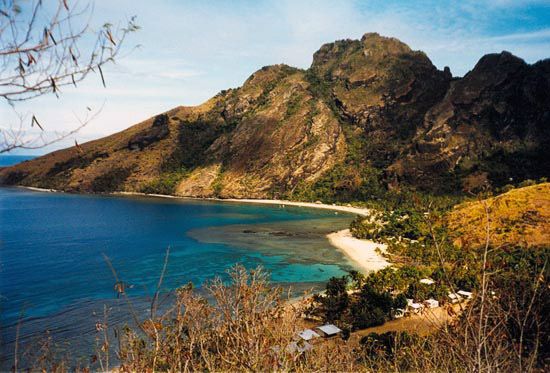
The Yasawa Group is a chain of approximately 20 volcanic islands located in the South Pacific Ocean, northwest of Viti Levu, which is the principal island of…
What is Yasawa Group?
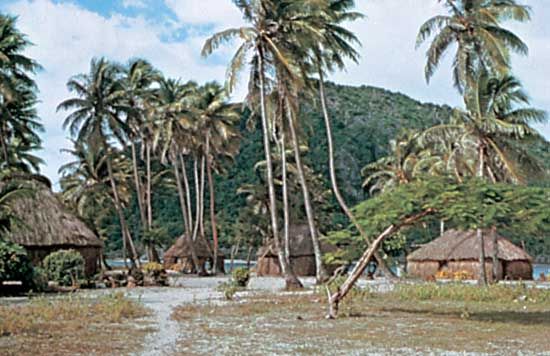
The Yasawa Group is a chain of approximately 20 volcanic islands located in the South Pacific Ocean, northwest of Viti Levu, which is the principal island of Fiji.1
Spanning a total land area of 52 square miles (135 square km), the group was first sighted by Captain William Bligh in 1789. The two largest islands in the chain are Naviti and Yasawa. The population of the islands is almost entirely Melanesian. Due to their proximity to the international airport at Nadi, the islands became a highly popular destination for visitors by the late 20th century.1
Who was Captain William Bligh and why is he famous?
William Bligh (1754–1817) was an English naval officer, navigator, and explorer best known as the commander of the HMS Bounty during the famous mutiny of 1789.3
Bligh’s fame stems from several key aspects of his career:
- The Mutiny on the Bounty: After his crew, led by Fletcher Christian, seized the ship, Bligh and 18 loyalists were set adrift in a small 20-foot launch. Bligh’s subsequent 3,600-mile voyage to Timor is considered a feat of brilliant navigation and survival.3
- Naval Competence: Before the Bounty voyage, Bligh served under James Cook on his third Pacific expedition. He was a highly skilled navigator who discovered approximately 13 Pacific islands and was elected to the Royal Society.3
- Command Style: Despite his technical expertise, Bligh struggled with interpersonal management. He was often perceived as verbally abusive and was involved in other conflicts, including the Rum Rebellion while serving as governor of New South Wales.3
What are the main characteristics of volcanic islands?
Volcanic islands are landmasses formed by the accumulation of volcanic material—such as lava, ash, and pyroclastic fragments—that builds up from the seafloor until it emerges above sea level. These islands are typically classified as oceanic islands because they lack a foundation of continental rock.78910
Primary Characteristics
- Geologic Origins: They often form at subduction zones, where one tectonic plate is forced beneath another, creating curved chains known as island arcs. Others form over hotspots, where magma penetrates the crust within a plate, creating chains of islands that track the plate’s movement.91112
- Topography and Erosion: Young volcanic islands often feature clearly defined craters and domelike terrain. Over time, they are shaped by wind, rain, and wave action, resulting in deep valleys, craggy cliffs, and calderas.1213
- Soil and Vegetation: Volcanic ash weathers into rich, loamy soils that can support dense populations and lush vegetation, distinguishing them from non-volcanic islands in similar climates.7
- Submarine Foundations: Many volcanic islands are part of larger underwater structures, such as seamounts, and may be surrounded by fringing coral shelves.1214
What is the significance of Melanesian culture in Fiji?
The significance of Melanesian culture in Fiji is foundational, as indigenous Fijians are ethnically classified as Melanesian and trace their origins to settlers who arrived from Melanesia at least 3,500 years ago. These early migrants introduced essential elements to the region, including food plants, pigs, and the Lapita culture, which featured advanced navigation, canoe building, and distinct pottery styles.1617
While indigenous Fijians are ethnically Melanesian, their traditional social and political structures—characterized by hierarchical systems and paramount chieftainships—share significant similarities with Polynesian cultures16. This cultural synthesis is further enriched by a history of intermarriage, particularly in the Lau Group of islands, which have long maintained close ties with neighboring Tonga. Today, this heritage remains vital, expressed through traditional crafts like tapa cloth manufacture, wood carving, and the ceremonial consumption of kava, which serves as a unifying cultural practice across Fiji’s diverse population.1718
Sources
- Yasawa Group — Encyclopædia Britannica
- list of islands - Fiji — Encyclopædia Britannica
- William Bligh — Encyclopædia Britannica
- Mutiny on the Bounty — Encyclopædia Britannica
- Bounty — Encyclopædia Britannica
- Bligh — Merriam-Webster
- volcano - Long-term environmental effects — Encyclopædia Britannica
- Hawaii - Relief — Encyclopædia Britannica
- mountain - Volcanoes and island arcs surrounding the northwest Pacific basin — Encyclopædia Britannica
- volcano - Submarine volcanoes — Encyclopædia Britannica
- volcanism — Encyclopædia Britannica
- Atlantic Ocean - Islands of the Atlantic Ocean — Encyclopædia Britannica
- valley - Valley evolution in Hawaii — Encyclopædia Britannica
- plate tectonics - Island arcs — Encyclopædia Britannica
- volcano - Determinants of size and shape — Encyclopædia Britannica
- history of Fiji - Early history and culture of Fiji — Encyclopædia Britannica
- Fiji - Ethnic groups — Encyclopædia Britannica
- Fiji - Daily life and social customs — Encyclopædia Britannica
Published on · 3 min read