White Sea
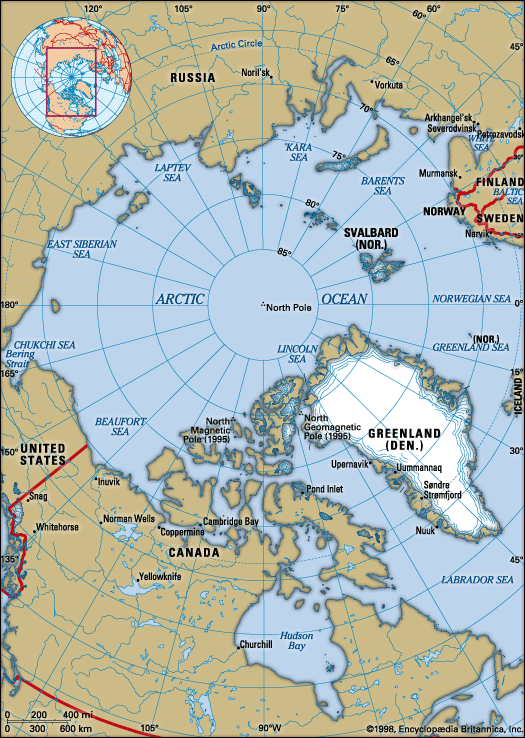
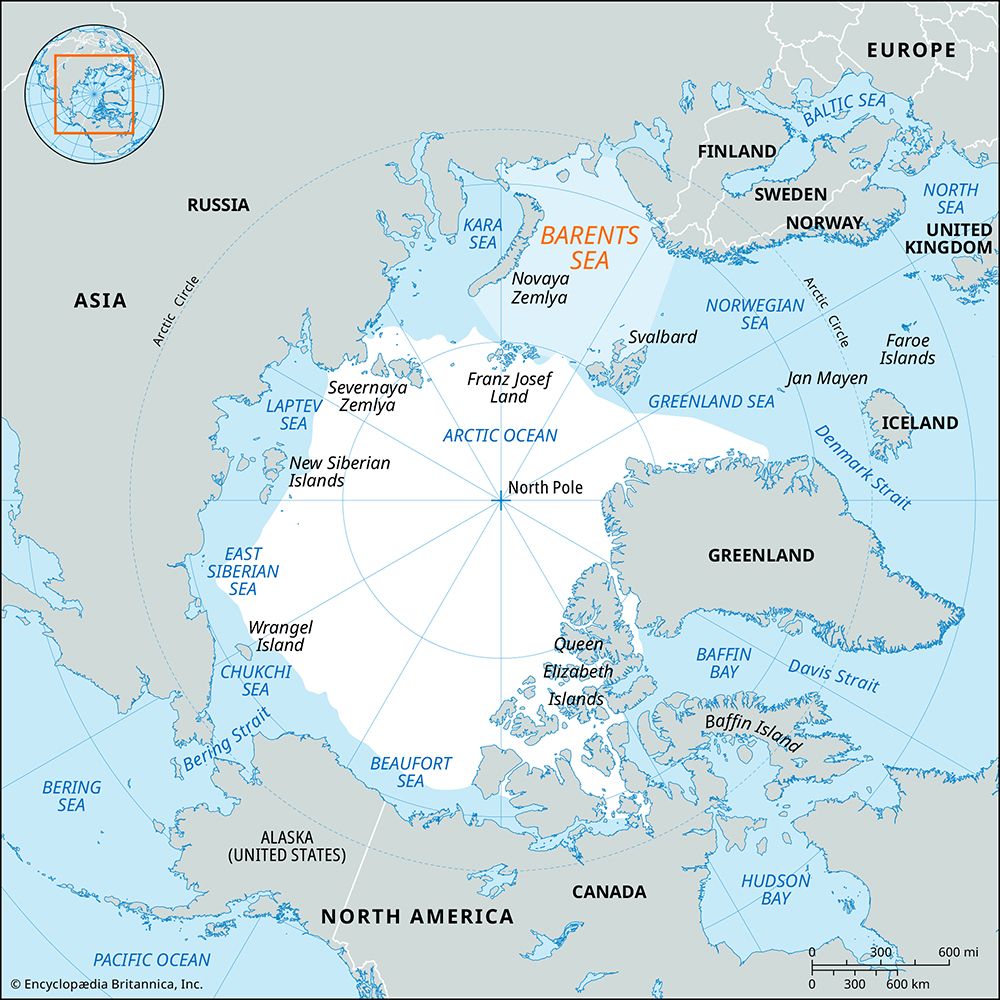
The White Sea is an almost landlocked extension of the Arctic Ocean that maintains its primary marine connection to the north via the Barents Sea. This…
How does the White Sea connect to other bodies of water in the Arctic region?
The White Sea is an almost landlocked extension of the Arctic Ocean that maintains its primary marine connection to the north via the Barents Sea. This connection is facilitated by a long, narrow strait known as the Gorlo, or “Throat,” which features a 130-foot-deep sill that restricts deepwater exchange between the two seas.1
Beyond its natural marine outlet, the White Sea is integrated into a broader inland navigation network through the White Sea–Baltic Canal. This 141-mile system of rivers, lakes, and canals connects the White Sea to Lake Onega. From there, it joins the Volga-Baltic Waterway, which provides shipping access to the Baltic, Black, Caspian, and Azov seas, as well as the Volga River. This infrastructure significantly shortens the maritime passage between major Russian ports.12
Where is the White Sea located, and what are its geographical features?
The White Sea is an almost landlocked extension of the Arctic Ocean that indents the northwestern coast of Russia. It covers approximately 35,000 square miles (90,000 square km) and is situated on a continental shelf, appearing as a depression on the slope of the Baltic Shield.1
Geographical Features
- Topography: The sea features an irregular shape defined by four major gulfs: Kandalaksha, Onega, Dvina, and Mezen. The northwest coastline is characterized by steep cliffs, while the southeast shores are low and flat.1
- Depth: The mean depth is 200 feet (60 meters), with a maximum depth of 1,115 feet (340 meters) found in the Kandalaksha Inlet. A 130-foot-deep sill separates the sea from the Barents Sea, restricting deepwater exchange.1
- Hydrology: Numerous rivers, including the Northern Dvina, Onega, and Mezen, flow into the sea. The bottom is uneven, featuring underwater ridges and the Solovets Islands in the southern portion.1
What are the major rivers that flow into the White Sea?
Numerous rivers flow into the White Sea, contributing to the region’s extensive water network. The major rivers include:
- Northern Dvina: One of the most significant waterways in northern European Russia, it enters the sea near the city of Arkhangelsk.14
- Mezen: A major river that flows into the sea, contributing to the drainage of the surrounding landscape.1
- Onega: A key river that feeds into the sea, lending its name to the Onega Gulf.1
- Vyg: This river is a vital component of the White Sea–Baltic Canal system, which connects the sea to Lake Onega.12
- Niva, Umba, Varzuga, and Ponoy: These rivers also discharge into the White Sea, draining the surrounding terrain.1
How has the White Sea been historically important for human activities and settlements?
The White Sea has served as a vital hub for trade, industry, and strategic transport throughout history. Its economic significance is largely rooted in the surrounding heavily forested lands and an elaborate river network that connects remote regions of northwestern Russia to the sea.1
Historical and Economic Importance
- Trade and Ports: Founded in 1584, Arkhangelsk became the Russian Empire’s first port for international trade, particularly with England. Although its prominence fluctuated following the founding of St. Petersburg, it remains a major center for timber processing, shipbuilding, and as the western terminus of the Northern Sea Route.5
- Strategic Infrastructure: The construction of the White Sea–Baltic Canal between 1930 and 1933 significantly enhanced the region’s commercial and strategic value. By connecting the White Sea to Lake Onega, the canal provides a vital link to the Volga-Baltic Waterway, shortening the sea passage between St. Petersburg and Arkhangelsk by thousands of miles.16
- Religious and Penal History: The Solovets Islands have played a complex role in Russian history. In the 15th century, the Russian Orthodox Church established a monastery there, which became a major center of industry and trade. By 1923, the site was converted into a notorious labor camp, part of the Gulag Archipelago, where thousands of prisoners were held under brutal conditions.2
Sources
- White Sea — Encyclopædia Britannica
- White Sea–Baltic Canal — Encyclopædia Britannica
- sea ice — Encyclopædia Britannica
- Northern Dvina River — Encyclopædia Britannica
- Arkhangelsk — Encyclopædia Britannica
- Solovetsky Island — Encyclopædia Britannica
- canals and inland waterways - Major inland waterways of Europe — Encyclopædia Britannica
Published on · 3 min read