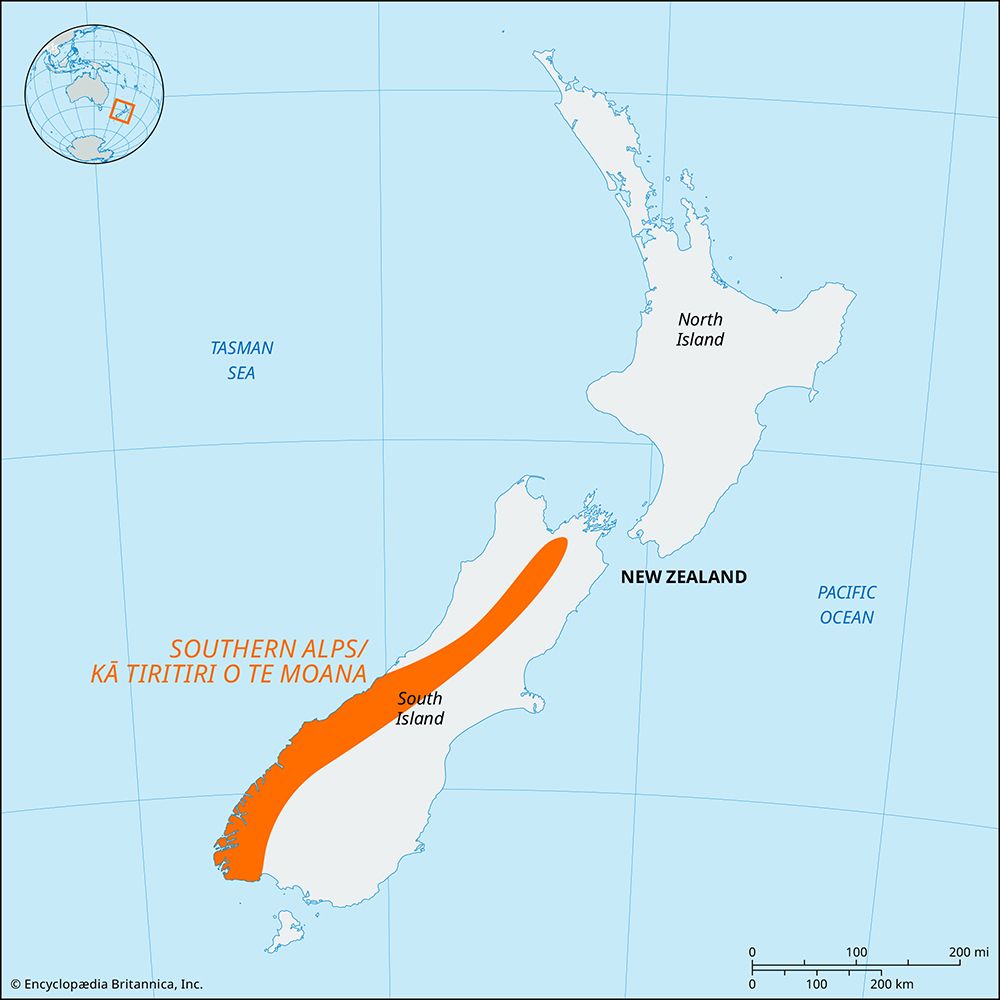
Southern Alps/Kā Tiritiri O Te Moana
The Southern Alps play a decisive role in shaping New Zealand's climate by acting as a barrier to prevailing westerly and northwesterly winds. Because these…
How do the Southern Alps affect New Zealand’s climate and weather patterns?
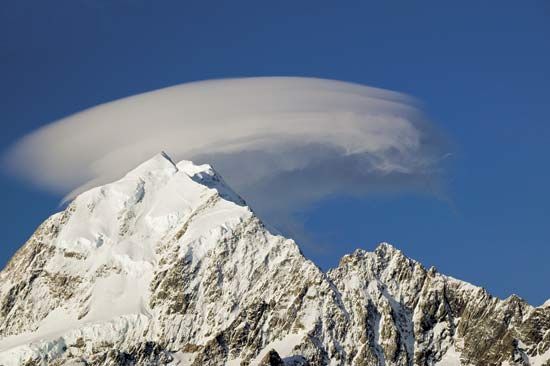
The Southern Alps play a decisive role in shaping New Zealand’s climate by acting as a barrier to prevailing westerly and northwesterly winds. Because these high mountain chains lie across the path of these winds, the country experiences a sharper climatic contrast from west to east than from north to south.1
Key impacts include:
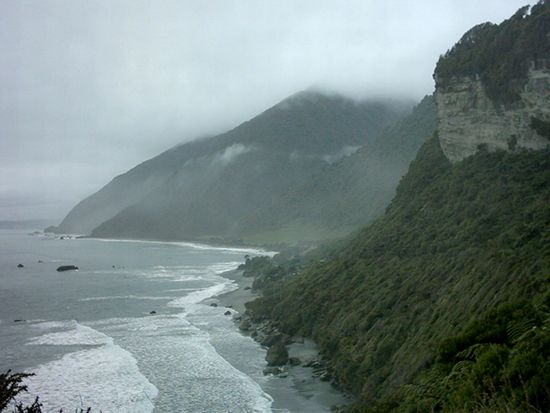
- Precipitation Extremes: The mountains force air upward, resulting in heavy rainfall on the western slopes—reaching up to 250 inches (6,400 mm) annually—while creating much drier conditions in the east.1
- Foehn Winds: In the lee of the Southern Alps, the foehn effect occurs. As air descends the eastern slopes, it becomes warm and dry, leading to significantly lower humidity levels in those regions.1
- Regional Climate Variation: The mountains are responsible for the semi-continental climate found in Central Otago, which is sheltered from the maritime influence of the coast.21
How have the Southern Alps influenced human settlement and economic activities in New Zealand?
The Southern Alps have profoundly shaped human activity in New Zealand by acting as a formidable geographic barrier that dictates settlement patterns and economic development.13
Settlement and Infrastructure
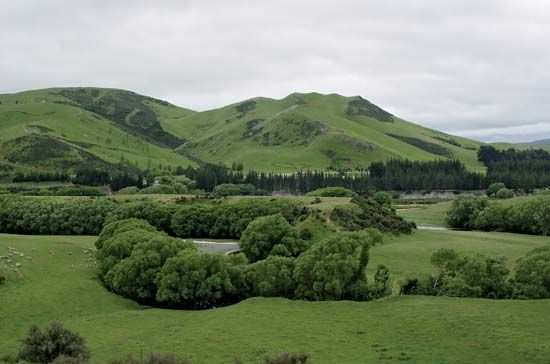
The rugged, precipitous terrain of the Southern Alps has historically limited human access, resulting in a sparsely populated interior and western coast. While the eastern side of the South Island features the expansive Canterbury Plains—a hub for organized settlement and agriculture—the western slopes remain characterized by narrow coastal strips and difficult-to-access wilderness. Infrastructure development has been a significant challenge; however, the range is traversed by a rail line passing through the Otira Tunnel, a vital link connecting the island’s regions.1435
Economic Activities
- Agriculture: The rain-shadow effect created by the mountains allows for the dry, fertile conditions of the Canterbury Plains, which have supported intensive sheep farming and mechanized agriculture since the 1850s.35
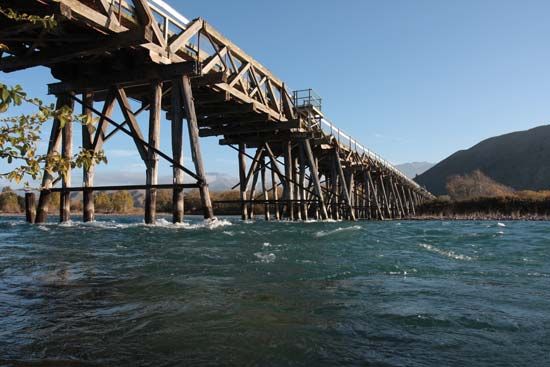
- Energy: The steep topography and snow-fed rivers provide immense hydroelectric potential, with major power stations established on the Waitaki River and its tributaries.3
- Tourism and Resources: The region’s spectacular scenery supports a robust tourism industry, particularly in areas like Otago. Historically, the mountains were also the site of a 19th-century gold rush, which spurred early European settlement in the eastern interior.4
What is the geological formation of the Southern Alps/Kā Tiritiri o te Moana?
The Southern Alps/Kā Tiritiri o te Moana are a 300-mile- (480-km-) long chain of fold mountains that form the backbone of New Zealand’s South Island. Their formation is primarily the result of crustal shortening caused by the collision of the Pacific Plate and the Indian-Australian Plate.13
Unlike the North Island, where mountains are largely shaped by volcanism, the Southern Alps were created through a complex tectonic process involving folding, thrust faulting, and vertical slip along major faults, most notably the Alpine Fault. This mountain-building episode, known as the Kaikōura Orogeny, began at the end of the Oligocene Epoch about 23 million years ago and continues today.13
The range experiences rapid uplift—potentially as much as 10 millimeters per year—which is currently balanced by the rapid erosion of the range’s schist rock.3
What is the significance of the Māori name ‘Kā Tiritiri o te Moana’ for the Southern Alps?
The Māori name for the Southern Alps, Kā Tiritiri o te Moana, translates to “the mirage of the ocean.” This evocative name reflects the visual experience of the mountain range as seen from the sea, where the snow-capped peaks often appear to shimmer or float above the horizon like a distant, ethereal coastline.3
While the provided search results confirm the name’s usage and its association with the Southern Alps, they do not offer further linguistic or cultural details regarding its specific origins or traditional significance beyond this descriptive imagery.
Sources
- New Zealand - Relief of New Zealand — Encyclopædia Britannica
- New Zealand - Climate — Encyclopædia Britannica
- Southern Alps/Kā Tiritiri o te Moana — Encyclopædia Britannica
- New Zealand - Settlement patterns — Encyclopædia Britannica
- New Zealand - Discovery — Encyclopædia Britannica
- Canterbury Plains — Encyclopædia Britannica
- New Zealand - Agriculture, forestry, and fishing — Encyclopædia Britannica
- Otago — Encyclopædia Britannica
- Southern Alps — Merriam-Webster
- Alpine orogeny — Encyclopædia Britannica
- plate tectonics - Mountains by continental collision — Encyclopædia Britannica
- mountain - Volcanoes and island arcs surrounding the northwest Pacific basin — Encyclopædia Britannica
- Aoraki/Mount Cook National Park — Encyclopædia Britannica
Published on · 3 min read