Sphynx Cat
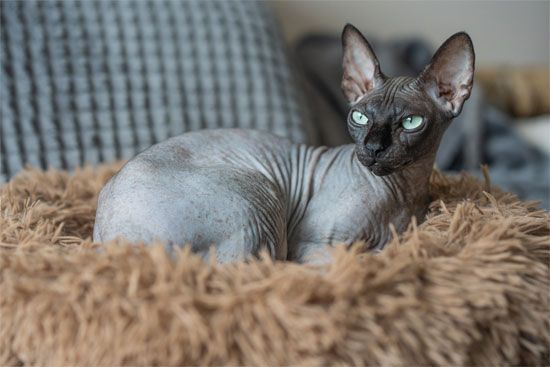
The Sphynx cat is a breed of domestic cat known for its virtually hairless appearance, which results from a natural genetic mutation affecting hair follicle…
What is sphynx cat?
The Sphynx cat is a breed of domestic cat known for its virtually hairless appearance, which results from a natural genetic mutation affecting hair follicle development. Despite their appearance, they are rarely entirely hairless and typically possess a fine, downy coat.123
The modern breed originated from spontaneous mutations observed in North America during the 1970s, specifically in Minnesota and Toronto, Canada. Breeders stabilized the trait through selective breeding and backcrossing with shorthaired cats.13
Because they lack a fur coat to absorb natural skin oils, Sphynx cats require specific care to maintain their health. They must be bathed regularly and have their large ears cleaned to prevent oil buildup, dust, and wax accumulation. Without proper grooming, these oils can lead to skin issues such as irritation, acne, or infections.14
How does selective breeding create new animal traits?
Selective breeding, also known as artificial selection, creates new animal traits by humans intentionally mating individuals that possess desirable qualities. By controlling which animals reproduce, breeders increase the frequency of specific genotypes—the genetic constitutions responsible for those traits—within a population over successive generations.678
The process relies on the heritability of traits, which measures how easily a characteristic is passed from parents to offspring. When a trait is controlled by a single gene, it can often be fixed within a population in a single generation. However, when multiple genes or environmental factors influence a trait, breeders must engage in selective breeding over many generations to achieve the desired change.7
Breeders utilize various methods to isolate these traits, such as:
- Mass selection: Choosing individuals based on their appearance.8
- Pedigree selection: Selecting stock based on ancestral reproductive ability and quality.8
- Progeny selection: Choosing based on the performance of an animal’s descendants.8
- Pure-line selection: Breeding superior organisms until a line with only the desired characteristics is established.8
While this practice has successfully produced diverse breeds, it can also reduce genetic diversity, sometimes leading to health issues.7
What are some other cat breeds with unique physical features?
Many cat breeds exhibit distinct physical characteristics resulting from natural genetic mutations or selective breeding. Here are several examples of breeds with unique features:
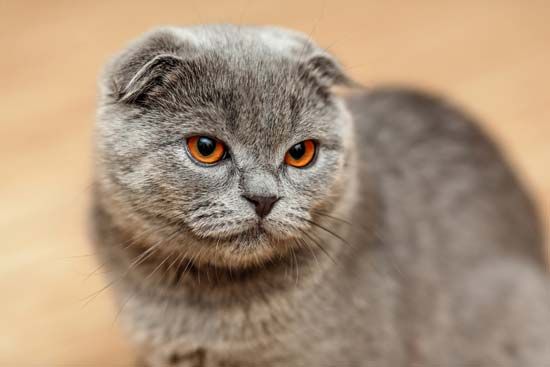
- Scottish Fold: This breed is easily identified by its ears, which fold forward and down, a trait originating from a spontaneous genetic mutation.11
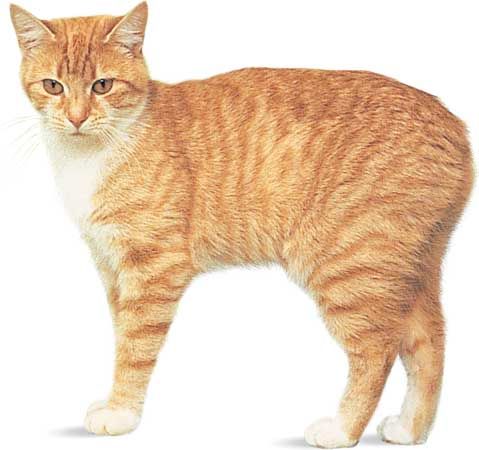
- Manx: Known for being tailless or having only a short stump, this breed possesses a double coat consisting of a soft undercoat beneath longer, coarser hairs.1213
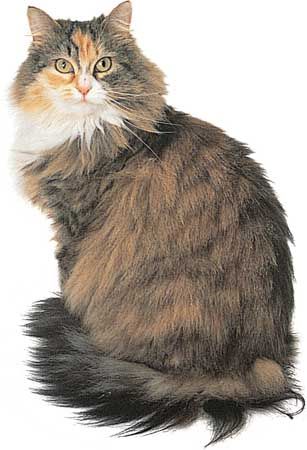
- Maine Coon: As North America’s only native longhaired breed, these cats are large, muscular, and heavy-boned, often noted for their long, raccoon-like tails.1415
- Cornish Rex and Devon Rex: These breeds are famous for their unique, curly coats. The Devon Rex is often nicknamed the “poodle cat” and features a distinct pixie-like face.1213
- Ragdoll: This breed is characterized by its tendency to relax its muscles completely when picked up, mimicking the behavior of a floppy rag doll.1615
- Japanese Bobtail: This breed features a triangular head with large ears and a short, rabbit-like tail.1213
How do genetic mutations occur in nature?
Genetic mutations are permanent alterations in an organism’s DNA that can be transmitted to descendant cells. These changes occur through several primary mechanisms in nature:17
- Spontaneous Errors: Most mutations arise from accidents during the normal chemical transactions of DNA, particularly during DNA replication. For instance, DNA bases can spontaneously shift between different chemical conformations (isomers), such as the keto form changing to the enol form, which leads to incorrect base pairing. Additionally, spontaneous events like depurination—the loss of a purine base—can create gaps that are filled incorrectly during subsequent replications.1718
- Environmental Factors: Exposure to external agents, known as mutagens, can significantly increase mutation rates. These include high-energy electromagnetic radiation (such as ultraviolet light or X-rays), particle radiation, and highly reactive chemicals.171918
- Mobile DNA Elements: Many genomes contain mobile elements that can move to new locations, potentially disrupting genes or promoting large-scale chromosomal mutations through recombination.17
While cells possess DNA repair mechanisms to correct these errors, mutations that escape these processes become permanent.1920
Sources
- sphynx cat — Encyclopædia Britannica
- sphynx — Merriam-Webster
- Why do Sphynx cats appear hairless? — Encyclopædia Britannica
- Shorthair Cat Breeds — Encyclopædia Britannica
- cats as pets - Hairless cats — Encyclopædia Britannica
- selective breeding — Merriam-Webster
- selective breeding — Encyclopædia Britannica
- selection — Encyclopædia Britannica
- Animal breeding — Encyclopædia Britannica
- Animal breeding - Breeding objectives — Encyclopædia Britannica
- Maine coon cat — Encyclopædia Britannica
- Scottish fold cat — Encyclopædia Britannica
- Abyssinian — Encyclopædia Britannica
- domestic shorthair — Encyclopædia Britannica
- longhair — Encyclopædia Britannica
- Longhair Cat Breeds — Encyclopædia Britannica
- mutation — Encyclopædia Britannica
- human disease - Factors relating to genetic injury — Encyclopædia Britannica
- somatic mutation — Encyclopædia Britannica
- DNA repair — Encyclopædia Britannica
- heredity - Mechanisms of mutation — Encyclopædia Britannica
Published on · 3 min read