Stink Bug
Stink bugs (family Pentatomidae) derive their common name from the foul-smelling secretions they produce. These insects possess specialized scent glands…
How did stinkbugs get their name, and what is the purpose of their odor?
Stink bugs (family Pentatomidae) derive their common name from the foul-smelling secretions they produce. These insects possess specialized scent glands, typically located on the underside of the body in front of the hind legs.123
The primary purpose of this odor is chemical defense. When a stink bug is threatened, disturbed, or crushed, it releases these volatile compounds to deter potential predators. The smell serves as an effective repellent, and in some species, it may also play a role in predator learning, reinforcing the protective effect of the insect’s chemical defenses. Additionally, these secretions can be transferred to the surfaces where the insects rest, such as fruits or leaves, often leaving behind a disagreeable or nauseating taste.312
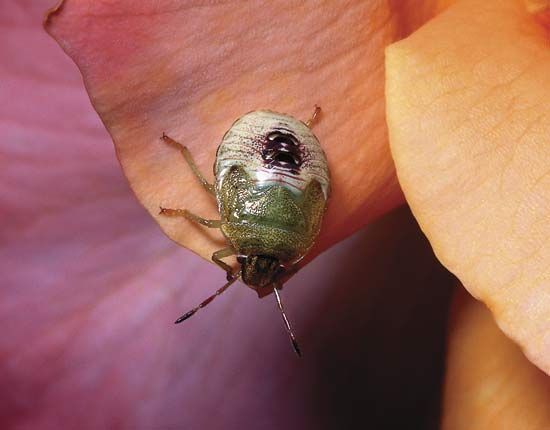
What are the distinctive physical characteristics of stinkbugs?
Stink bugs, belonging to the family Pentatomidae, are characterized by several distinctive physical features that aid in their identification and survival:
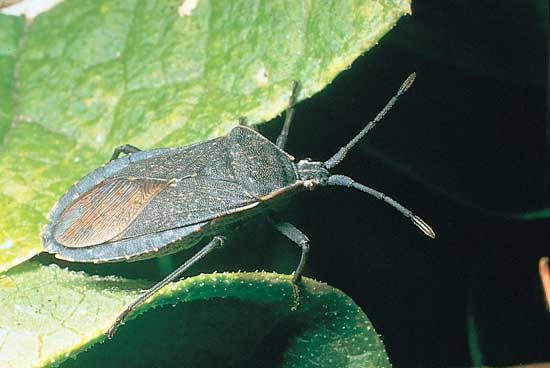
- Body Shape: They are widely recognized for their flattened, oval, and broad shape, which is often described as shield-like. This appearance is largely due to a very large, triangular scutellum (a plate on the back) that suggests the shape of a shield.651
- Head and Prothorax: The head and prothorax form a distinct triangle that points forward.6
- Size: Generally, these insects range between 5 and 12 mm (0.2 to 0.5 inch) in length, though some species, such as the green stink bug, can reach up to 19 mm (0.7 inch).6
- Coloration: Their coloration—typically brown, green, or metallic—serves as camouflage, allowing them to blend into bark and foliage. Some species exhibit specific markings, such as the yellowish-orange border around the scutellum and black-banded antennae found on the green stink bug.6
- Anatomy: They are part of the true bug suborder Heteroptera and possess scent glands on the underside of the body.6
What methods are used to control stinkbug populations in agricultural settings?
Controlling stink bug populations in agricultural settings involves a combination of chemical and physical management strategies. Because several species are significant agricultural pests that damage crops like beans, tomatoes, and rice, effective control is essential for maintaining yields.7
Common methods include:
- Pesticide Application: The use of insecticides remains a primary method for managing heavy infestations. Modern agricultural practices have shifted toward using pesticides with lower human toxicity, such as Malathion, and employing efficient application techniques like low-volume or ultralow-volume spraying to reduce the amount of inert material used.75
- Habitat Management: Eliminating hibernating spots and removing alternate host plants near fields can significantly reduce local populations, as these areas often serve as refuges for the insects during cooler months.7
- Integrated Pest Management (IPM): This approach coordinates multiple control methods to minimize reliance on chemicals. It may involve combining chemical sprays with bait, utilizing biological controls such as natural predators or parasites, and planting crop varieties that are resistant to pest attacks.85
What are some common species of stinkbugs, and where are they typically found?
There are approximately 5,000 species of stink bugs within the family Pentatomidae, ranging from significant agricultural pests to beneficial predatory insects. They are found globally, often residing on bark, foliage, or near their host plants.5
Common Species and Their Habitats
- Green Stink Bug (Chinavia hilaris): The most commonly encountered species in North America, it feeds on a variety of plants, including soybeans, tomatoes, tobacco, and peaches.5
- Southern Green Stink Bug (Nezara viridula): A worldwide species that causes damage to garden crops such as beans, berries, and tomatoes.5
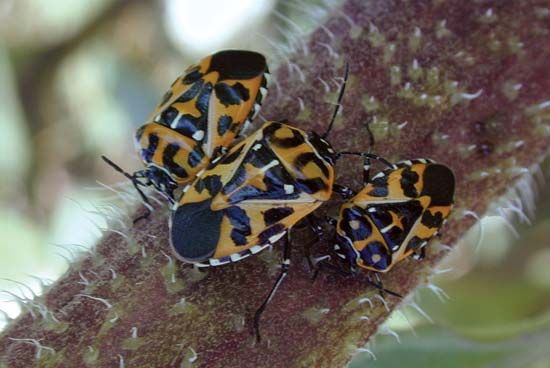
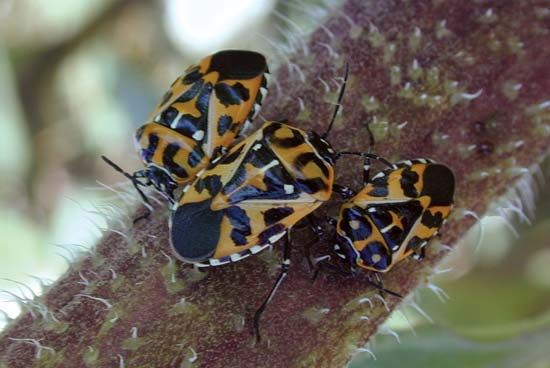
- Harlequin Cabbage Bug (Murgantia histrionica): A major plant pest that specifically targets cabbage and related crops.5
- Rice Stink Bug (Oebalus pugneax): A species responsible for severe losses to rice crops in North America.5
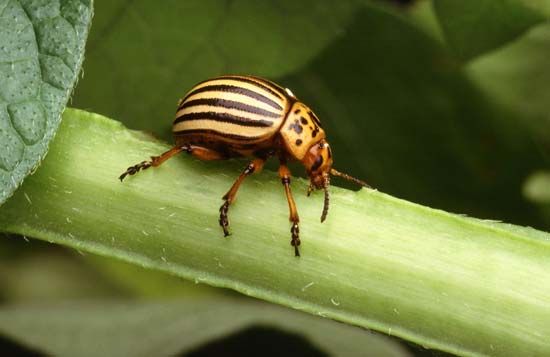
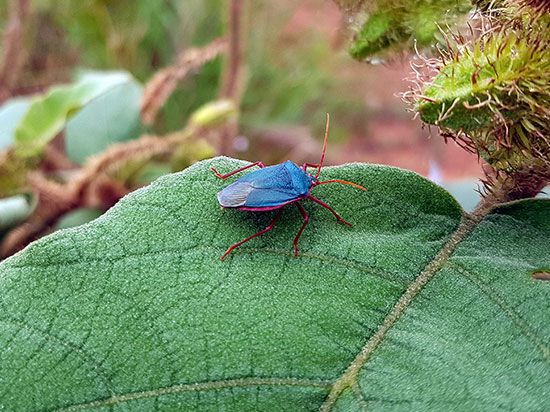
- Beneficial Species: Not all stink bugs are pests. The genus Podisus preys on Colorado potato beetle larvae, and Zicrona caerulea, found in China, preys on various beetle larvae and adults.5
These insects are part of the suborder Heteroptera and are known for their ability to hibernate in cooler climates or become less active in warmer regions during winter.5
Sources
- stink bug — Merriam-Webster
- Chemoreception - Defensive odors — Encyclopædia Britannica
- stink gland — Merriam-Webster
- Say stinkbug — Merriam-Webster
- stink bug — Encyclopædia Britannica
- shield bug — Merriam-Webster
- Agricultural technology - Biological controls — Encyclopædia Britannica
- Origins of agriculture - Integrated control — Encyclopædia Britannica
Published on · 3 min read