Storax
Storax refers to two distinct but related botanical and chemical entities:
What is storax?
Storax refers to two distinct but related botanical and chemical entities:
- The Resin: A fragrant balsam obtained from the bark of the Asian tree Liquidambar orientalis (the sweet gum family). This substance, also known as Levant storax, is historically used as an expectorant and in perfumery. A similar resin was also once harvested from Styrax officinalis.12
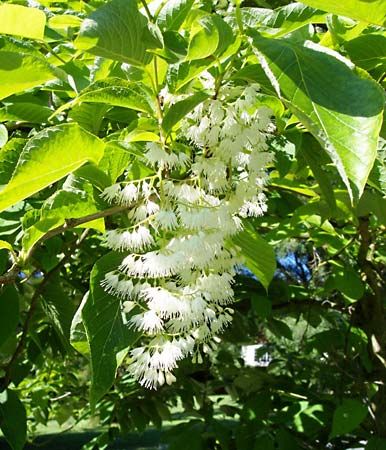
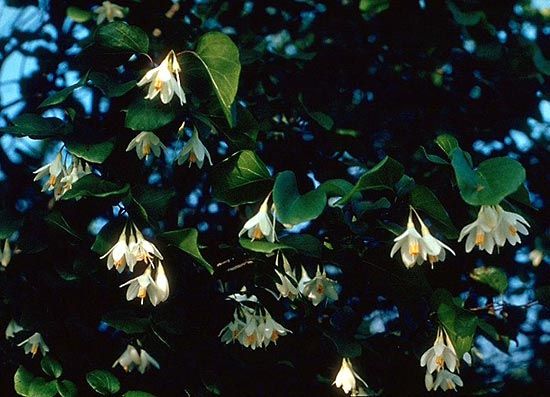
- The Plant Genus: The term also identifies a genus (Styrax) of approximately 120 species of trees and shrubs within the family Styracaceae. These plants are typically found in warm or tropical regions and are characterized by hairy leaves and white, drooping flowers. Well-known species include the Japanese snowbell (S. japonicum) and the snowdrop bush (S. officinalis).12
How is balsam resin collected from trees?
Balsam and other resinous substances are collected from trees either spontaneously or through intentional wounding of the plant tissue.3
When harvesting resin—often referred to as an exudate—the process typically involves systematically removing strips of bark from the tree trunk. This wounding triggers the release of resin from specialized epithelial cells lining the internal resin canals. Once the tree is wounded, the substance is collected in containers, such as plastic bags.4
While some substances flow naturally, others require these incisions to be made to stimulate production. It is important to note that not all tree species produce sufficient quantities of resin to make harvesting economically viable; consequently, commercial collection is concentrated in specific regions, including parts of the United States, India, China, and Mediterranean countries. Additionally, some resin components can be obtained through industrial processes, such as the distillation of wood or as a by-product of the pulping process, rather than through direct tapping of living trees.4
What is the difference between storax and benzoin?
While the terms are sometimes conflated due to their historical use in incense and medicine, storax and benzoin are distinct substances derived from different botanical sources.
- Storax: This term refers to a fragrant balsam primarily obtained from the bark of the Asian tree Liquidambar orientalis (the sweet gum family). Historically, a similar resin was also harvested from the Styrax officinalis (snowdrop bush), which belongs to the Styracaceae family—a group of trees and shrubs also known as the “storax family.”12
- Benzoin: Although the provided search results do not detail the specific chemical composition of benzoin, they clarify that it is a separate entity often compared to storax within the context of botanical resins and the Styracaceae family. In botanical and commercial contexts, benzoin is typically a balsamic resin obtained from trees of the genus Styrax (specifically species like Styrax benzoin), distinct from the Liquidambar source of Levant storax.1
In summary, while both are aromatic resins used in perfumery and medicine, they originate from different tree species and botanical families.
How have ancient cultures used incense in history?
Throughout history, incense has served as a vital component of religious and social life, functioning as an oblation, a tool for purification, and a medium for prayer.
Ancient Rituals and Symbolism
- Egypt: Incense was central to religious liturgy, used to honor deities like Amon-Re and in mortuary rites to assist the souls of the dead in ascending to heaven. It was believed to manifest the presence of gods and drive away demons.5
- Mesopotamia: Babylonians utilized incense extensively during prayer and the divination of oracles.5
- Israel: Early Israelites used a specific mixture of frankincense, storax, onycha, and galbanum. It was viewed as a symbol of prayer rising to the sacred realm.56
- Greece and Rome: From the 8th century BCE, Greeks burned resins for protection against demons. Romans later adopted incense for public and private sacrifices, including the cult of the emperor.5
- Asia: In China, incense honored ancestors and household gods, while in Japan, it was integrated into Shintō and Buddhist rituals to produce mystic exaltation and well-being.56
Sources
- storax — Merriam-Webster
- storax — Encyclopædia Britannica
- balsam — Encyclopædia Britannica
- wood - Extractives — Encyclopædia Britannica
- incense — Encyclopædia Britannica
- ceremonial object - Incense and other smoke devices — Encyclopædia Britannica
Published on · 3 min read