Strait of Gibraltar
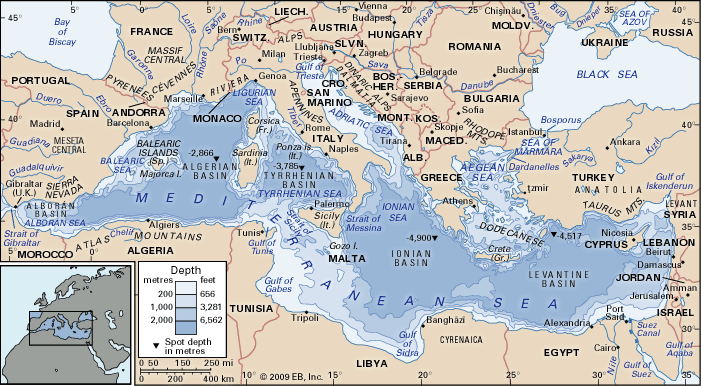
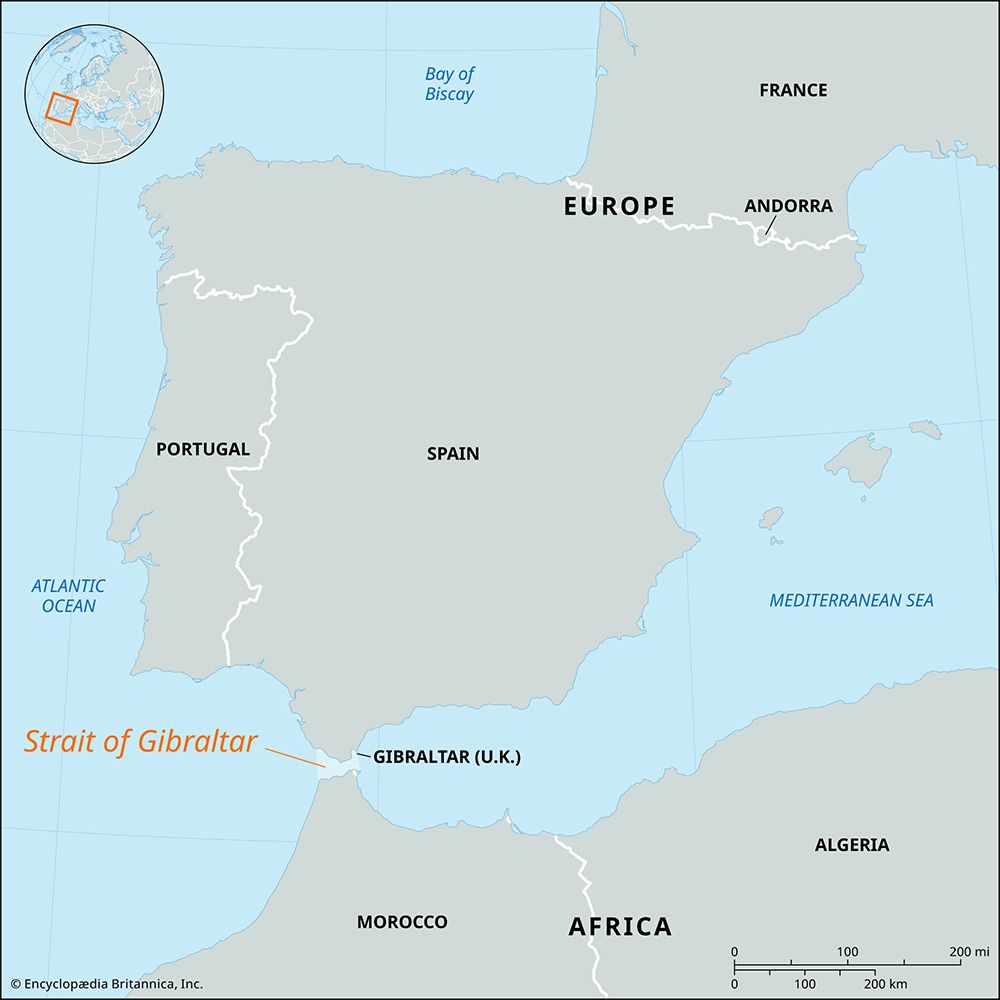
The Strait of Gibraltar serves as a critical maritime gateway, connecting the Atlantic Ocean to the Mediterranean Sea. By functioning as a vital shipping…
How does the Strait of Gibraltar impact maritime trade and transportation?
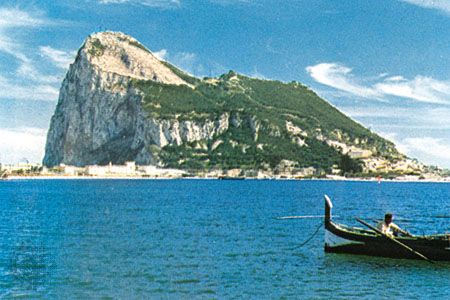
The Strait of Gibraltar serves as a critical maritime gateway, connecting the Atlantic Ocean to the Mediterranean Sea. By functioning as a vital shipping route, it remains of immense strategic and economic importance to southern Europe, northern Africa, and western Asia.12
The strait acts as a key transit point for both passenger and cargo vessels. Its economic impact is further supported by the port facilities at Gibraltar, which generate income through the provisioning of ships and re-export trade. Historically, the strait has been a focal point of geopolitical rivalry due to its role as a essential passage for international maritime traffic. Beyond its commercial utility, the strait is a natural necessity; the exchange of water through the channel prevents the Mediterranean from becoming a shrinking salt lake, as it allows for the inflow of surface water and the outflow of heavier, more saline water at depth.312
How has the Strait of Gibraltar influenced human history and migration?
The Strait of Gibraltar has served as a pivotal bridge and barrier throughout human history, profoundly shaping migration, conquest, and cultural exchange between Europe and Africa.
Historical Significance and Migration
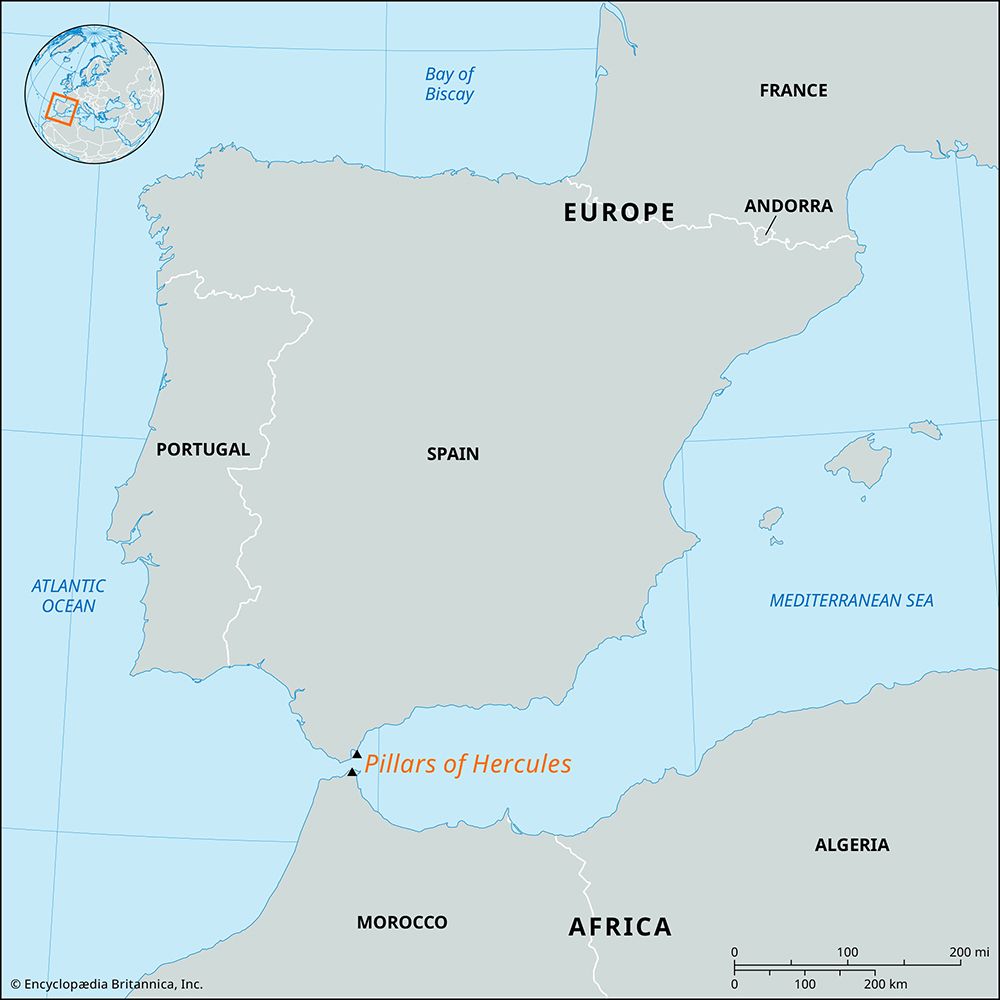
In antiquity, the strait was defined by the Pillars of Heracles, which marked the western boundary of the known Mediterranean world. Its most transformative historical moment occurred in 711 CE, when the Muslim commander Tariq ibn Ziyad led an army across the passage—the name of which, Jabal al-Tariq (Mount Tariq), is the origin of “Gibraltar”—to launch the Muslim conquest of the Iberian Peninsula. This event initiated centuries of Islamic influence in Europe, facilitating the movement of Arab and Amazigh populations into the region and creating a new, diverse society in Al-Andalus.145
Strategic Control and Modern Movement
Beyond ancient migrations, the strait has been a site of persistent geopolitical rivalry. Its status as the sole entrance to the Mediterranean Sea from the Atlantic Ocean made it a focal point for military and colonial powers, particularly after the opening of the Suez Canal in 1869. Today, the strait continues to facilitate modern transit, with daily ferry services connecting Tangier to the European side, and recent diplomatic agreements have further integrated the region by removing physical border barriers to support free movement.1643
How do currents and tides affect navigation through the Strait of Gibraltar?
Navigation through the Strait of Gibraltar is significantly influenced by a complex, two-way exchange of water. This “breathing” mechanism consists of a constant surface current flowing eastward from the Atlantic Ocean into the Mediterranean Sea, and a deeper, westward-flowing countercurrent of denser, more saline water exiting the Mediterranean.18
The dynamics of these currents affect maritime transit in several ways:
- Surface Flow: The eastward surface current is the most constant component of Mediterranean circulation and is particularly powerful during summer months when evaporation rates are highest.8
- Subsurface Countercurrent: Below a depth of approximately 400 feet (120 meters), the heavier, colder, and more saline Mediterranean water flows westward into the Atlantic. At the narrowest part of the strait, this dense water can accelerate to speeds of about 1 meter (3 feet) per second.19
- Wind Interference: Navigation can be further complicated by local weather patterns, such as the levanter—a high-speed easterly wind that can disrupt the standard surface current flow.1
- Tidal Influence: While tides are generally less impactful in the Mediterranean than in other regions, they contribute to the complexity of currents within narrow channels, adding to the navigational challenges faced by mariners.8
How has the strategic importance of the Strait of Gibraltar changed over time?
The strategic importance of the Strait of Gibraltar has evolved significantly from an ancient boundary to a critical modern maritime artery.
Ancient and Classical Significance
In antiquity, the strait was defined by the Pillars of Heracles, which served as the western limit of the known Mediterranean world. It functioned as a vital gateway for early Atlantic voyagers and became a site of intense rivalry, particularly after Tariq ibn Ziyad captured the region in 711 CE, establishing a long-standing fortress position.176
Imperial and Modern Strategic Value
The strait’s importance was transformed by the 1869 opening of the Suez Canal, which turned the Mediterranean into a primary route to British colonies in East Africa and Asia. Consequently, Gibraltar became a symbol of British naval strength and a vital repair point during the World Wars.76
In the contemporary era, the strait remains a crucial shipping route and a strategic asset for NATO operations. While political tensions regarding sovereignty have persisted, recent diplomatic progress—including the 2026 dismantling of the physical border between Spain and Gibraltar—reflects a shift toward regional integration.76
Sources
- Strait of Gibraltar — Encyclopædia Britannica
- List of Important Straits — Encyclopædia Britannica
- Gibraltar - Economy — Encyclopædia Britannica
- Spain - The conquest — Encyclopædia Britannica
- Gibraltar, Strait of — Merriam-Webster
- Gibraltar - History — Encyclopædia Britannica
- Gibraltar — Encyclopædia Britannica
- density current - Mediterranean overflow current — Encyclopædia Britannica
- Mediterranean Sea - Hydrology — Encyclopædia Britannica
Published on · 4 min read